
AI Search Visibility
How To Turn AI Visibility Data Into a GEO Roadmap in 2026

 JoseGrowthatOmnia
 Daniel EspejoCEO & FounderatOmnia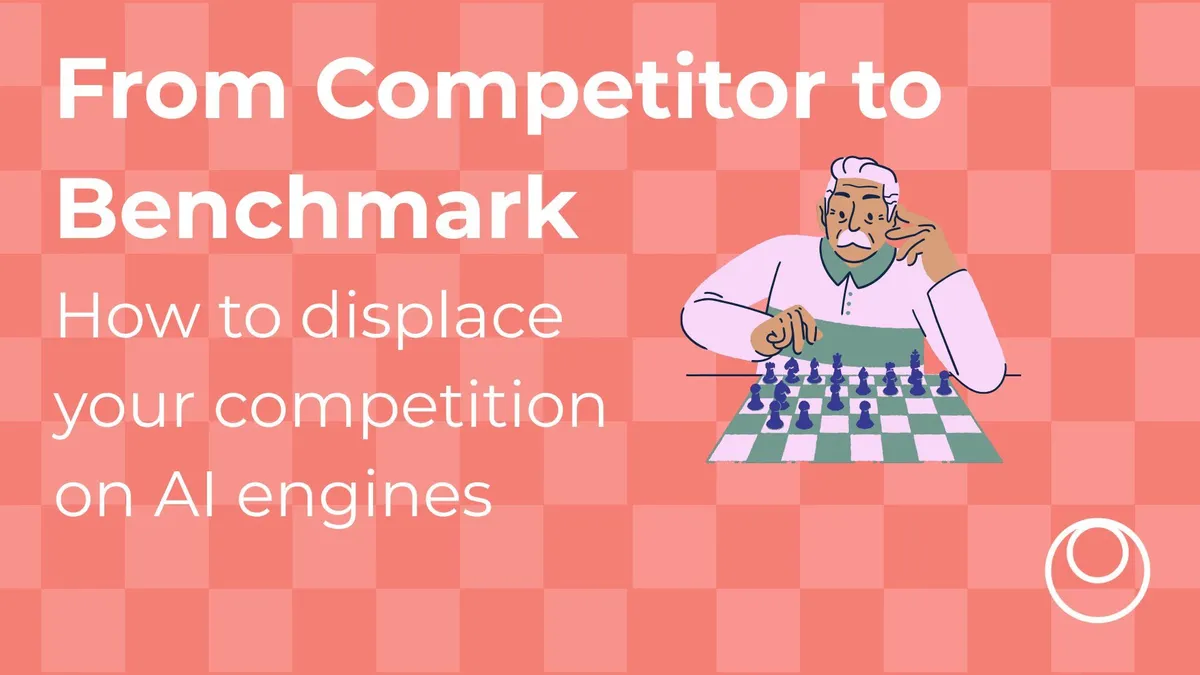
TL;DR
In AI engines, you either appear in an answer or you don't. There is no ranking to slowly climb. Displacing competitors requires publishing better content, appearing in the same trusted sources they do, and expanding your citation footprint across niche media, forums, and new content channels.
When someone asks a question on ChatGPT, Perplexity, Gemini... the AI doesn't just open Google. It goes through dozens of sources in a few seconds, analysing each one of them. It then decides which are the most reliable, relevant and coherent to build a response.
In the process, your brand may appear... or it may be ignored. Most importantly, if your competitors are featured in the response, they're influencing the conversation while you're left out, resulting in: less visibility = less growth.
The good news is that there are ways to go from being just one more to becoming a reference. Let's take it step by step.
In Google, being a benchmark has always meant being on the first page. In AI it is different:
So when we talk about displacing the competition, it is not just a matter of "taking a place", but of occupying the space where the AI is using it as a reference. As a general rule, AI responses usually name several brands, so being one of them is a must, then we displace the competition to put ourselves one position ahead.
The first step is to find out what sources AI is relying on in your industry.
At this point there are often surprises:
Unlike Google and its positioning, the key is that your competition does not always shine because it has more budget, but because it is in the sources that the AI considers reliable. This means that you don't need a budget to be more visible than your competition, you simply need to have the right tool and strategy.
As you already know, there are specialised tools like Omnia with which you can map all the sources in a matter of seconds, thus finding out: who is your competition, where do they appear and how, in what context, and why. With all the information, you can start working on your strategy and position yourself above the competition.
A software startup notices that their competitor appears on GitHub forums. They start publishing practical, well-documented guides, and within six months the AI starts quoting them instead of the competitor.
A clothing brand discovers that ChatGPT recommends their competitor through local trend blogs. They create partnerships with these same blogs and generate visual content that the AI recognises and uses.
An oil company sees that their competitor is in niche food reviews. They contact these media, send product and generate content with local chefs. Gradually, the AI starts to cite them as a main reference.
Each sector is different, Sources do not follow a fixed pattern: they vary greatly from one sector to another and sometimes even between engines for the same query. This means you have to map them using tools such as Omnia if you want to understand where your visibility is really decided.
You can try Omnia free for 14 days and see how your brand is positioned.
Displacing your competition on AI engines is not a single trick. It is a combination of strategy, presence in relevant sources and the ability to produce content that the AI values as reliable.
The change from classic SEO is huge: here it is not enough to gain positions. You have to be in the places where the AI searches, speak the language of those engines and become the benchmark that displaces the rest.
Do you prefer your competitors to continue writing the story... or are you going to start occupying that space yourself?
Omnia offers a 14-day free trial on the Growth plan.
No credit card required. See exactly where your brand shows up (or doesn't) across AI engines, then let the platform's recommendations guide your next move.
Written By
 Daniel EspejoCEO & FounderatOmniaJoseGrowthatOmnia
 Miguel FernándezCTO & FounderatOmnia
 JoseGrowthatOmnia
 The Omnia Team
 The Omnia Team
No credit card required · Free for 14 days · See your AI visibility within 3 minutes