
AI Search Visibility
How To Turn AI Visibility Data Into a GEO Roadmap in 2026

 JoseGrowthatOmnia
 AndreiHead of GrowthatOmnia
TL;DR
The best AI search monitoring tools track your brand across multiple AI search engines with country-specific checks. Look for citation analysis showing which URLs AI engines reference, instant alerts when competitors overtake you, and share of voice comparisons. Shortlist one action-oriented platform prescribing what to build (Omnia for scaleups), one budget tracker (LLMrefs), and one specialist matching your need (Pageradar for affiliates, Scrunch AI for compliance). Test on 14-day trials and focus on whether they deliver executable briefs or just dashboards.
If you don't know which AI engines are citing your competitors when answering your category's defining questions, you're likely losing pipeline right now. AI Overviews, ChatGPT, and Perplexity now answer prospects' questions directly on the results page, and Gartner projects traditional search traffic will decline 25% by 2026 as this trend accelerates.
When prospects ask “best [solution] for [use case],” these engines generate narrative answers citing 3-5 brands. If you're not on that shortlist, you're invisible to a growing segment of buyers. Traditional SEO dashboards won't flag the problem because they track keyword positions, not AI answer citations.
For VC-backed scaleups competing against established brands with 10x budgets, long-tail SEO was your advantage. But now those queries are being answered by AI engines that prioritize different signals. By the time declining traffic reveals the gap, competitors have already captured prompts you were winning. Clawing back citations is slower than losing them because you’re competing on sources and authority, not just page tweaks.
This guide evaluates 22 AI tools for monitoring brand mentions in search results designed to solve this exact problem. They detect when major AI engines stop citing you, reveal why competitors displaced you, and prescribe what to build to win prompts back. Whether you need SaaS tools for AI search monitoring or enterprise-focused AI visibility monitoring platforms, we've evaluated options for every team’s size and budget.
An AI search monitoring tool is software that tracks how your brand appears in AI-generated answers across platforms like ChatGPT, Perplexity, and Google AI Overviews. These tools run predefined prompts and topics daily (or weekly) to measure brand mentions, citation frequency, sentiment, and competitive positioning over time.
Marketers have no reliable way to continuously monitor AI search visibility and detect drops before they impact growth. A brand that dominated Google blue links for years can vanish from AI answers overnight if competitors earn better citations, or if the engines shift toward Reddit threads and YouTube videos as primary sources. You need tools that monitor volatility across surfaces and alert you when visibility erodes.
Traditional SEO rank tracking measures fixed positions. AI search monitoring deals with probabilistic answers that shift based on phrasing, personalization, and source selection.
You're not measuring “position #1” anymore. You're tracking visibility, citation frequency, and sentiment analysis. SEO professionals relying solely on blue-link tracking miss the roughly 60% of no-click searches now answered by AI Overviews, referral traffic from ChatGPT citations, and brand perception shaped by Perplexity. Tools to monitor SEO visibility in AI search engines show where your content appears (or doesn't) in conversational contexts. The best AI search monitoring tool for SEO professionals combines classic position tracking with AI citation analysis, so you're not optimizing blindly as traffic patterns shift.
Use this table to shortlist three to four tools. Then check out the detailed reviews below.
| Tool | Best for | Engine/LLM coverage | Geographical coverage (base plan) | Action layer | Price range/mo |
|---|---|---|---|---|---|
| Omnia | Scaleups, startups | 4 | Unlimited countries, unlimited languages |  |
€79–custom pricing |
| Peec AI | Agencies, global brands | 7 | Unlimited regions, 115+ languages |  |
€89–custom |
| Scrunch AI | Enterprises, agencies | 8 | Multi-region | |
$100–custom pricing |
| Profound | Fortune 500 brands | 10 | 1 country, 1 language | |
$99–custom |
| Nightwatch | Nightwatch users | 3 | Not specified | |
$99–$495 |
| Promptwatch | Growth teams, ROI focus | 10 | Multi-region | |
$99–$579 |
| Semrush | Semrush users | 6 | Not specified | |
$99 |
| Ahrefs | Ahrefs users | 6 | Not specified | |
$199–$699 |
| Rankscale AI | SMBs, agencies | 8 | Unlimited regions | |
€20–€780 |
| Cloro | Developers and technical teams building custom AI visibility pipelines | 7 (ChatGPT, Perplexity, Gemini, Copilot, AI Overview, AI Mode) | All countries globally, plus US state-level targeting | |
Free tier; $30–$5,000/mo |
| Hall AI | Mid-market, enterprise | 8 | Not specified | |
Free–$1,499 |
| SEOmonitor | SEO agencies | 4 | Multi-region | |
€99–€299 |
| SISTRIX | Global SaaS brands | 4 (beta) | 50 countries | |
€119–€799 |
| Nozzle | Advanced SEO teams | 1 | Not specified | |
$59–custom |
| Gumshoe AI | Brand managers | Not specified | Multi-region | |
$0.10/convo |
| Botify | Large enterprises | 12 bots | Not specified | |
Not specified |
| AthenaHQ | Enterprises | 6 | 1 region, 1 language | |
$295–custom pricing |
| Trakkr | Growth, technical teams | 8 | Multi-region | |
Free–$399 |
| Pageradar | Affiliate marketers | 1 | 167 countries | |
$39–$199 |
| LLMrefs | SMBs, startups | 11 | 50+ countries, 20+ languages | |
Free–€79 |
| AirOps | AI content execution at scale | 4 | Custom on enterprise only | |
$200/mo |
| Allmond | Agencies, SaaS companies, e-commerce brands, and startups needing affordable, scalable AI visibility monitoring | 4 (ChatGPT, Claude, Gemini, Perplexity) | 67+ countries | |
$29–$199/mo |
We evaluated 21 platforms based on engine coverage, citation intelligence, speed of alerts, action-layer capabilities, and fit for different team sizes. This list of best tools for monitoring AI search engines ranges from action-focused platforms (Omnia, Profound) to best tools for monitoring AI search results for agencies managing multiple clients (Peec AI, Rankscale AI). Plus tools for real-time monitoring AI search traffic growth that catch visibility shifts the day they happen.
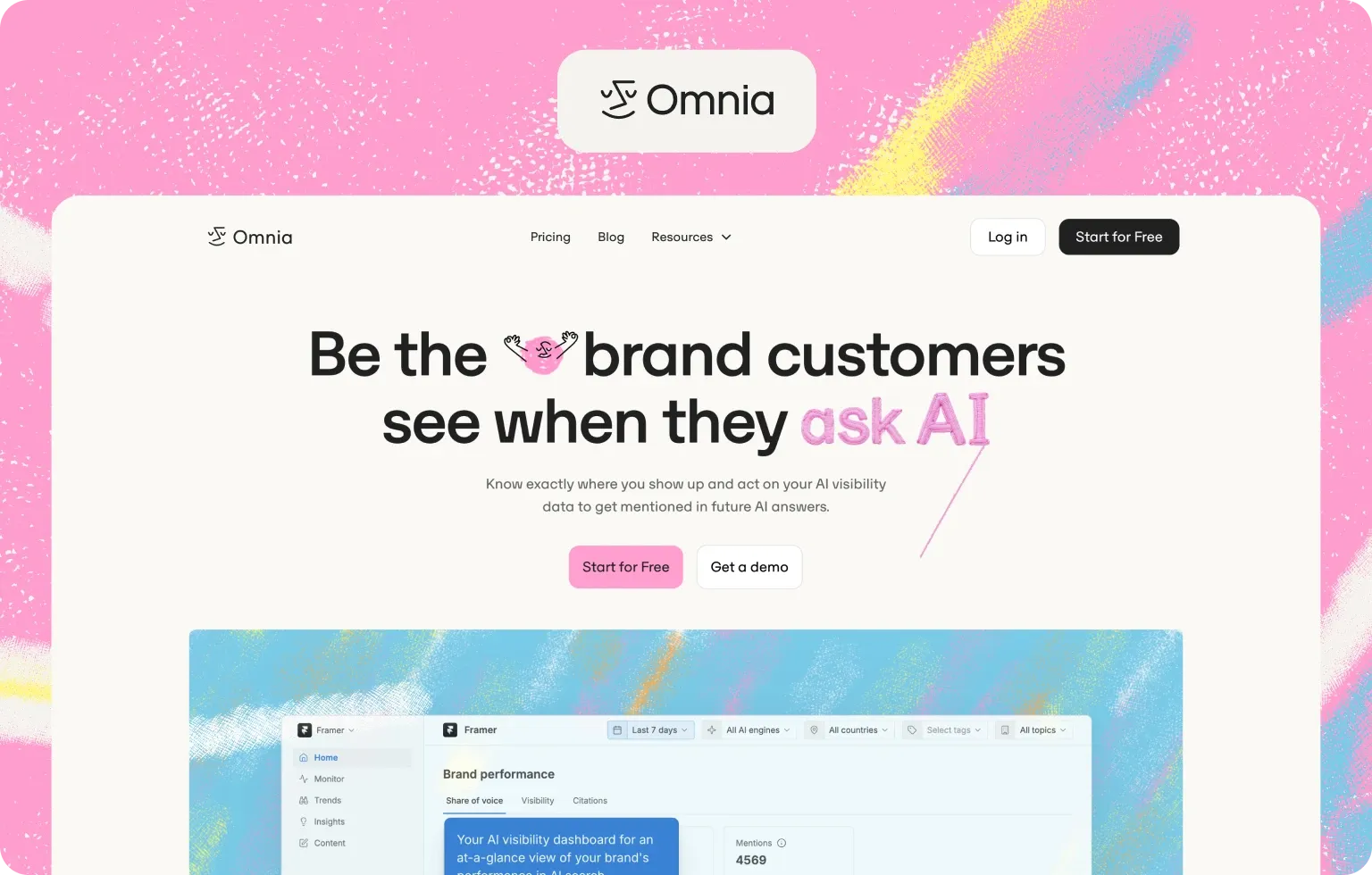
Omnia is the best AI search monitoring tool for scaleups who need monitoring and actions.
Best for
Scaleups needing continuous AI search tracking without enterprise SEO stacks, specifically B2B SaaS and growth marketing teams who need to detect visibility drops and execute fixes immediately.
What it does well
Omnia is built for the part most tools avoid, turning visibility data into a plan your team can execute. Instead of stopping at “competitor X is cited,” Omnia focuses on:
This matters for scaleups because you don’t have time to translate dashboards into work. You need a system that outputs: “Create this page, answer these sub-questions, use this structure, and target these third-party placements.”
Omnia delivers localized tracking by country, letting you spot performance gaps across geographies. Competitive visibility tracking runs daily and the action layer analyzes top-performing citations and identifies structural patterns (URL formatting, content types). Then, it reverse-engineers those into executable recommendations about which content to create, which prompts to target, and which sites to pitch for placement.
Key features
Good fit if
Not a fit if
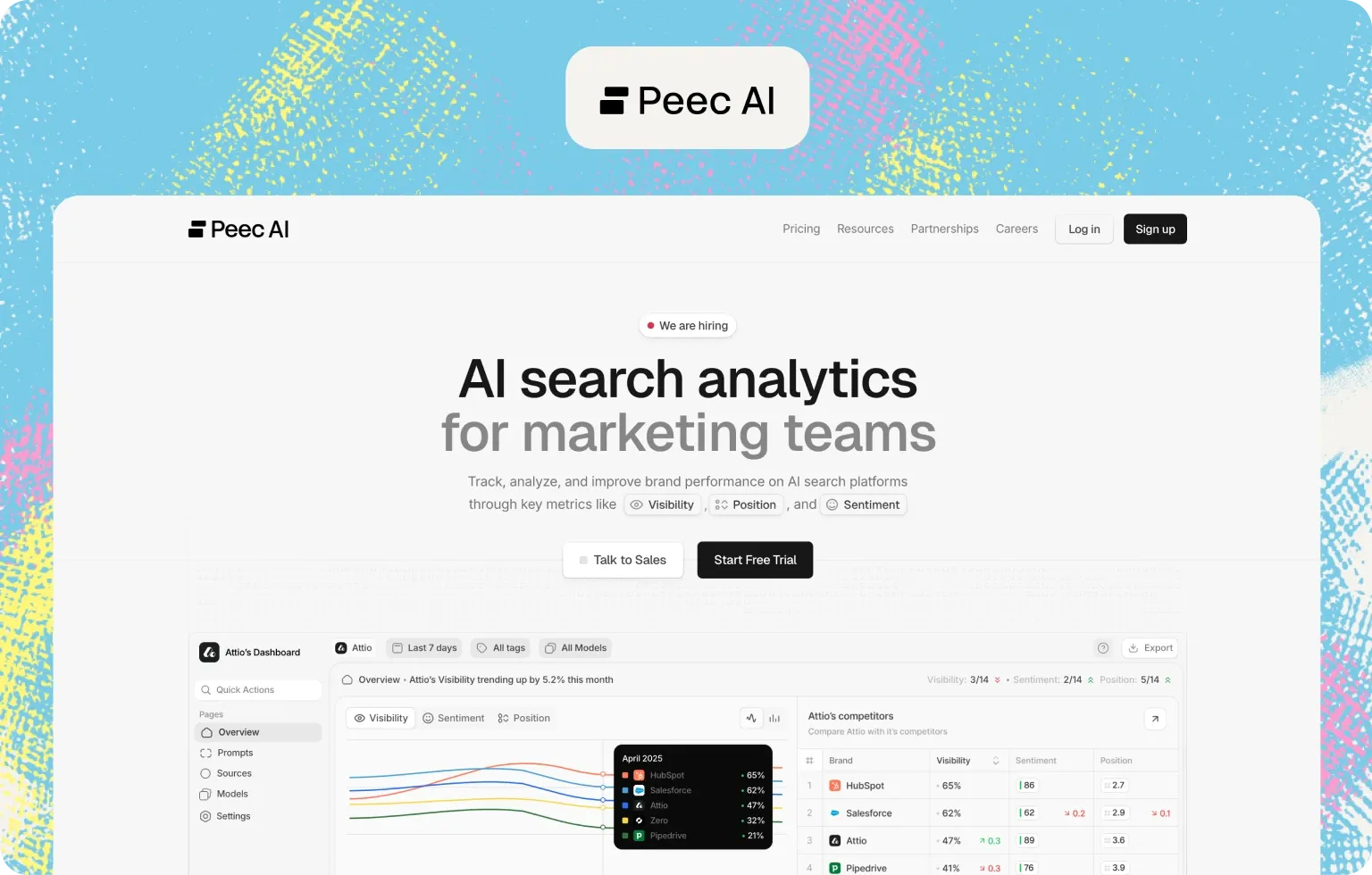
Peec AI delivers daily tracking with unlimited seats and sentiment analysis metrics, purpose-built for global brands and agencies managing multiple clients.
Best for
Agencies and multinational scaleups that need collaborative workspaces.
What it does well
Peec AI provides unlimited seats so entire teams can monitor, collaborate, and act on visibility data without per-user fees. It suggests prompts based on your site content and delivers sentiment metrics that flag when AI platforms describe your brand negatively or inaccurately.
Key features
Watch-outs
The pricing scales with prompt volume. High-frequency monitoring across multiple languages can drive costs up quickly for enterprise keyword sets.
Pricing
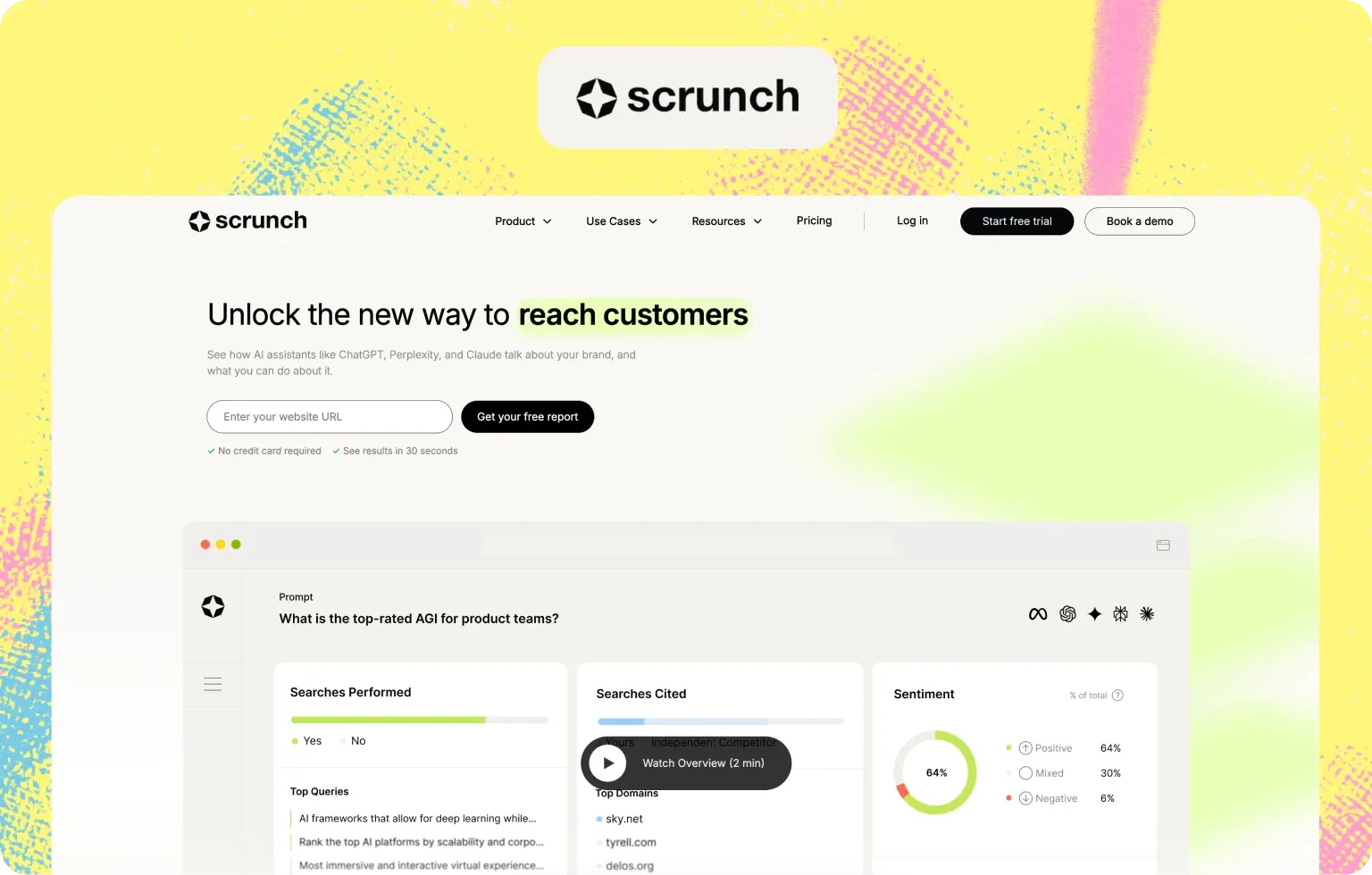
Scrunch AI is an AI visibility platform that emphasizes security and governance with SOC 2 certification and features real-time bot crawling feeds.
Best for
Enterprise brands and agencies that need compliant AI visibility monitoring with security-first architecture.
What it does well
Scrunch AI provides a real-time bot crawling feed that shows exactly when GPTBot, PerplexityBot, or other AI crawlers access your pages. This lets teams correlate crawler activity with citation changes.
Key features
Watch-outs
Enterprise-ready monitoring comes with enterprise-grade pricing, so smaller teams may find the cost prohibitive without dedicated security/compliance mandates.
Pricing
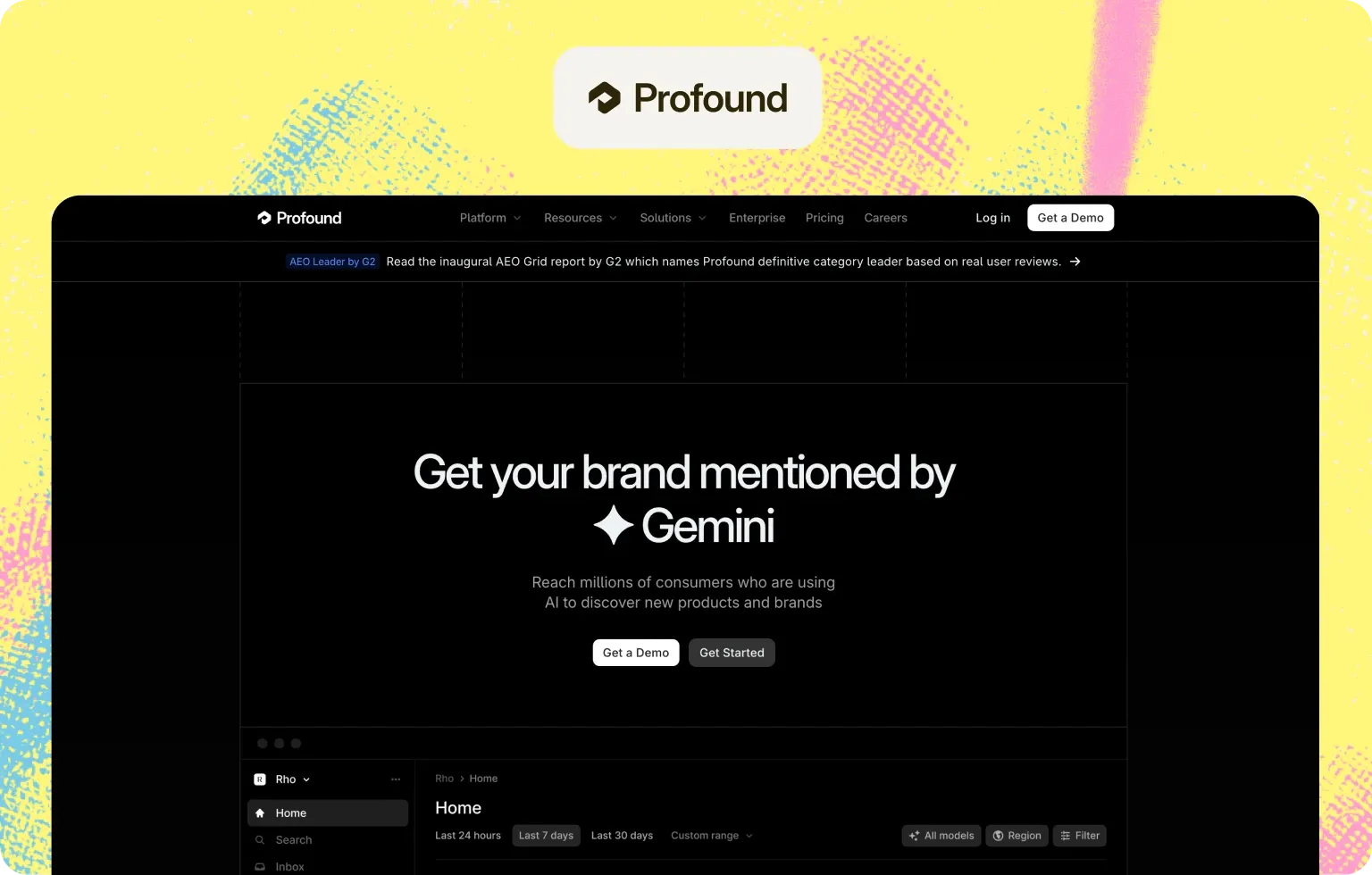
Profound tracks 10+ engines with prompt volume analysis and market research analytics.
Best for
Fortune 500 marketing teams that need tracking across 10+ LLMs, automated prompt discovery at scale, and integration with existing martech stacks .
What it does well
The platform automates prompt discovery, identifies category-relevant queries, competitor mention triggers, and seasonal patterns.
Key features
Watch-outs
The complicated UI can be challenging for smaller teams.
Pricing
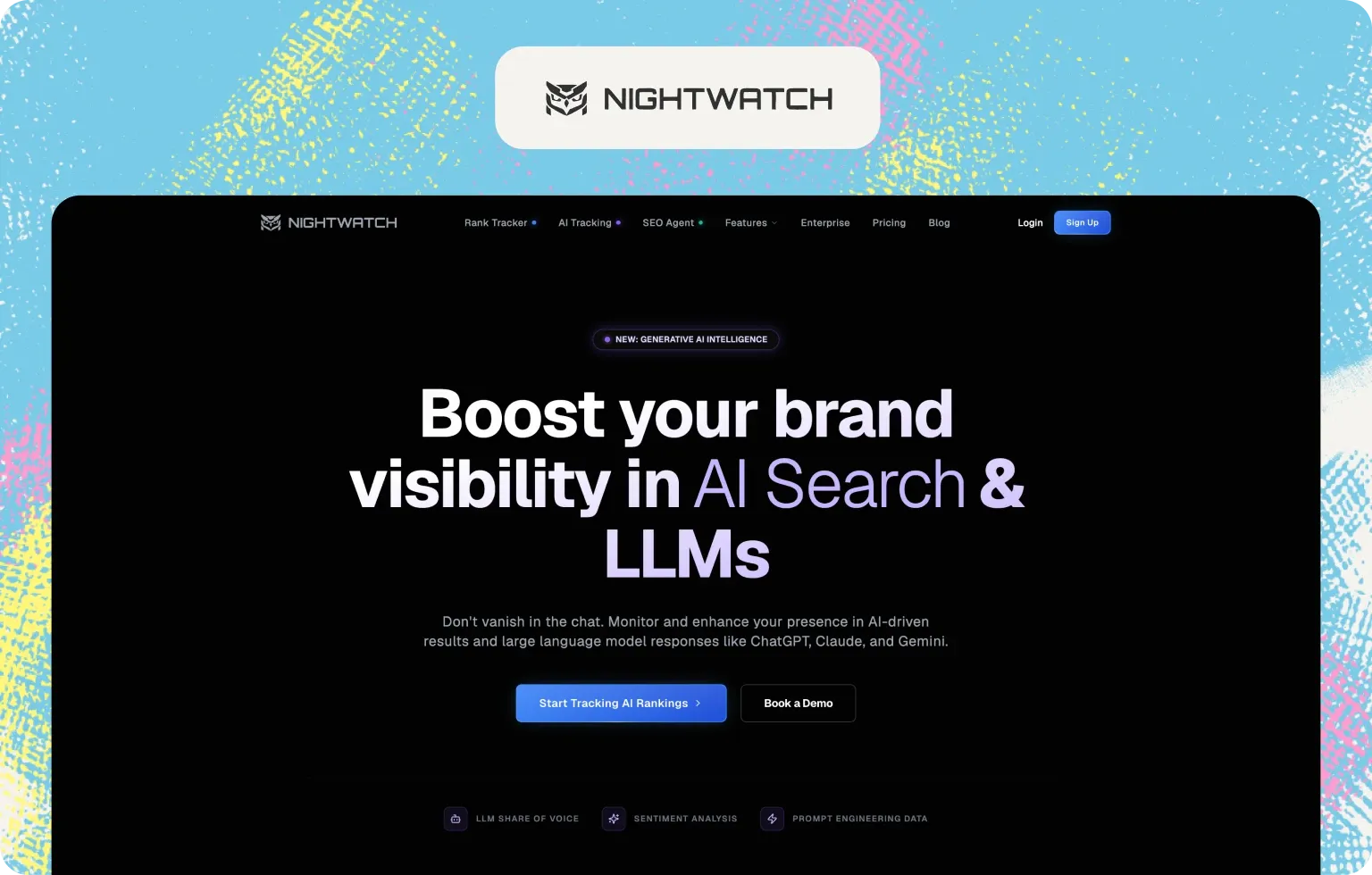
Nightwatch combines traditional SEO rank tracking with AI visibility monitoring, offering precise geo-level data and daily AI Overview tracking.
Best for
Nightwatch SEO rank tracking users that need unified traditional and AI visibility dashboards with precise tracking.
What it does well
Key features
Watch-outs
The AI visibility features require add-on pricing, as the base plan focuses primarily on traditional rank tracking.
Pricing
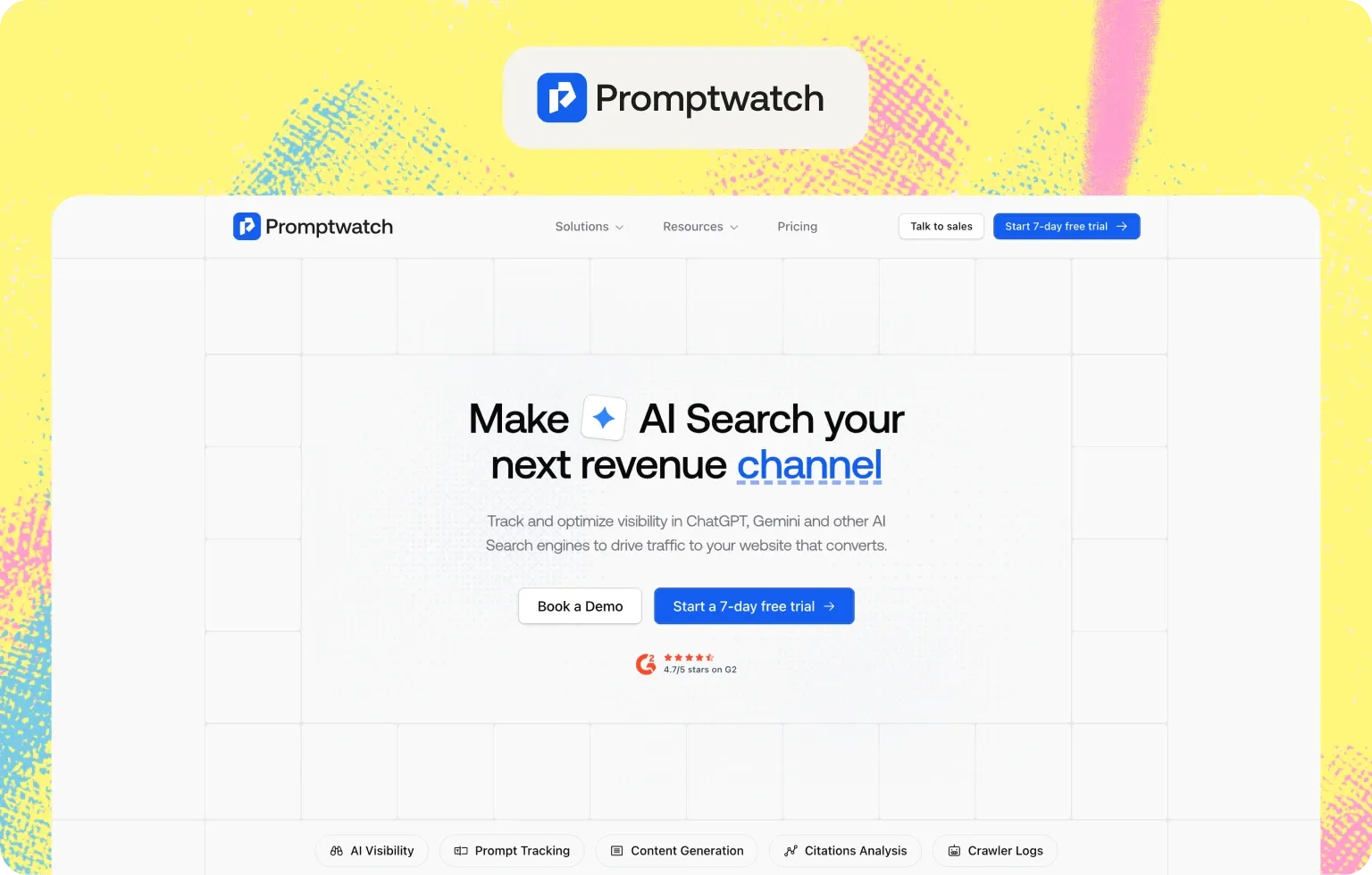
Promptwatch is a prompt-level AI visibility tracker that provides daily refreshes and real-time alerts.
Best for
Growth teams and marketing leaders who need to justify AI visibility investments with ROI data by connecting brand mentions to actual website traffic and conversions.
What it does well
The platform's attribution capability tracks when users who saw your brand in AI answers later visited your site, what actions they took, and whether they converted.
Key features
Watch-outs
The pricing scales with prompt volume, so high-frequency tracking can drive costs up.
Pricing
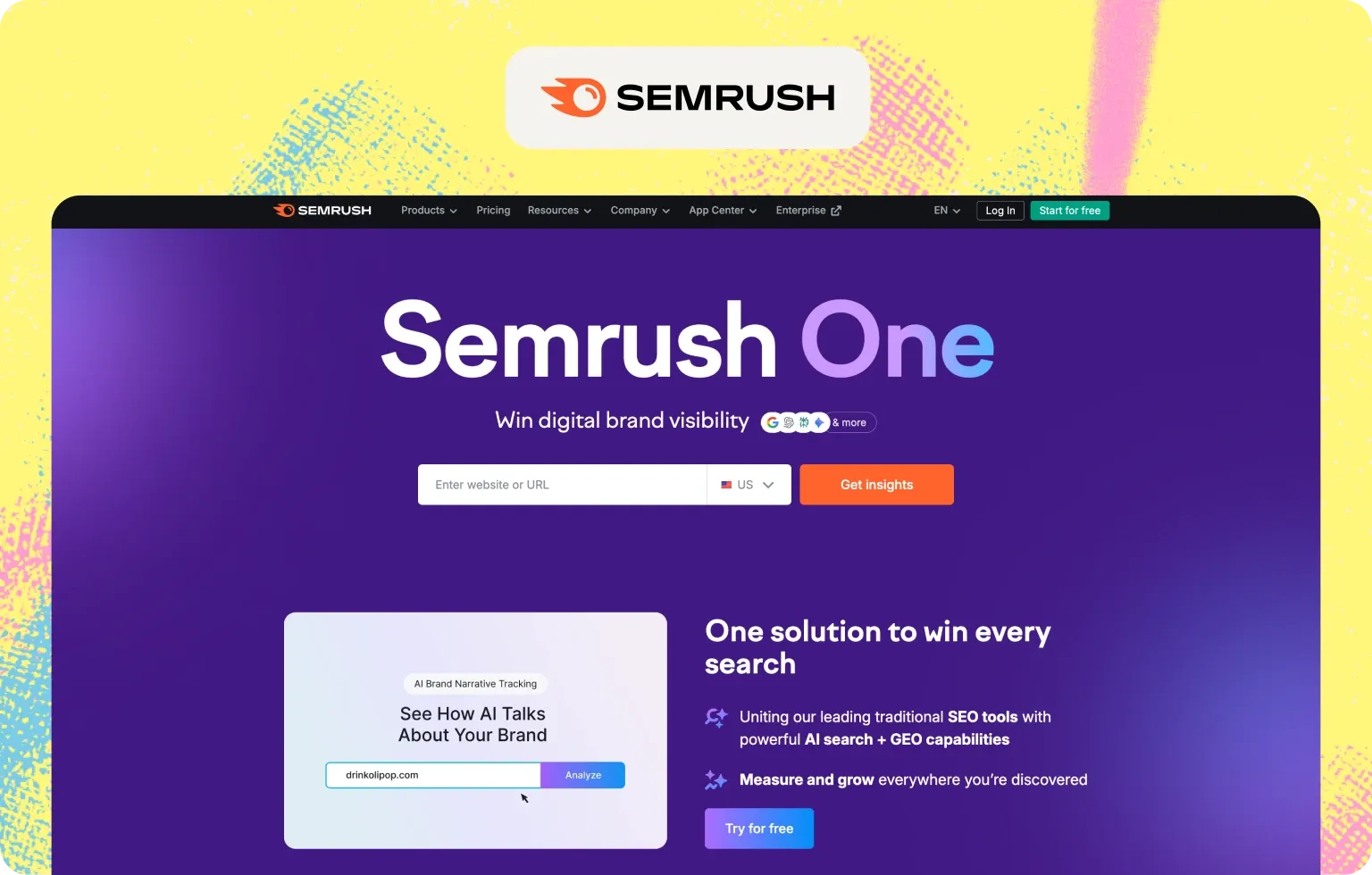
Semrush integrates AI Overviews tracking across its full SEO suite.
Best for
Marketing teams already using Semrush for traditional SEO who want to add AI visibility monitoring on the same platform.
What it does well
Semrush excels at transforming complicated visibility data into charts and reports that stakeholders can easily interpret.
Key features
Watch-outs
If you surpass the limits of Semrush AI Toolkit, you need to pay for additional prompts or domains.
Pricing
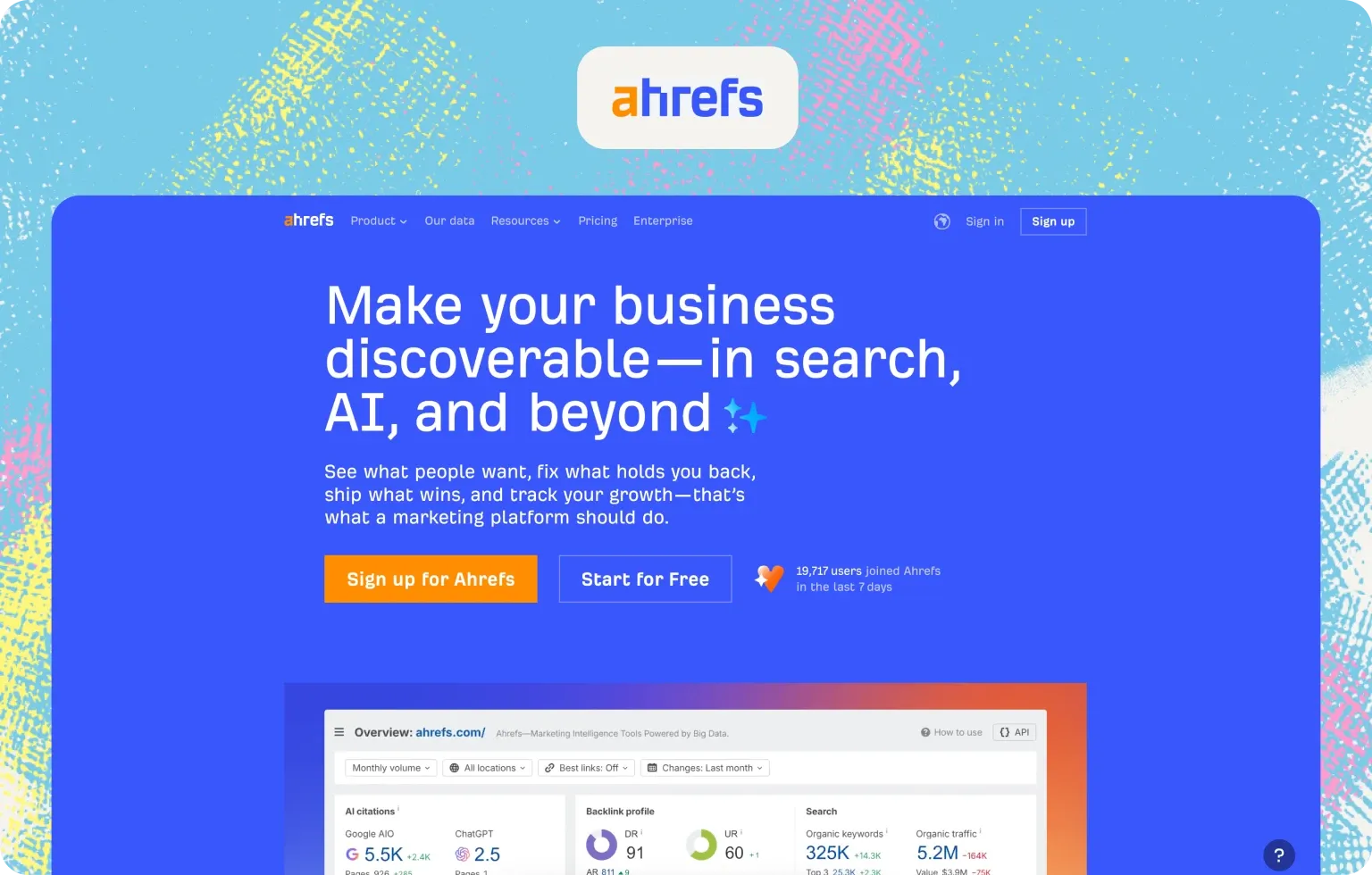
Ahrefs has AI visibility tracking as an add-on to its established SEO platform.
Best for
Brands already invested in Ahrefs for backlink analysis and keyword research who want integrated SEO and AI visibility without switching tools.
What it does well
The platform connects AI visibility data directly to backlink profiles , showing which external sites drive AI citations — turning citation tracking into an outreach roadmap.
Key features
Watch-outs
If you need to access more than one AI engine, it comes at a hefty price of $699/mo.
Pricing
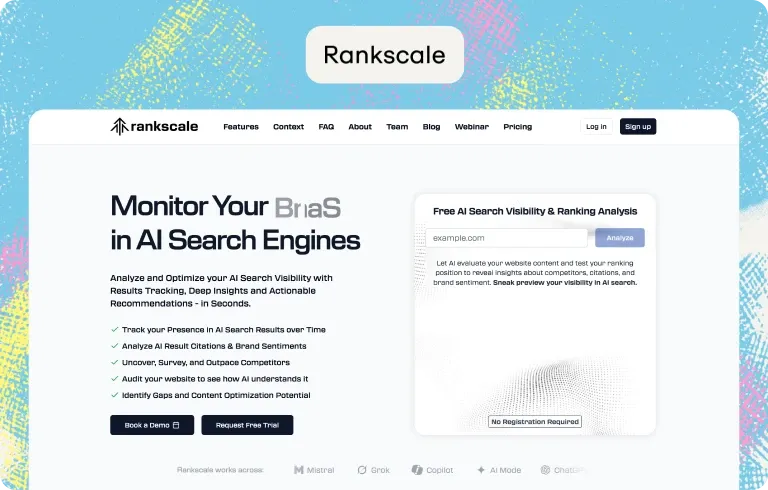
Rankscale AI offers credit-based pricing with flexible tracking.
Best for
SMBs or agencies that need scalable, credit-based monitoring for multiple clients without per-seat fees or rigid subscription tiers.
What it does well
The platform tracks visibility, provides performance metrics, and offers competitor benchmarking with real-time alerts when clients gain or lose citations.
Key features
Watch-outs
Credit consumption varies by tracking frequency and engine coverage, so high-frequency monitoring can quickly deplete credits.
Pricing
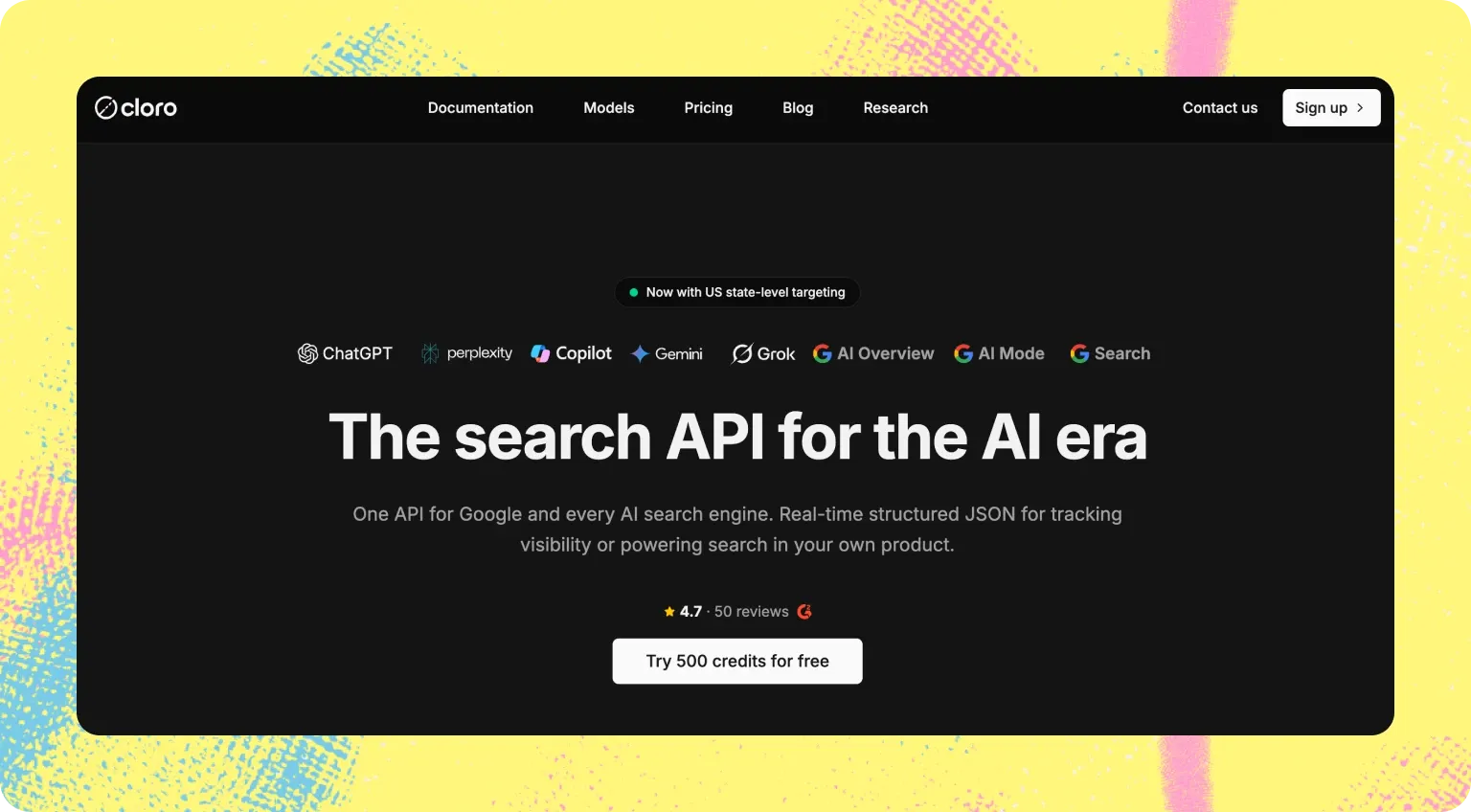
cloro is the API layer under AI visibility tools.
Best for
Engineering teams building AI visibility in-house, and platforms that need the underlying data rather than a dashboard.
What it does well
cloro returns the raw rows behind AI visibility reporting instead of a pre-built rollup. A prompt sent to its endpoint comes back as JSON containing the engine's answer along with every source it cited. Several commercial tools sit on top of it, including Ahrefs, BrightEdge, Evertune and Gauge.
Key features
Watch-outs
There is no interface, so share of voice and every other metric has to be defined and modeled by your own team in your own warehouse.
Pricing
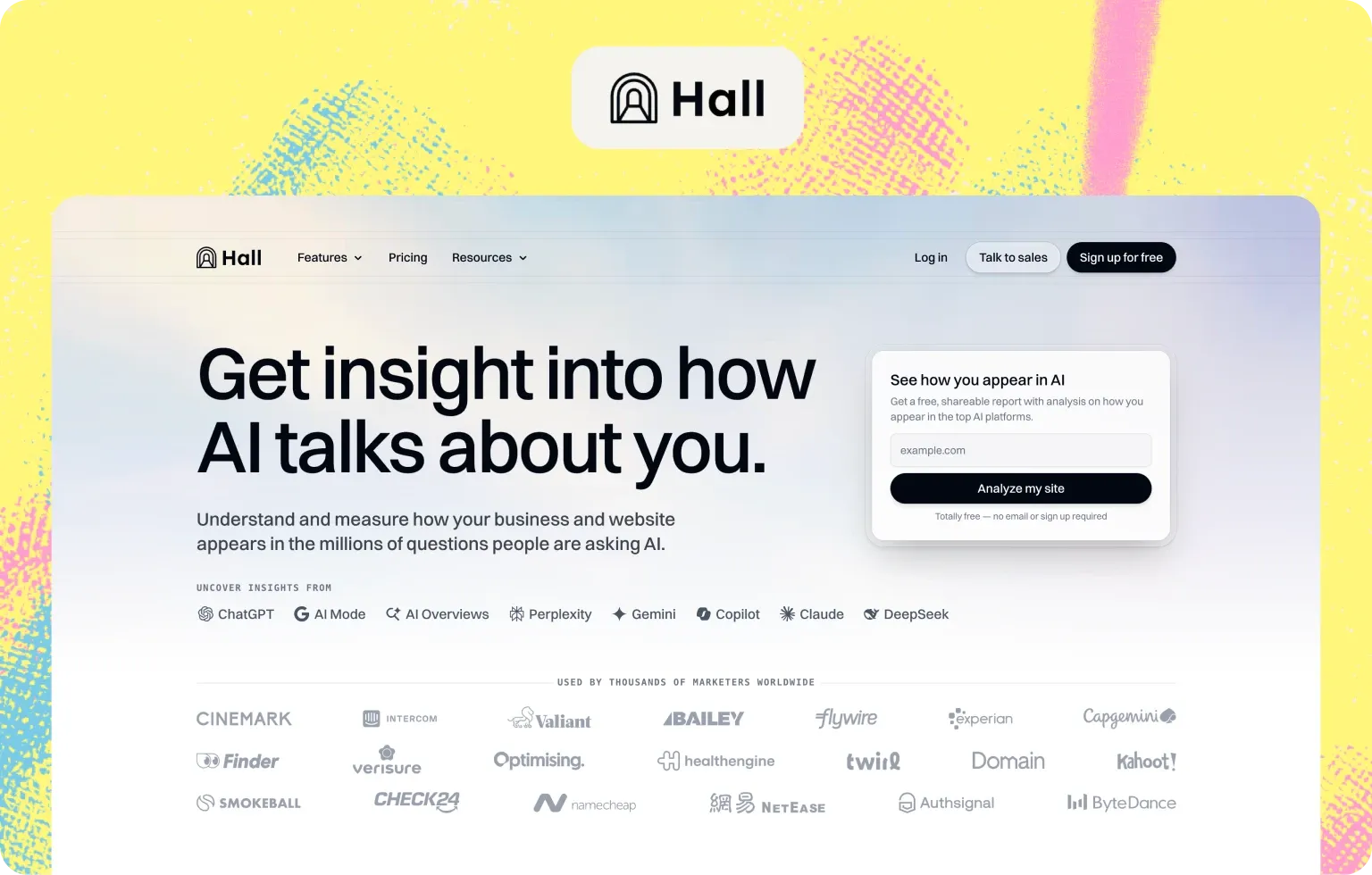
Hall AI builds their search monitoring features around a centralized dashboard experience.
Best for
Mid-market companies and enterprise teams that want a clear, visual dashboard for monitoring brand presence and tracking website citations.
What it does well
Hall AI stands out with its agent analytics, offering real-time visibility into how AI assistants, crawlers, and bots interact with your site — including entry sources, crawl paths, depth of exploration, and engagement patterns.
Key features
Watch-outs
Inconsistent data depth and coverage may create gaps when performing long-term trend analysis.
Pricing
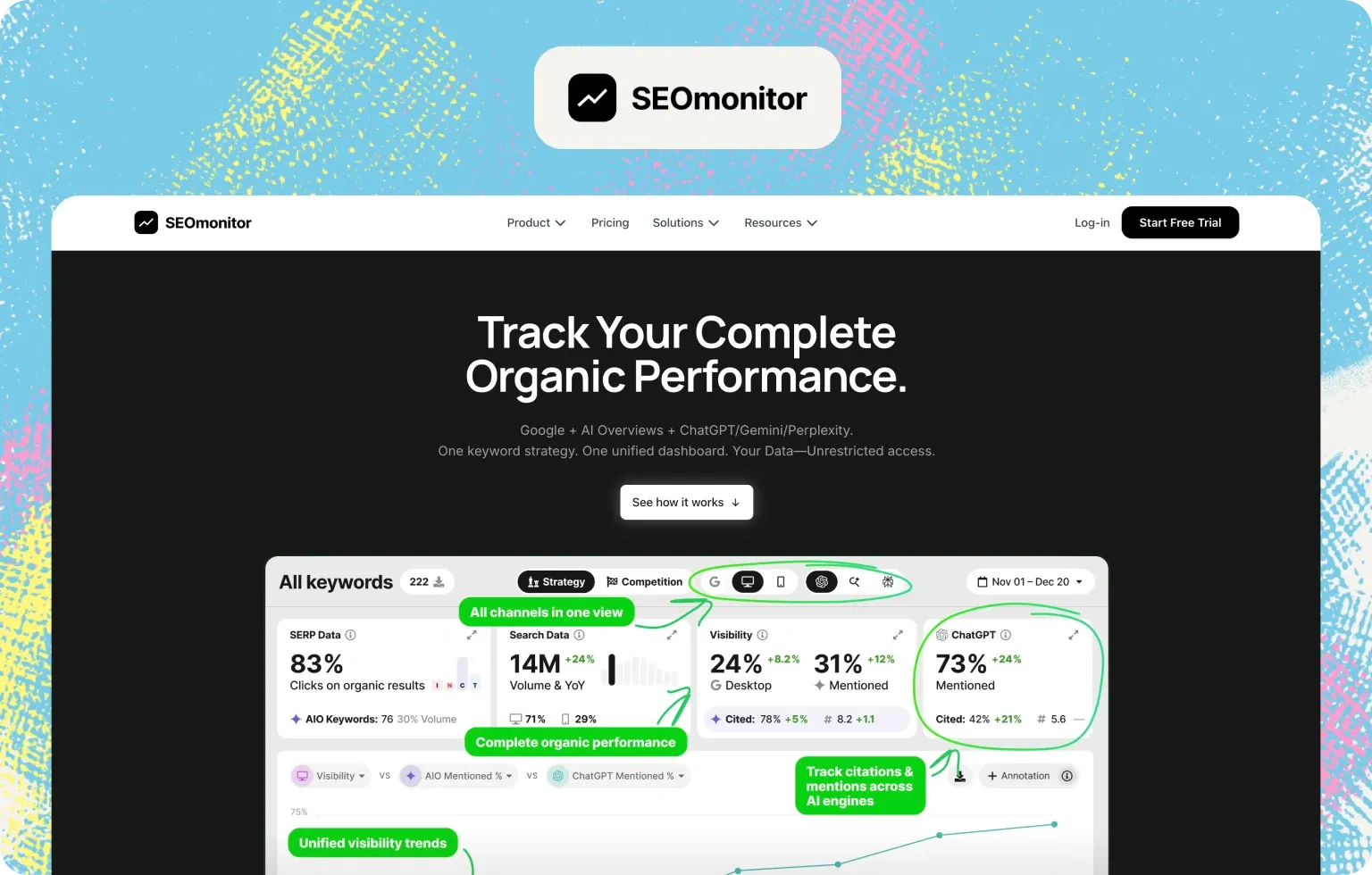
SEOMonitor delivers daily Google AI Overviews detection with full snapshots, device-level tracking, and integrated forecasting for agencies.
Best for
SEO agencies managing multiple clients who need AI Overviews tracking with daily monitoring, historical snapshots, and forecasting. The platform also ties AI visibility to existing keyword sets.
What it does well
SEOMonitor captures full AI Overview snapshots and stores them historically for trend analysis
Key features
Watch-outs
Prices increase steadily based on increasing AI search keywords.
Pricing
SISTRIX is a European SEO platform that expanded into AI visibility tracking with custom monitoring across multiple international markets and expanded SERP archives.
Best for
Global SaaS brands and agencies serving multiple regions who need cross-border AI Overview presence tracking with unmatched geographic coverage.
What it does well
SISTRIX tracks AI Overviews across all countries. The expanded SERP archive captures full AIO content, recognized entities, and historical changes, which is invaluable for retroactive audits and understanding how Google's AI answers evolve over time.
Key features
Watch-outs
AI Prompt Tracker that allows teams to monitor brand mentions beyond Google is still in beta.
Pricing
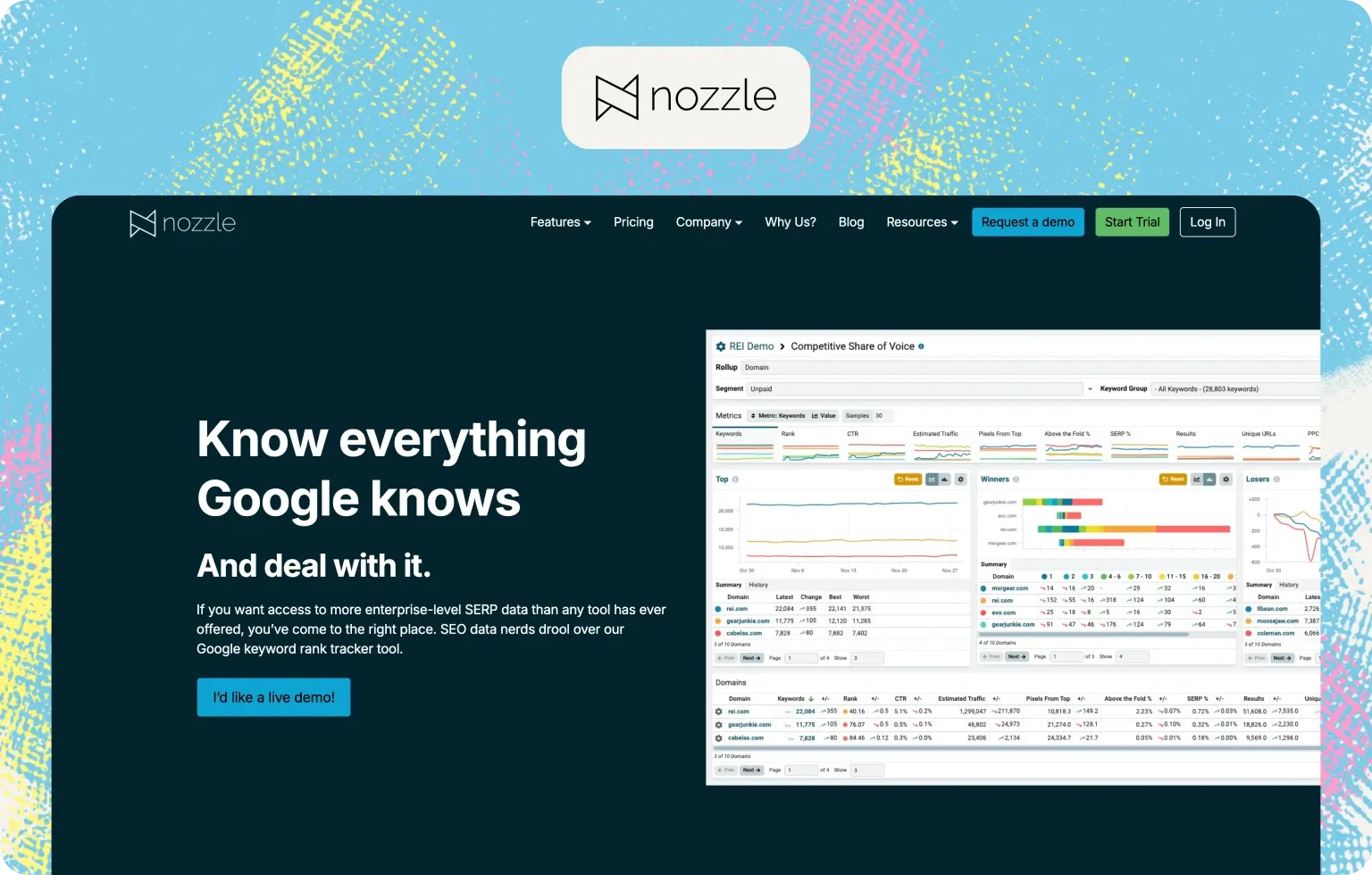
Nozzle is a highly flexible enterprise rank tracker.
Best for
Advanced SEO teams and analysts who need raw, customizable AI visibility data.
What it does well
Nozzle exports raw data directly to Google BigQuery for custom modeling. The platform provides transparent visual evidence of how AI Overviews appeared, including pre- and post-expansion views, and measures share-of-voice specifically within the AIO SERP feature.
Key features
Watch-outs
The platform has a steep learning curve. It requires technical expertise to maximize value.
Pricing
SMBs
Enterprises
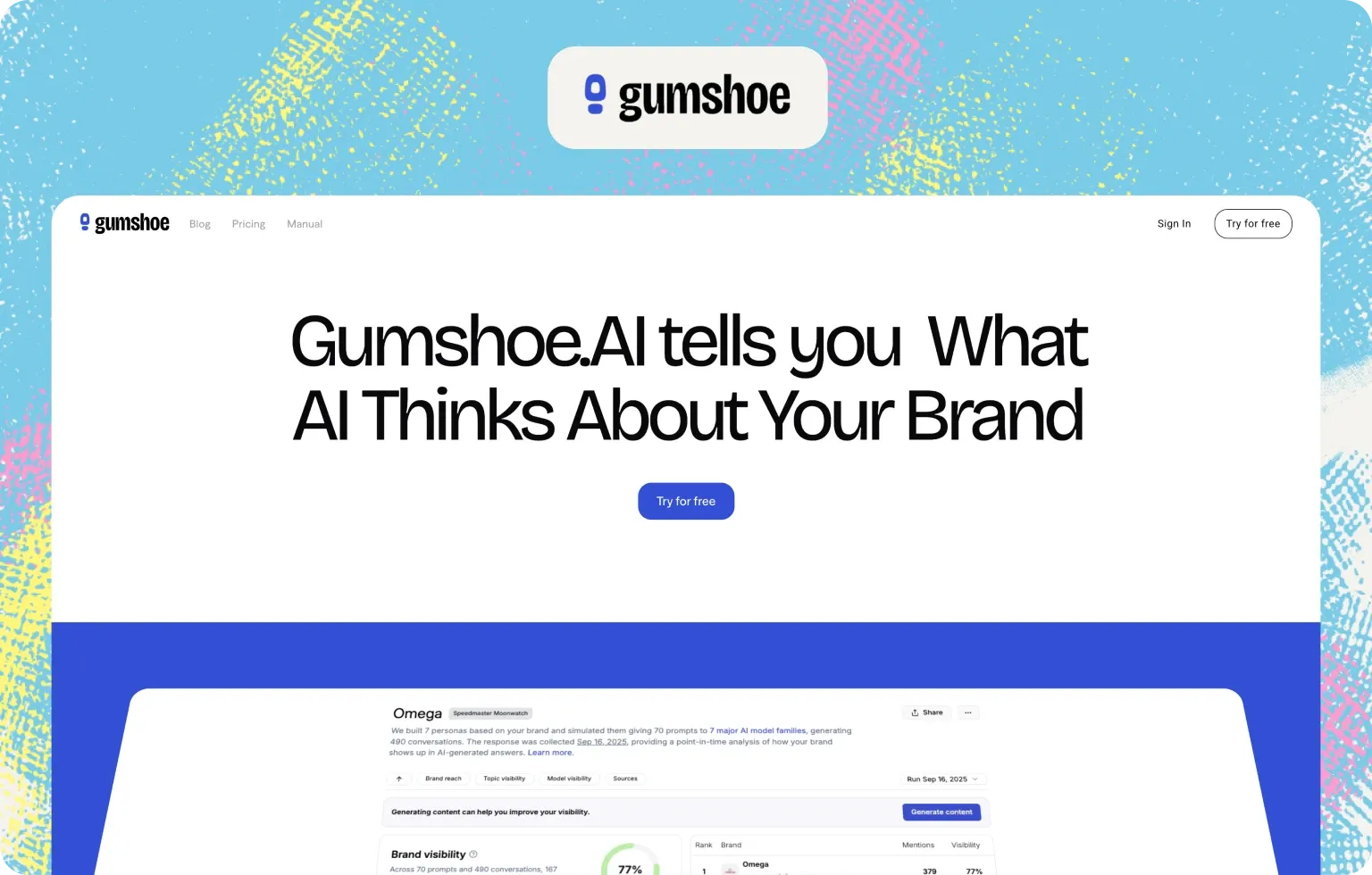
Gumshoe AI provides persona, model, and brand visibility insights.
Best for
Brand managers and content marketers who need a flexible, pay-as-you-go way to measure brand presence.
What it does well
Gumshoe AI focuses on “Share of LLM,” a metric that quantifies how often your brand is mentioned compared to competitors in AI-generated answers. It views AI models as an additional customer segment you can shape and educate to reflect your brand more accurately.
Key features
Watch-outs
The pay-per-conversation model can scale unpredictably with high tracking volumes.
Pricing
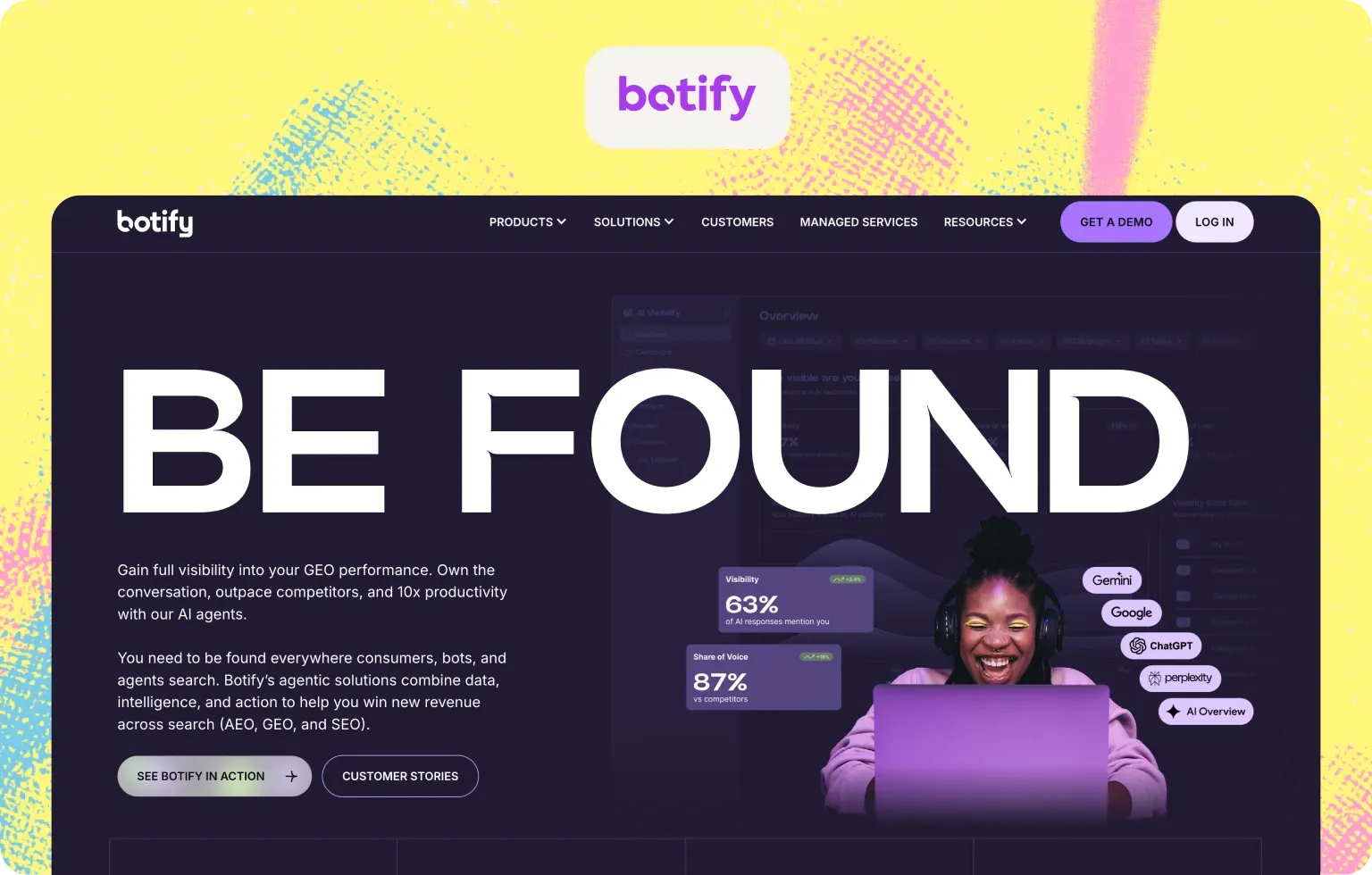
Botify connects the “input” of AI search (technical crawlability and log files) directly to the “output” of brand visibility across LLMs.
Best for
Large enterprises and technical SEO teams who need to diagnose why they aren't appearing in AI mentions by correlating visibility drops with bot crawl behavior and technical blockers.
What it does well
Botify explains visibility. Its AI Visibility Dashboard tracks presence rate, citation share, and sentiment across multiple AI search platforms.
Key features
Watch-outs
Botify is a heavy-duty technical platform. If you don't have a team capable of acting on log file analysis or crawl budget optimization, you'll be paying for power you can't use.
Pricing
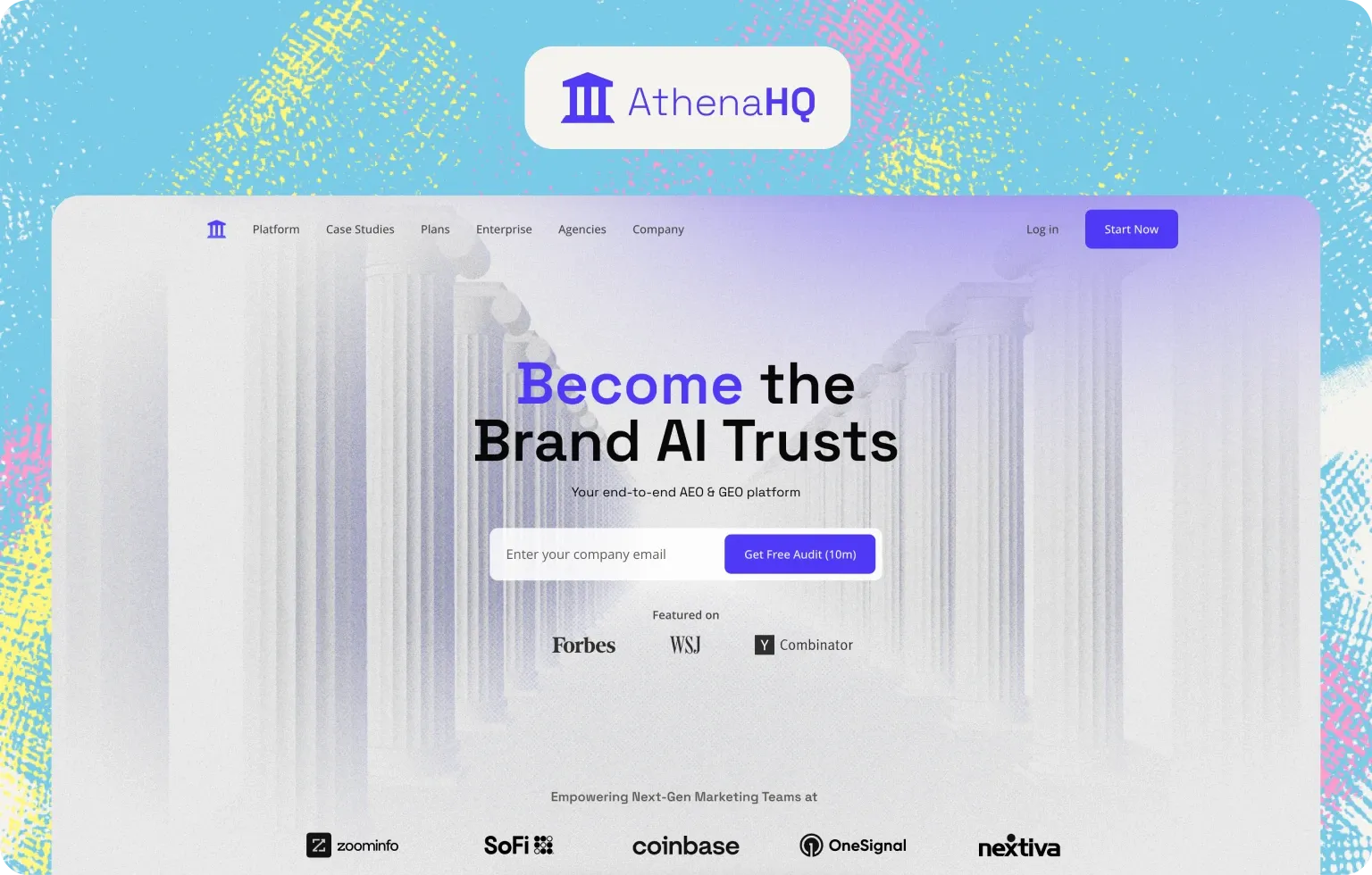
Athena HQ is an end-to-end answer engine optimization (AEO) platform.
Best for
Enterprises valuing expert pedigree and model-driven recommendations as well as strategic monitoring.
What it does well
The platform provides expert-led recommendations to show which content gaps to fill, which prompts to optimize for, and which technical issues block AI crawlers. Real-time alerts fire when visibility shifts.
Key features
Watch-outs
High base plan price prevents smaller teams from using AthenaHQ.
Pricing
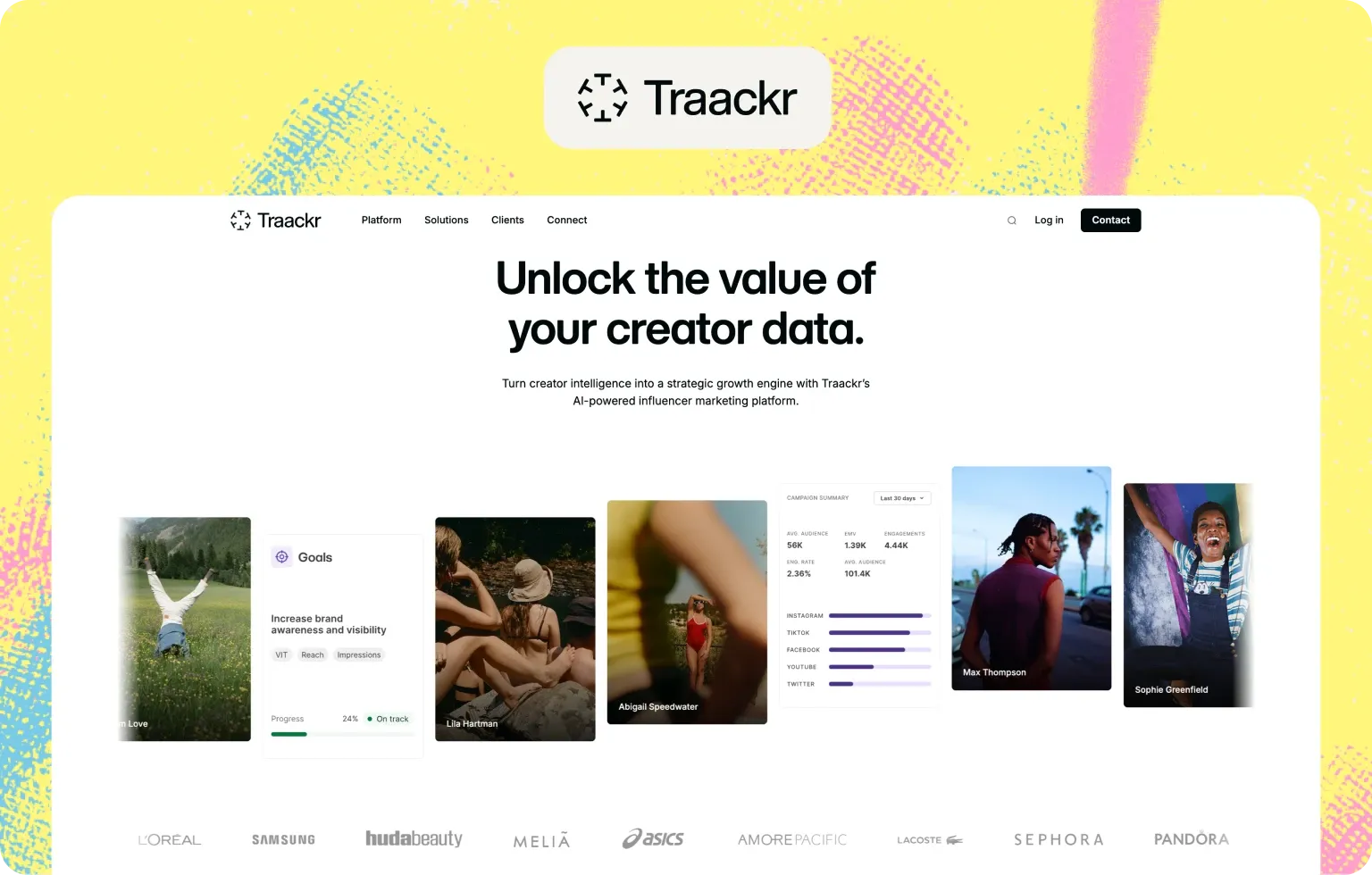
Trakkr is a 'command center' for AI visibility that combines real-time monitoring.
Best for
Growth and technical marketing teams who want a “fix it once, syndicate everywhere” approach to AI visibility
What it does well
Trakkr goes beyond passive monitoring with its Prism technology. Prism is an edge-focused service that harvests your site's content and serves it as normalized, machine-readable JSON-LD (using Schema.org vocabularies) directly to AI agents.
Key features
Watch-outs
The most powerful feature (Prism) is locked behind paid tiers. While the free plan is useful for testing, it’s too limited for serious monitoring.
Pricing
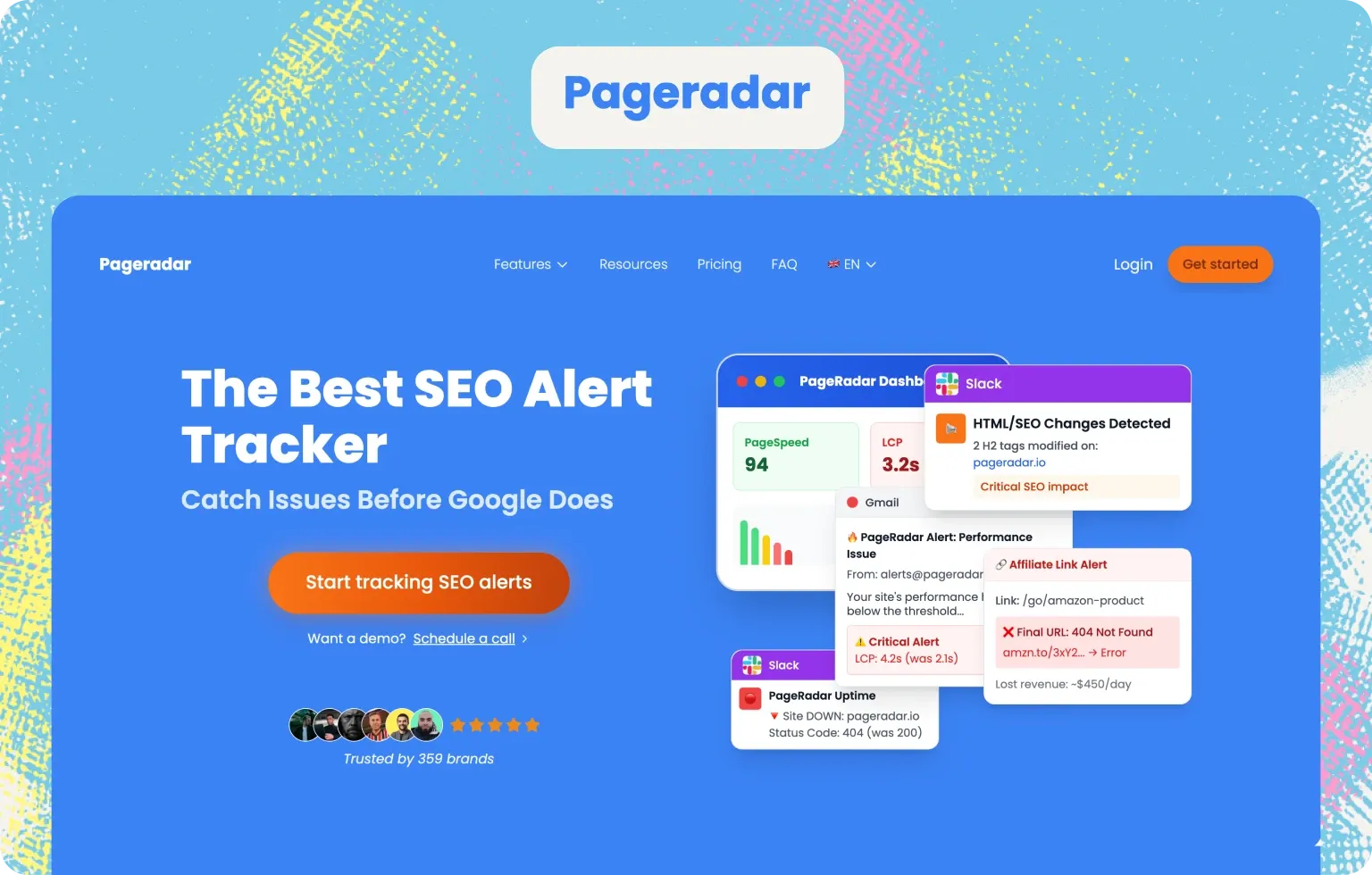
Pageradar is a specialized AI search monitor platform that focuses on speed and alerting rather than deep historical analytics.
Best for
Affiliate marketers and publishers who need an “alarm system” for their visibility.
What it does well
While some other tools wait for a weekly crawl, Pageradar sends immediate notifications (via Slack or email) the moment an AI Overview is detected for your tracked keywords — or when one disappears.
Key features
Watch-outs
Pageradar is a lightweight monitoring tool. It lacks the deep keyword research or content optimization features of competitors.
Pricing
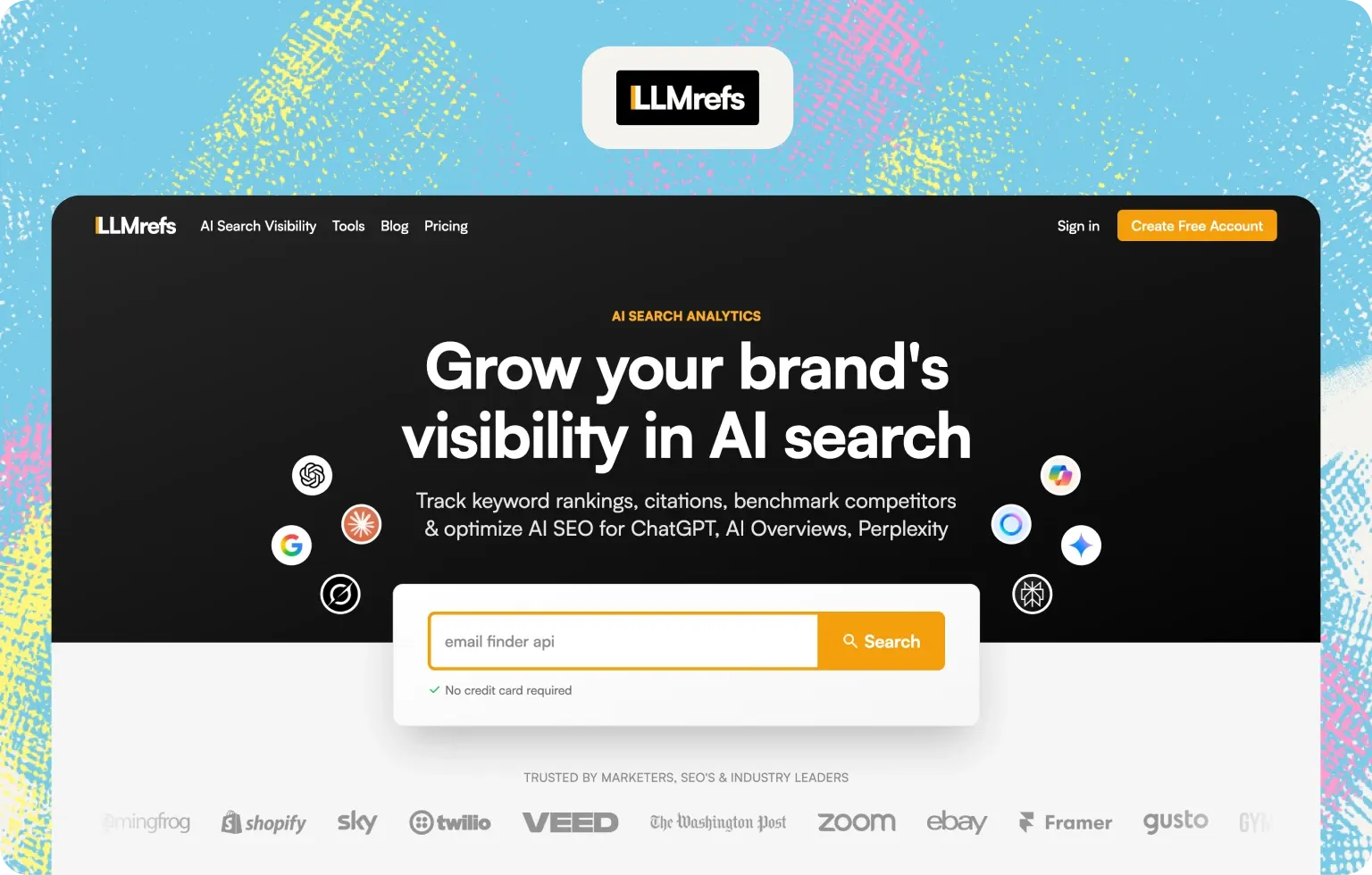
LLMrefs is a straightforward, budget-friendly AI visibility monitoring tool.
Best for
Small businesses, agencies, startups, and solo marketers who want an extremely simple and affordable way to monitor AI visibility, with a freemium option to try before committing.
What it does well
LLMrefs provides an easy entry point into AI search visibility management. Its free tier makes it low-risk to test, and the platform’s simplicity is especially helpful for teams just getting started with AEO.
Key features
Watch-outs
The weekly reporting updates (rather than daily or real-time) may not keep pace with fast-moving campaigns.
Pricing
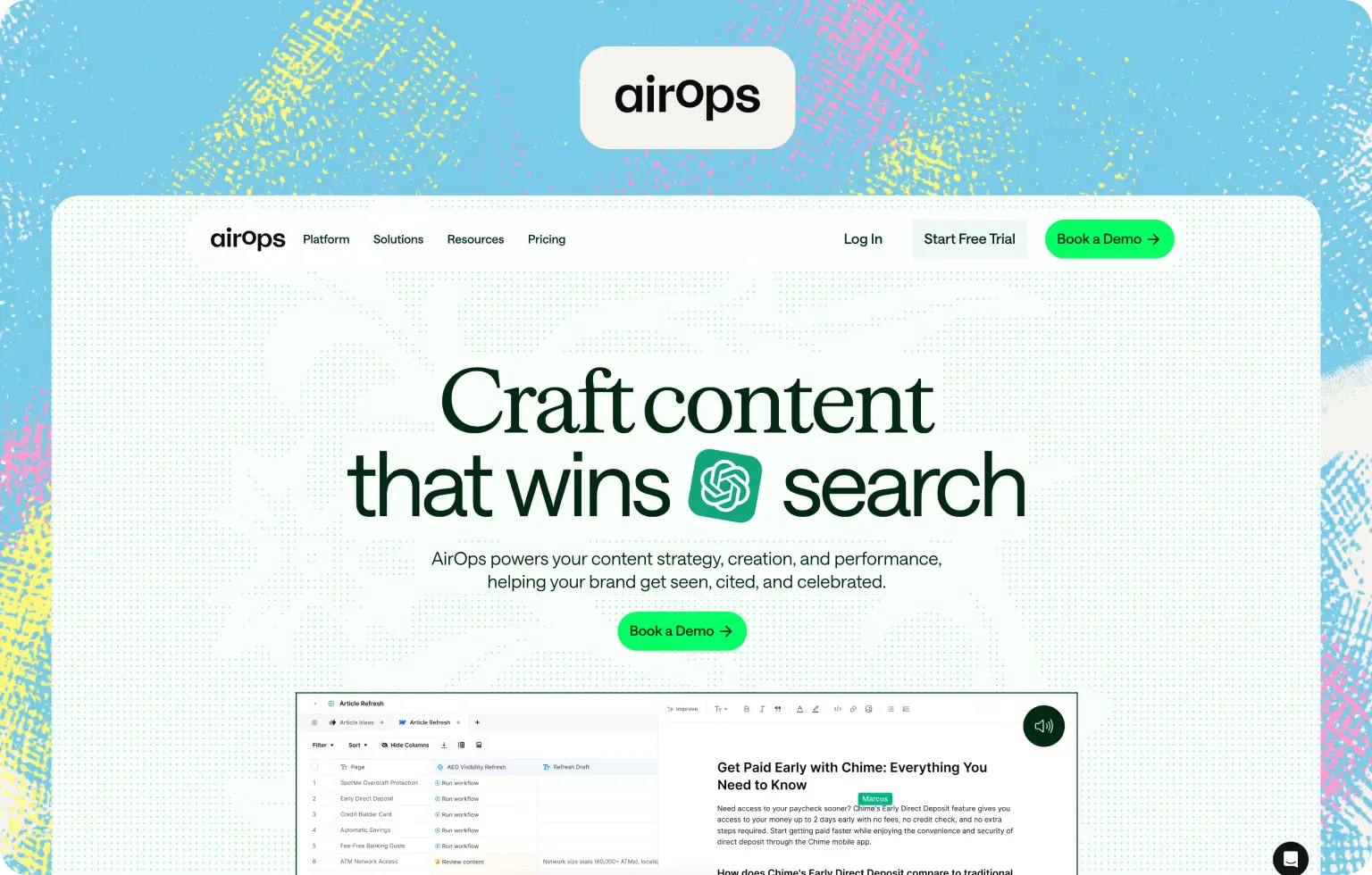
AirOps is a content operations platform that combines AI citation tracking with workflow automation to help teams move from visibility gaps to published content.
Best for
Growth teams and content marketers who want citation insights built into their content production workflow, not just a standalone monitoring dashboard.
What it does well
AirOps shows exactly which URLs and domains LLMs reference when answering tracked prompts, broken down at both the individual page level and the aggregated domain level. What separates it from monitoring-only tools is the workflow layer: citation gaps feed directly into content briefs and production workflows, so teams can act on what they find without switching tools. For teams already running content operations at scale, this closes the loop between 'where we're missing' and 'what we publish next.'
Key features
Watch-outs
AirOps is significantly more expensive than other tools in this category. It also comes with a learning curve that typically requires onboarding support to get full value from the platform.
Pricing
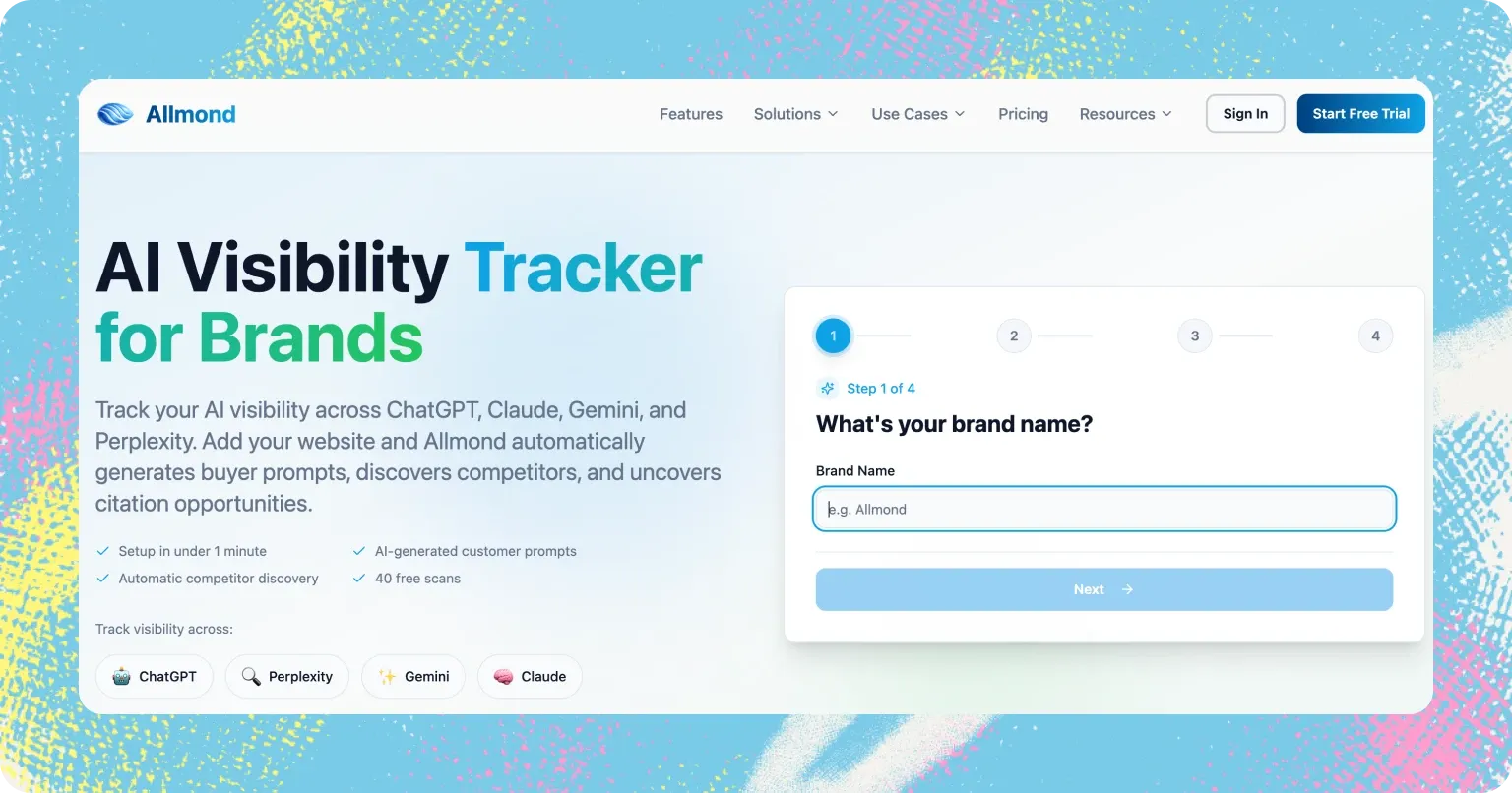
Allmond provides AI visibility tracking across major LLMs with competitor benchmarking, citation analysis, and agency-friendly reporting.
Best for
Agencies, SaaS companies, e-commerce brands, and startups that need affordable, scalable AI visibility monitoring across multiple brands, clients, and markets.
What it does well
Allmond tracks how brands appear in ChatGPT, Claude, Gemini, and Perplexity responses across 67+ countries. It combines visibility scoring, competitor intelligence, and citation analysis into a simple workflow that helps teams identify gaps and prioritize AI-focused marketing efforts.
Key features
Watch-outs
Focused primarily on AI visibility monitoring rather than broader SEO, analytics, or marketing automation. Weekly scans may not satisfy teams looking for daily or real-time tracking, and reporting is intentionally streamlined rather than highly customizable.
Pricing
When evaluating the best AI visibility tools, match your selection to team size and workflow needs. The top tools for monitoring company mentions in AI-generated search results range from action-oriented platforms to specialized trackers:
B2B brands face comparison prompts (like Salesforce vs HubSpot), integration queries (“does [tool] integrate with Slack”), and security/compliance questions that traditional SEO tools miss.
Omnia, Profound, and AthenaHQ excel here by tracking competitor displacement patterns — showing when prospects research your category but competitors get cited. For long sales cycles, continuous monitoring with instant alerts (Omnia, Scrunch AI) catches visibility shifts before they compound into lost pipeline. Focus on tools that track prompt-level performance across decision-stage queries, not just brand awareness metrics.
E-commerce needs product category dominance (like “best running shoes for flat feet”) and review-heavy citation tracking, since AI engines pull heavily from Reddit, YouTube reviews, and comparison sites. Pageradar specializes in affiliate link validation across 160+ countries, crucial for international merchants. Omnia and Promptwatch track merchant citations and “best [product] for [use case]” prompts, showing which review sites and forums drive AI recommendations. For product catalogs, prioritize tools (Hall AI, Trakkr) that monitor how AI surfaces specific SKUs versus generic category mentions.
AI search performance monitoring tools operate by running predefined prompt sets across multiple engines, capturing responses, and parsing them for brand mentions, citations, and recommendations. Each tool maintains prompt libraries (question variants you define), executes them daily or weekly from neutral geographic locations to eliminate personalization bias, then stores snapshots for trend analysis.
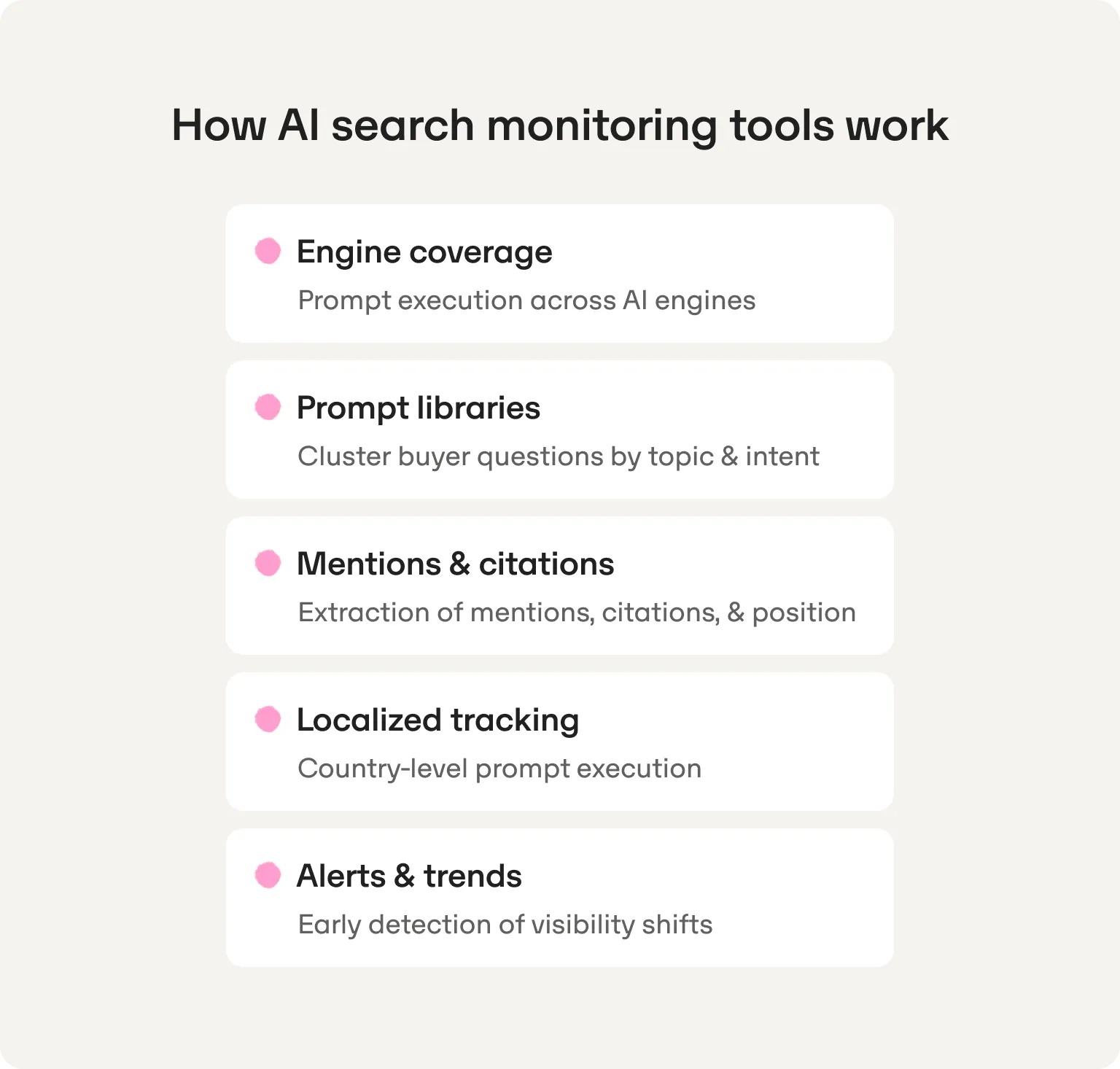
The platform identifies which sources AI engines cite (URLs, domains), extracts sentiment, and tracks your brand's position within generated answers. This enables you to see visibility shifts before they impact your pipeline.
The best AI search analytics tools for multi-platform monitoring cover both conversational LLM chat (ChatGPT, Claude, Gemini, Copilot) and integrated SERP surfaces (Google AI Overviews, AI Mode, Perplexity Sonar). Coverage varies significantly. Enterprise tools will track 8+ engines, while budget options focus on 3-4 core platforms.
Your engine mix determines whether you're catching buyer research (ChatGPT) or purchase intent (Google AI Mode). Multi-platform matters because prospects use different engines at different funnel stages.
Prompt libraries group related queries into topic clusters (like “CRM software,” “email marketing tools”).
Best-practice BOFU prompt patterns include:
Tools like Omnia auto-suggest prompts based on your site content and competitor analysis, so you discover high-volume queries you weren't tracking. Without discovery, you only monitor what you already think matters, and consequently miss the long-tail prompts driving conversions.
If you ask ChatGPT, “What are the best email-marketing platforms for startups? What are their pricing structures?” it gives you these results (for this one-time query).
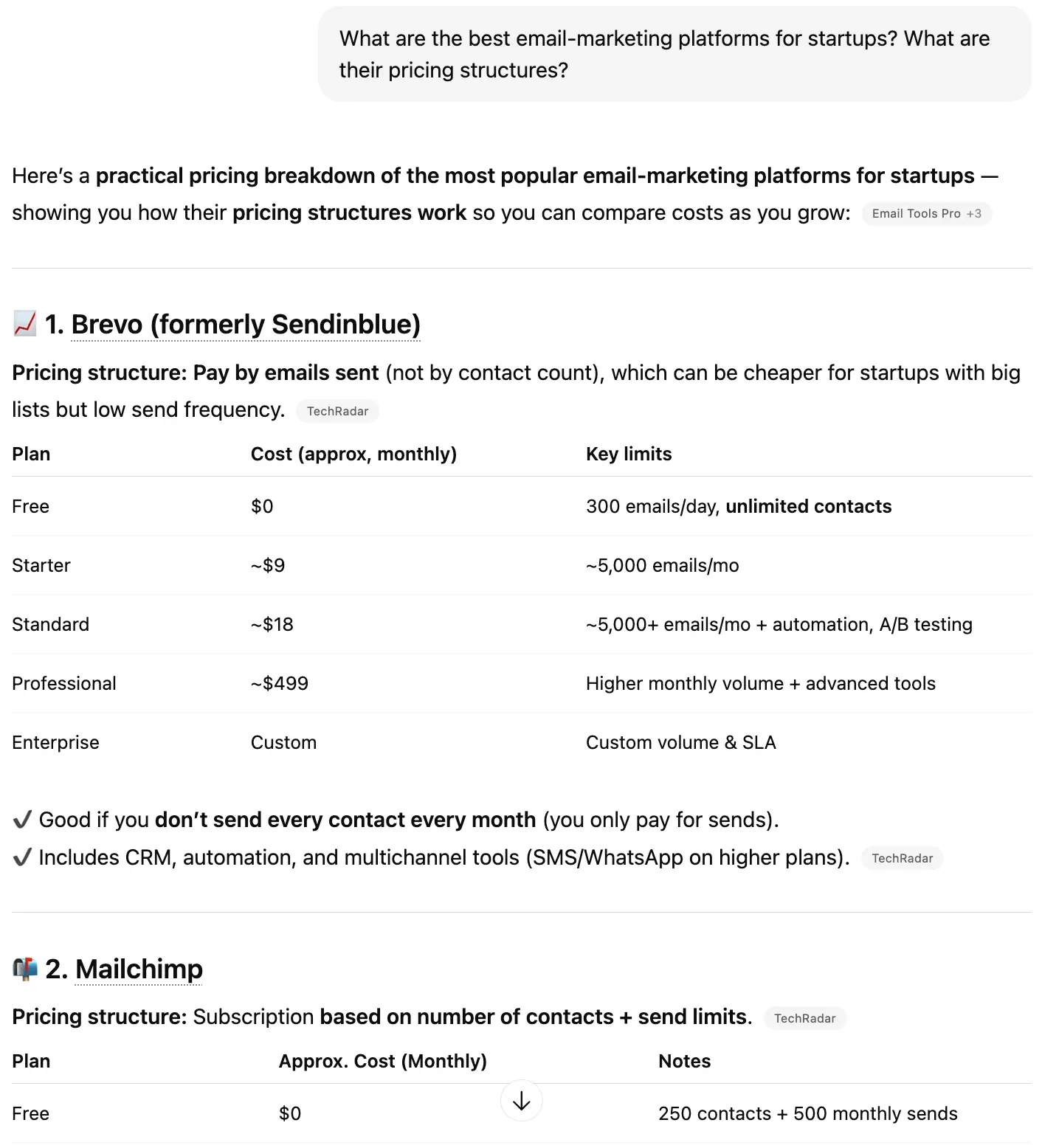
Track all four metrics. Mentions without citations are weaker. Position matters because users read top-of-answer content disproportionately. It’s also important as a brand to verify your information appears correctly when third-party sites earn citations.
In the example above, ChatGPT surfaced accurate pricing because TechRadar's review was current. But outdated third-party content can misrepresent your features or pricing, which damages trust even when you're recommended.
AI responses vary dramatically by country due to language, local SERP surfaces (Google AI Overviews availability), and regional source preferences. US results might cite Reddit while German results cite local forums.
“Neutral” checks mean running prompts from residential IPs in target markets without browser history, eliminating personalization. For B2B SaaS selling globally, you might dominate US ChatGPT responses but be invisible in UK Perplexity results. Localized tracking by country is the only way to confidently answer 'Do we show up?' for each market. Track where you sell, not just where you're headquartered.
“Real-time” should mean detecting changes within 24 hours, so daily monitoring with instant notifications when visibility shifts. Alert types include:
Tools for real-time monitoring AI search traffic growth send alerts before traffic declines show in analytics.
Use this checklist during demos to figure out how comprehensive the AI search monitoring tool is:
Most AI visibility tools are dashboards that don't ship content, change citations, or win prompts. Ask vendors to show you:
If the demo ends with “export to CSV and analyze,” it’s not a powerful search visibility tool.
Enterprise-focused AI visibility monitoring platforms prioritize compliance features scaleups don't need yet, like SOC 2 audits, custom contracts, and dedicated support teams.
For scaleups, focus on these essentials:
Skip features you won't use, such as multi-year data archives, on-premise deployment, and custom SLAs over 99%. Requirements grow with headcount, so start lightweight and upgrade when procurement complexity justifies enterprise features.
Whether you're using AI tracking tools for reputation management or tools for monitoring company mentions on AI-driven search engines for competitive intelligence, the goal is the same. You need to turn monitoring into shipped fixes. Use this checklist every Monday:
Review and prioritize:
Queue actions:
Set alerts so you react to competitor overtakes within 24 hours, not at next week's review. The goal is to turn monitoring into shipped fixes every week.
LLM brand monitoring tools discover underperforming topics in AI search results by comparing your high intent topic list (prompts that drive pipeline) against current visibility. A simple method is to export your tracked prompts, filter for zero mentions, then prioritize by business impact and ease.
High-impact and easy wins go first. If you have a comparison guide sitting at zero visibility, that's immediate action. Update it with citation-friendly formatting, then pitch it to review sites AI engines trust.
Low-impact topics stay in the backlog until capacity opens. The output isn't a report. It's a brief prescribing what to build, which URL structure to use, and which five sources to target for placement. Monitor weekly, act within 48 hours, measure visibility shifts by next cycle.
If you're a scaleup with a 1-2 person marketing team, you don't have time for enterprise procurement cycles or three-month roadmaps. You need to know what broke yesterday and what to ship this week. Most AI monitoring tools assume you have bandwidth to translate dashboards into action. But when you're competing against established brands with 10x your budget, interpretation time is lost time. By the time a visibility drop shows up in weekly reports, competitors have already captured the prompts you were winning.
Omnia was built for teams who can't afford to guess. Where enterprise tools deliver data and expect you to figure out next steps, Omnia prescribes exactly what to build. This includes which content type, which URL structure, which five sites to pitch for placement. That specificity matters when your marketing team is also handling product launches, outreach, and ad campaigns. You don't have cycles to reverse-engineer citation patterns yourself. Omnia does it for you and hands you a brief.
The speed advantage compounds. Continuous monitoring with instant competitor alerts means you catch visibility shifts the day they happen, not three weeks later when traffic has already declined. INDYA moved from #11 to #2 in tracked AI prompts within seven days because Omnia flagged the opportunity immediately. For scaleups where every prompt win translates to pipeline growth, that response time is the difference between capturing a category and watching competitors take it.
Don't wait until declining traffic reveals the gap, book an Omnia demo to see your current AI visibility. Or claim your 14-day free trial on the Growth plan and start tracking competitor citations today.
Omnia offers a 14-day free trial on the Growth plan.
No credit card required. See exactly where your brand shows up (or doesn't) across AI engines, then let the platform's recommendations guide your next move.

Yes, several AI search visibility tools offer free tiers or trials. But free plans typically limit prompt volume, engine coverage, or refresh frequency. They're sufficient for testing whether the tool fits your workflow before committing to paid plans, but not for scaling your workflow.
The best AI search monitoring tools for SEO professionals 2025 and beyond combine traditional rank tracking with ai powered search engines monitoring. Omnia and Profound excel at AI-specific visibility tracking with actionable intelligence, while Nightwatch bridges traditional SEO and AI monitoring, letting you correlate blue-link rankings with ChatGPT citations in unified dashboards. For AI seo tool integration, prioritize platforms offering GSC and GA4 connections so you can attribute traffic sources and measure whether AI visibility translates to conversions.
Brand mentions count how often your brand appears in AI referral traffic, while citations track the source URLs those engines reference. A mention without a citation won't drive traffic — you're acknowledged but not linked. Citations matter more because they show which of your pages (or competitors' pages) AI-powered search engines like ChatGPT, Google AI Overviews, and Perplexity pull information from when constructing recommendations.
AI search systems like AI Mode and ChatGPT do regenerate answers, but tools run multiple checks from neutral locations to stabilize data. Run the same prompt against the same model twice, minutes apart, and only about 40% of the cited domains repeat (a Jaccard similarity of 0.40). Model size moves it too: a small model cites around 4 sources per answer, a large one closer to 9, so even the number of citation slots is not constant. That So a brand missing from one answer tells you nothing. Read the frequency across many prompts and several days instead of the result of a single run (method and data).
Yes, citation intelligence reveals which URLs and domains AI answer engines reference when recommending competitors. Advanced platforms perform sentiment analysis on how brands are portrayed and identify the structural patterns that make competitor content citation-worthy. This turns competitive analysis into a search optimization roadmap. If rivals win because they own comparison guides on high-authority review sites, you know to create similar assets and pitch for placement.
For now, yes — most AI SEO tool platforms complement rather than replace traditional SEO suites. AI search visibility tracking handles ChatGPT, Perplexity, and Google AI Overviews, while Semrush/Ahrefs cover blue-link rankings, backlinks, and technical audits. If your traffic mix is 70% traditional search and 30% AI answers, you need both. However, if you're a pure content play with minimal technical SEO needs, an action-oriented AI tool like Omnia might be sufficient standalone.
Written By
 AndreiHead of GrowthatOmniaJoseGrowthatOmnia
 Miguel FernándezCTO & FounderatOmnia
 JoseGrowthatOmnia
 The Omnia Team
 The Omnia Team
No credit card required · Free for 14 days · See your AI visibility within 3 minutes