Alternatives
Ahrefs vs BrightEdge vs Omnia: Key Differences for 2026

 JoseGrowthatOmniaJoseGrowthatOmnia
TL;DR
Promptwatch is a solid entry point for AI visibility tracking. But growth teams hit its limits fast: prompt caps that scale steeply in price and a content layer that generates articles without diagnosing why you're losing specific prompts. This guide compares 11 alternatives on the criteria that close those gaps and then provides a 15-minute vendor checklist.
Promptwatch alternatives aren't all competing on the same thing. Some are AI search monitoring tools. Other tools perform AI content generation. A few are offering the full stack.
This guide helps you figure out which is which (and which is right for you) by ranking 11 options on the criteria that actually make an impact for teams using prompts as a distribution channel. We look at URL-level citation intelligence, geo-by-country tracking, prompt-to-outcome mapping, and a built-in action layer that produces execution tasks, not dashboards.

Promptwatch is a capable platform with tons of useful features. The 10+ AI systems coverage, Reddit citation intelligence, ChatGPT Shopping tracker, and Agent Analytics are features you won't find bundled together anywhere else at this price point. For teams just getting started with AI search visibility, the $99 entry plan and free explore tier make it one of the more accessible options in the category. But there are three specific points where growth teams consistently run out of runway.
The Essential plan starts at 50 prompts and 5 generated articles per month. That’s reasonable, until you're mapping queries across product lines, competitors, and two or three markets. At that point, 50 runs out fast.
The jump to Professional ($249/mo) is a 2.5× price increase for 3× the volume. Scale further and Business ($579/mo) caps you at 350 prompts across 5 websites and 30 articles per month. That's the ceiling before enterprise custom pricing kicks in, which throttles the action layer at exactly the moment your team is ready to move.
The Content Agents feature is a real differentiator withAI-generated articles grounded in 880M+ citations is a credible foundation. But content generation and content strategy are different problems. Promptwatch will produce an article, but it won't tell you which third-party domains are driving a competitor's citations in Perplexity, which existing pages on your site to fix first, or what the ranked execution backlog should look like this week.
The action layer is a production tool. What most prompt-optimizing teams need first is a diagnosis — a ranked list of specific gaps, the domains to target for placements, and the page-level changes that actually shift citation outcomes.
Classic rank tracking tells you where you sit on a numbered list. Generative engine optimization is a different problem. AI search engines don't rank results like traditional search engines. Instead, they generate answers. Whether your brand appears in one depends on which sources the model learned to trust: the domains cited, the pages scraped, the Reddit threads indexed, the comparison articles that showed up during training. That means the instrumentation you need is fundamentally different too.
A keyword rank tracker tells you about position. A good AEO tool tells you about citation patterns. It also needs to handle the volatility inherent in AI-generated answers. Omnia data shows ChatGPT changes its top-cited domain 92% of the time across repeated queries, which means a weekly snapshot can look completely different from the baseline you set seven days ago. Tools built for deterministic rankings were not designed for this environment. The alternatives below were.
Use this table to shortlist 3 tools based on your must-haves, then read the detailed reviews below to make your final call.
| Tool | Best for | Engines | Pricing starts at | Action layer |
|---|---|---|---|---|
| Omnia | Lean teams that need monitoring + execution | 4 | €79/mo |  |
| Ziptie.dev | Developer teams wanting API-first access | 3 | $69/mo |  |
| Scrunch AI | Enterprise teams focused on AI crawlability | 8 | $250/mo | |
| Peec AI | Startups building a prompt set from scratch | 7 | $95/mo | |
| AirOps | Content teams closing gaps from signal to CMS | 4 | $200/mo | |
| Semrush | Existing Semrush users adding AI search visibility | 6 | $99/mo (add-on) | |
| Ahrefs | Ahrefs users wanting real-user prompt data | 7 | $398/mo (add-on) | |
| Indexly | Teams wanting SEO + AI visibility combined | 6 | $99/mo | |
| Goodie AI | Enterprise e-commerce with AEO needs | 11 | Not published | |
Each tool below is reviewed against the criteria that matter for teams actively managing AI search visibility: engine coverage, citation intelligence, geo tracking, and whether there's a real action layer or just a dashboard.
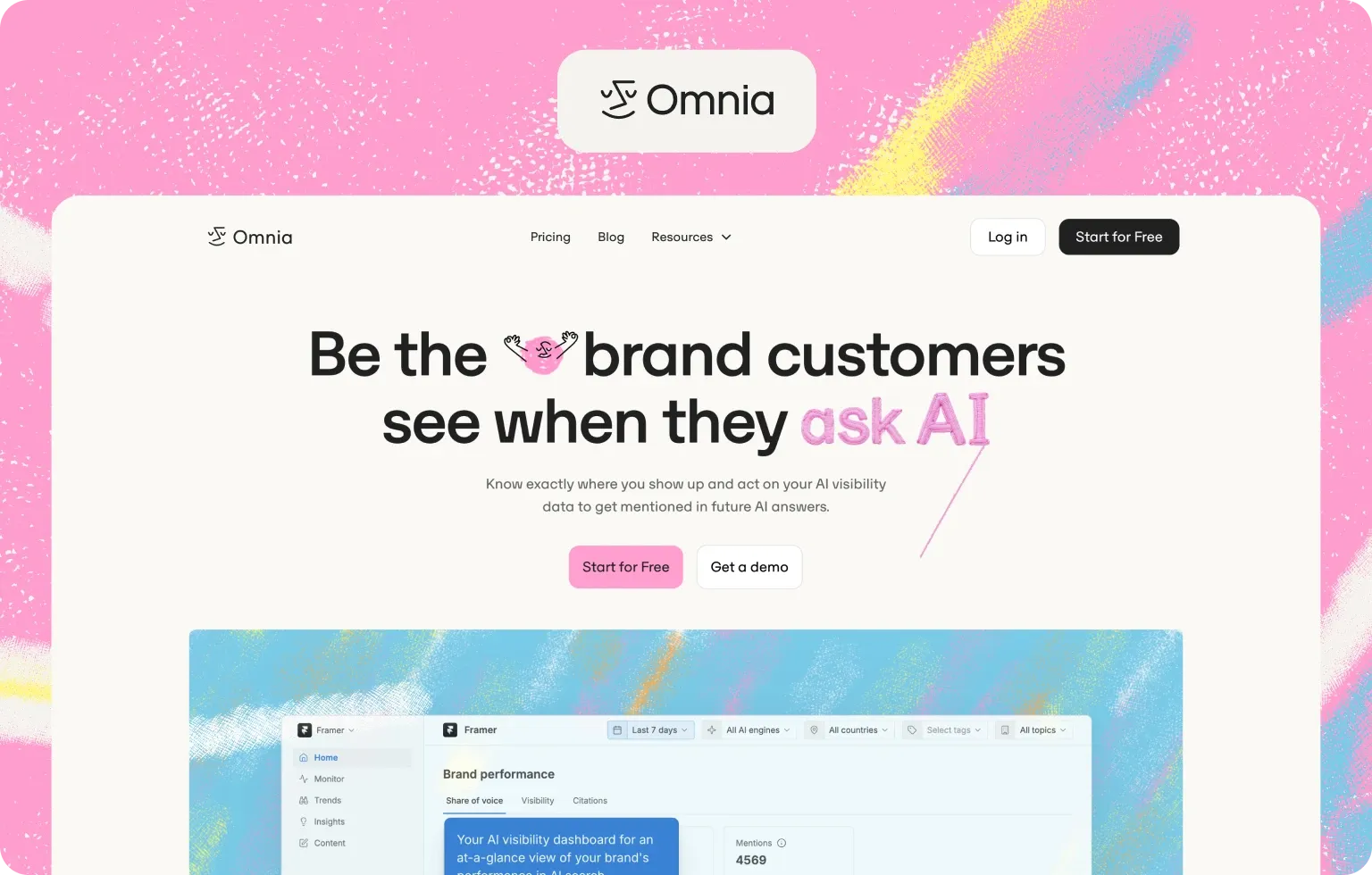
Omnia is a purpose-built AI visibility platform that goes further than most Promptwatch competitors do when tracking which prompts mention your brand. It maps each prompt to the citation sources driving outcomes, then turns that data into a content and outreach execution plan your team can run this week. The platform combines continuous multi-engine monitoring, country-level prompt execution via real browsers, and a built-in action layer that produces specific tasks rather than generic recommendations.
The result is a system that closes the loop between what you're measuring and what you're actually doing about it. Teams can get a baseline read on their AI visibility before committing to a plan using Omnia's free AI Visibility Checker.
Best for
Founders and heads of marketing at early-stage and growth companies who are actively evaluating AEO platforms and need more than a monitoring dashboard.
Key features
Watch-outs
Omnia covers four major AI search platforms including ChatGPT, Perplexity, Google AI Overviews, and Google AI Mode. These capture the majority of AI search activity for most brands. If your workflow specifically requires tracking Reddit citation patterns or ChatGPT Shopping visibility (areas where Promptwatch is genuinely differentiated), you'll want to supplement with another tool.
When to choose Omnia over Promptwatch
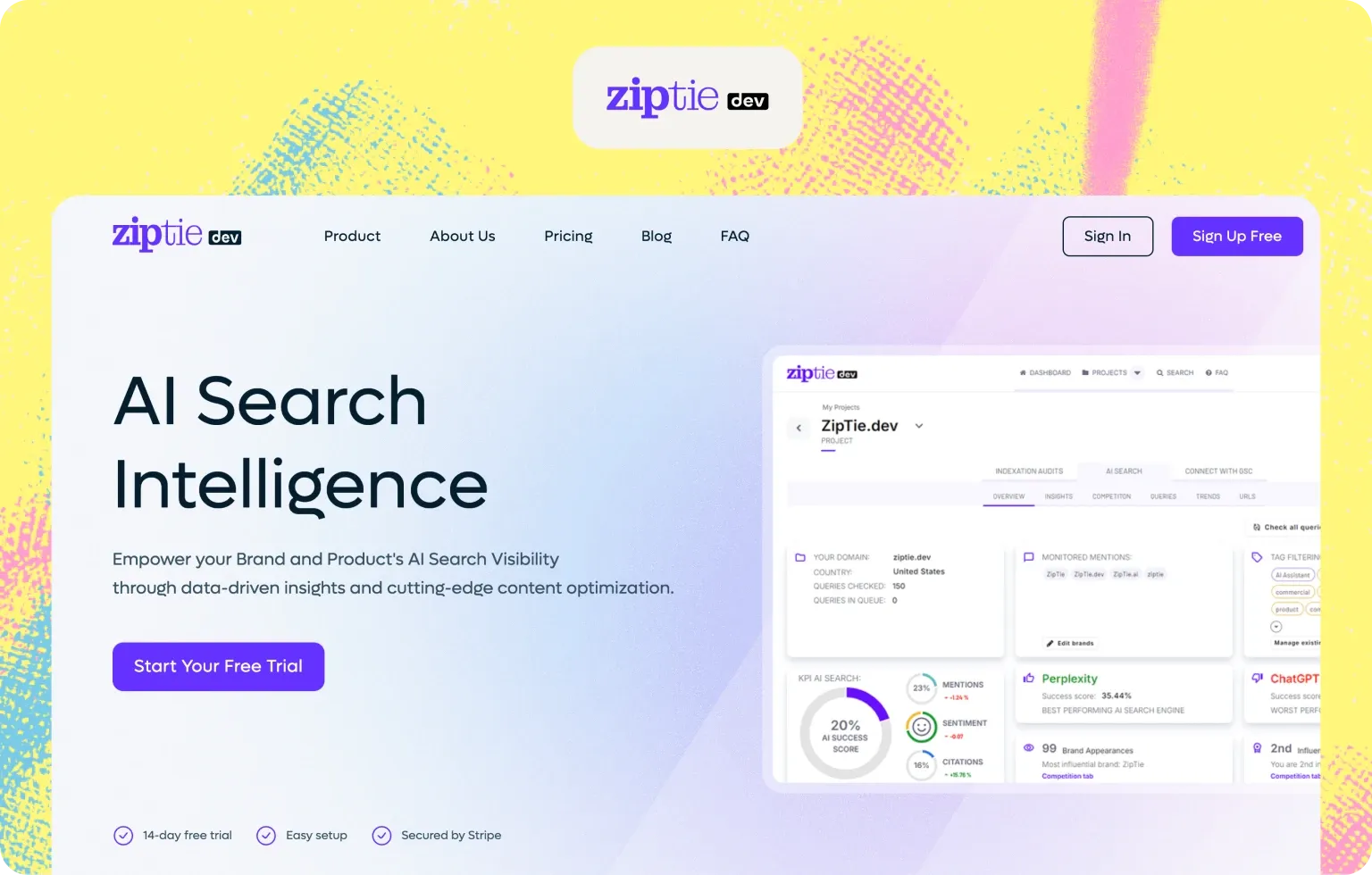
Ziptie is an API-first AI visibility tool built for teams that want to pull citation and share-of-voice data into their own dashboards, workflows, or internal tooling rather than live inside a monitoring interface. It covers 3 engines across 14 countries with built-in prompt suggestions and a GSC integration.
Best for
Mid-market teams and developer-led startups that want to own their visibility data pipeline — pulling citation frequency, sentiment, and share of voice into existing BI setups without being constrained by a vendor's dashboard.
Key features
Watch-outs
Ziptie covers only 3 engines, which is a meaningful gap if your brand's AI presence matters across Gemini, Claude, or Grok. The desktop-only tracking model also limits its usefulness for brands with significant mobile AI search audiences. ZipTie also lacks an action layer.
When to choose Ziptie over Promptwatch
Pricing
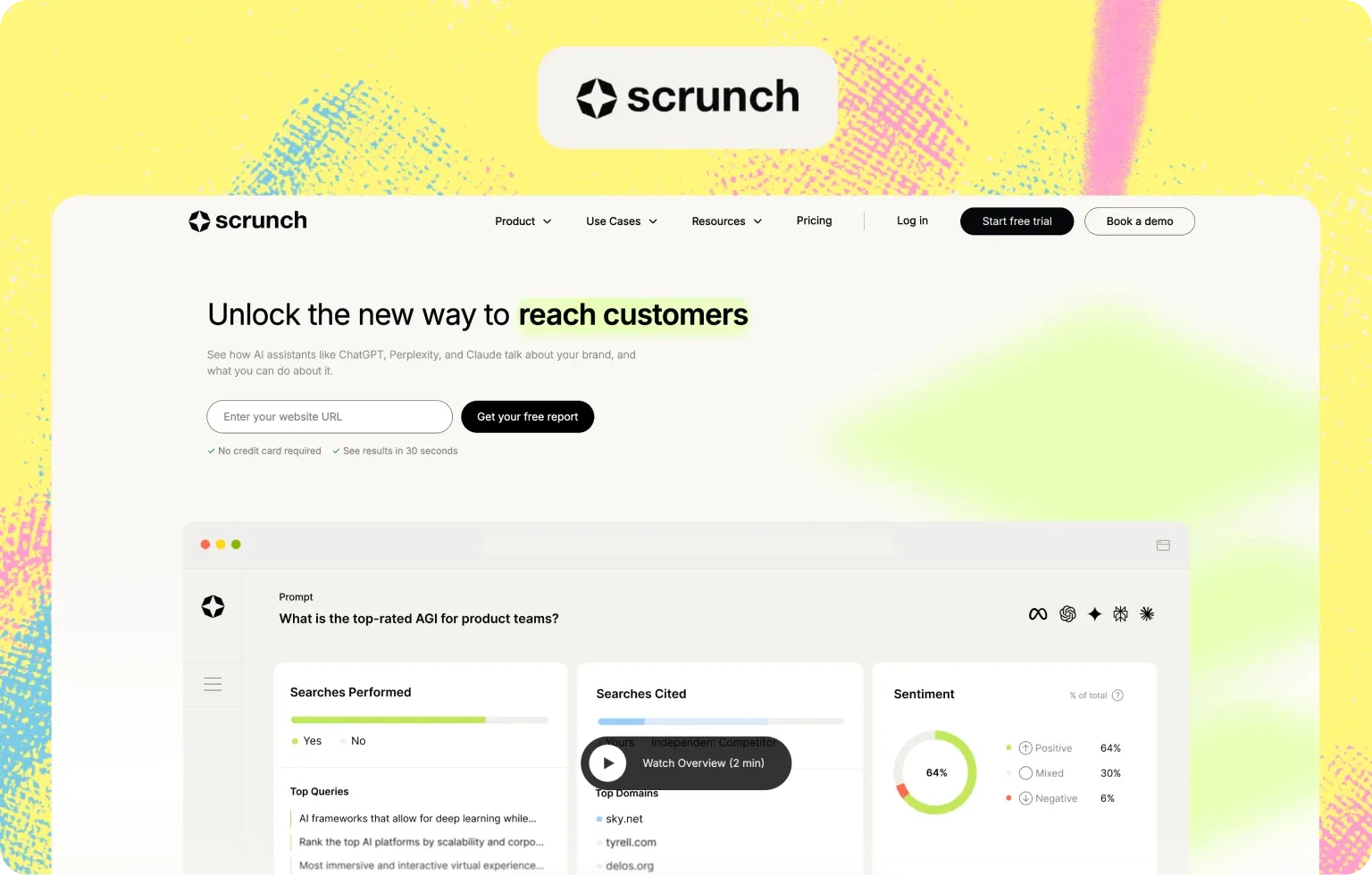
Scrunch AI is an AI visibility platform for agencies and enterprises that tackles the infrastructure layer. It helps teams build a machine-readable content layer for AI crawlers while simultaneously monitoring brand presence across 8 engines. Its real-time bot crawling feed shows exactly which AI agents are navigating your site and how they're interacting with your content at any given moment.
Best for
Startups that have scaled to the point where compliance requirements, team size, and multi-region competitive intelligence justify the $250/mo entry price.
Key features
Watch-outs
Scrunch is an alternative with no action layer. It doesn't generate content briefs or produce a prioritized execution backlog. The platform is built to improve how your content infrastructure is crawled and cited, but it doesn’t tell you what to write next. Startups in early growth mode that need hands-on execution guidance may want to consider Scrunch AI alternatives.
When to choose Scrunch AI over Promptwatch
Pricing
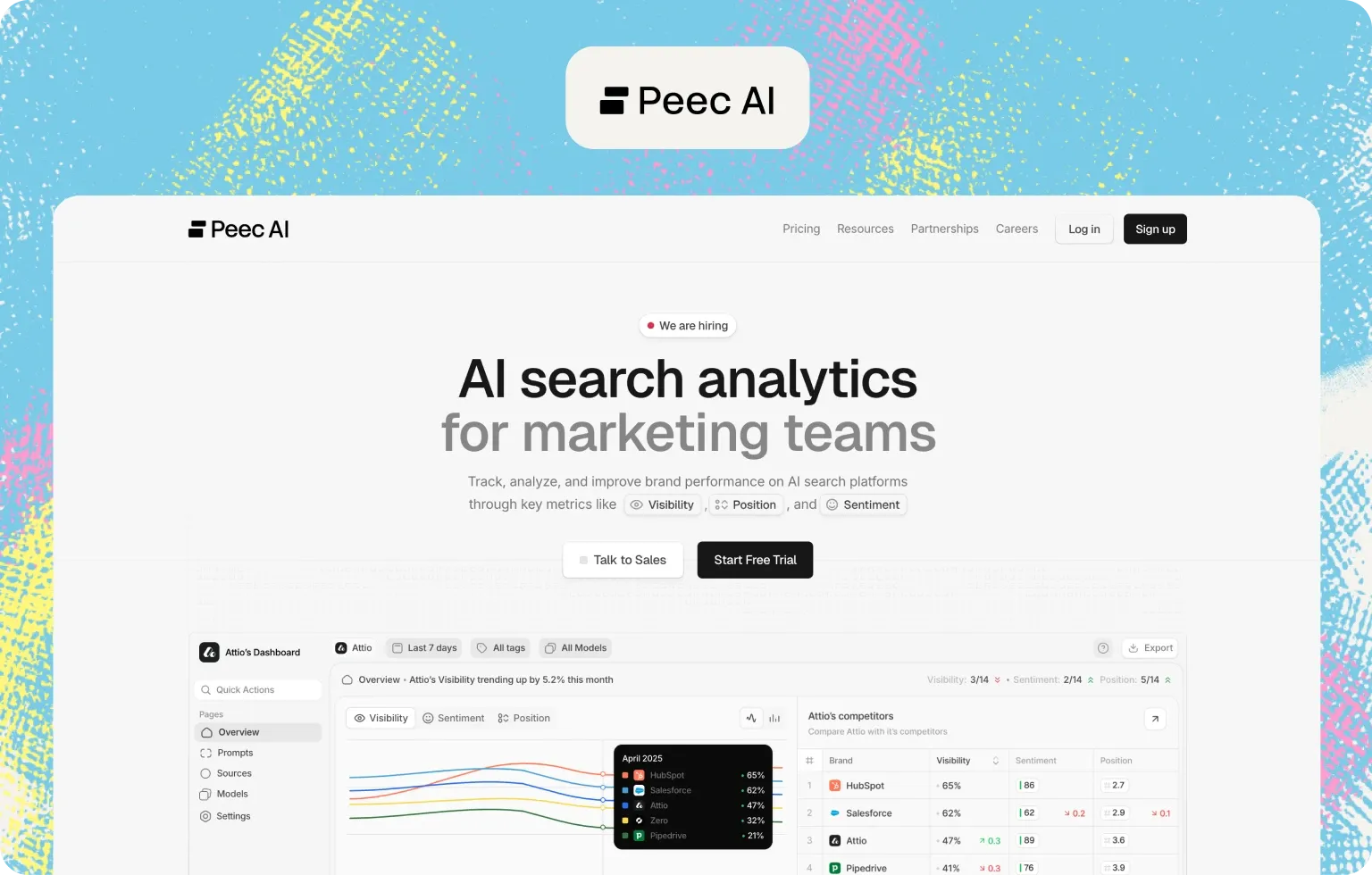
Peec AI is an AI visibility tracker covering 7 engines with a feature that's particularly useful for teams early in their AEO journey: suggested prompts auto-generated from your existing website content. Instead of asking your team to build a prompt library from scratch, Peec AI reads your site and surfaces candidate prompts based on what you already cover. This saves hours of setup work before you've run a single query.
Best for
Startup growth teams and agencies in the early stages of AI visibility work who want a daily-tracking foundation with URL-level citations, unlimited seats, and no per-language pricing penalties.
Key features
Watch-outs
Peec AI has no action layer. The suggested prompts feature reduces setup time, but once you're tracking, the gap between seeing which prompts you're losing and knowing what to create or fix remains yours to bridge with your own content workflow. If prompt-to-outcome execution is the goal, you'll need to look at Peec AI alternatives.
When to choose Peec AI over Promptwatch
Pricing
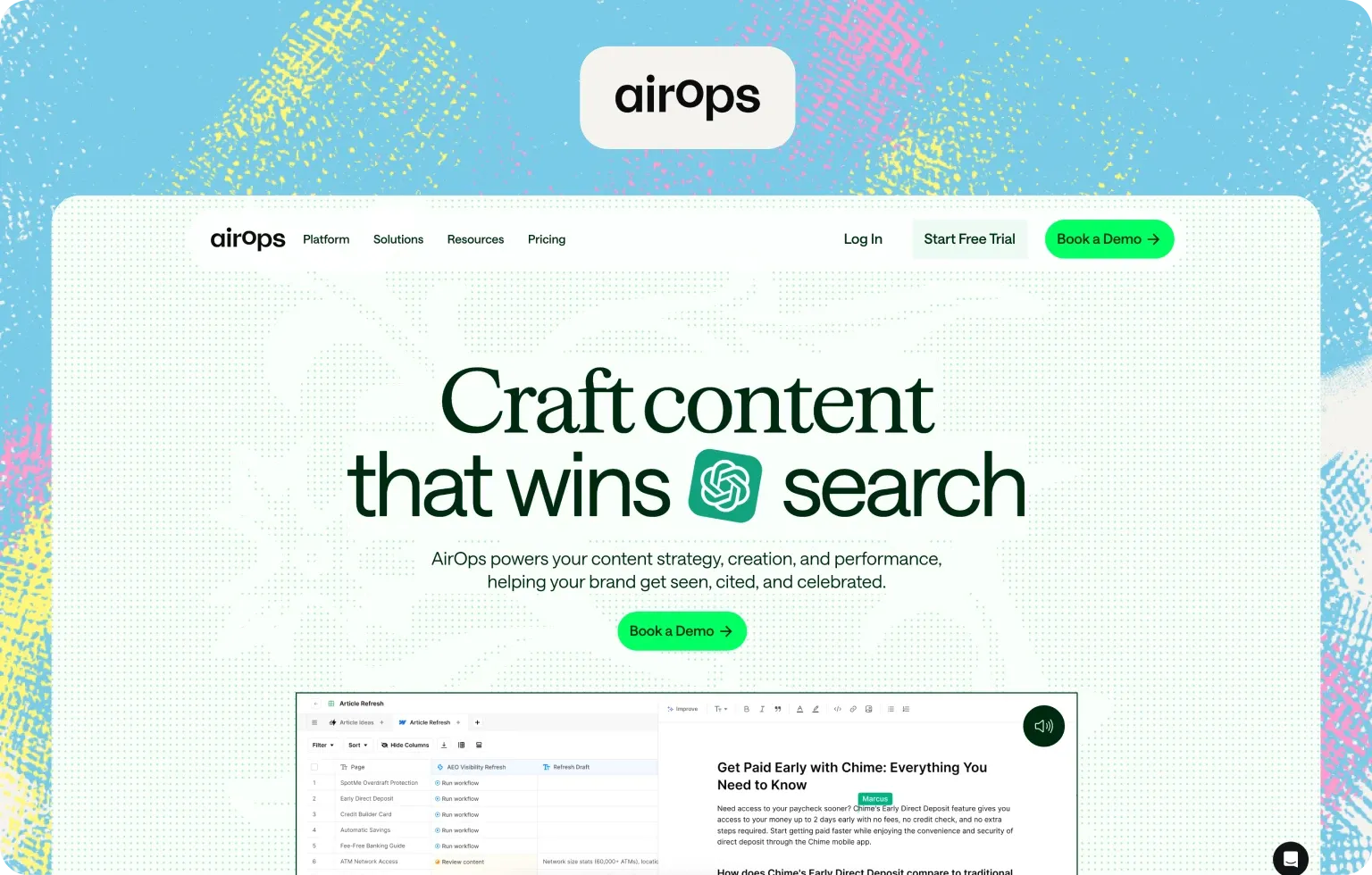
AirOps is the most complete prompt-to-published-content pipeline in this category. Its Page360 analytics layer unifies AI citation data, Google Search Console, and GA4 in a single view, and its workflow automation takes you from citation gap identification through brief generation and drafting to CMS publishing. ALl of this occurs without leaving the platform.
Best for
Startup and scaleup content teams that have moved past the monitoring phase and need a system that converts AI visibility signals directly into published content.
Key features
Watch-outs
AirOps covers 4 engines and 1 region on standard plans. This is a real limitation if your brand operates across multiple markets. The pipeline is tightly integrated around content production, so if your primary goal is multi-country monitoring or citation diagnostics without an active publishing workflow, the platform may feel overwhelming.
When to choose AirOps over Promptwatch
Pricing
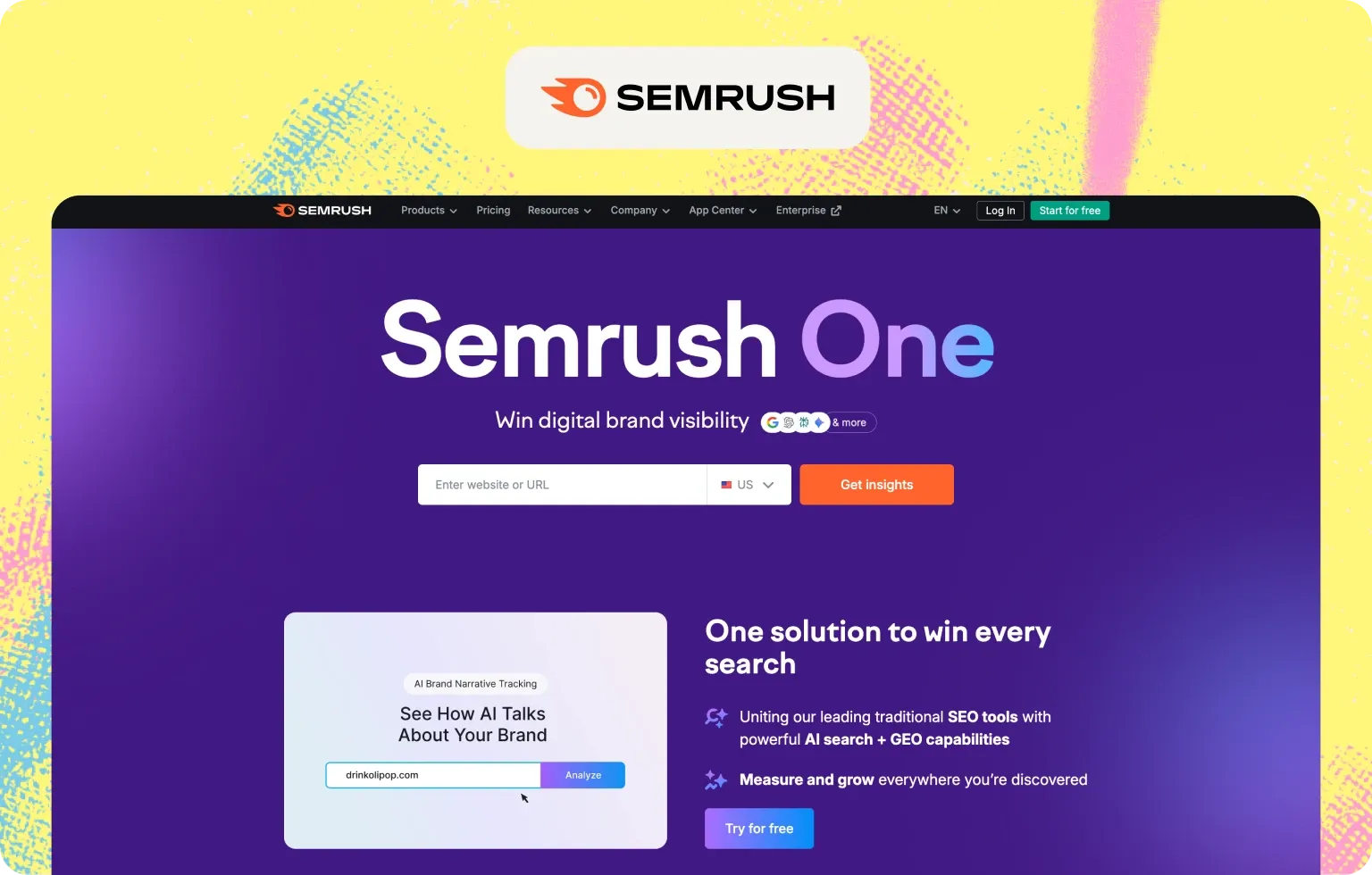
Semrush’s AI Visibility Toolkit is built for teams already using the platform for keyword research, backlinks, and site audits. It layers in prompt tracking, citation tracking at both domain and URL level, and brand performance reports. All of this is inside the SEO interface they’re already working in every day.
Best for
Startup teams already subscribed to Semrush who want to add AI visibility monitoring without onboarding a separate platform.
Key features
Watch-outs
The AI Visibility Toolkit is an add-on, meaning existing Semrush subscribers pay an additional $99/mo per user to access it. If you're not already a Semrush customer, the bundled Semrush One plans start at $199/mo, which is a significant commitment before validating whether the AI visibility features meet your needs.
When to choose Semrush over Promptwatch
Pricing
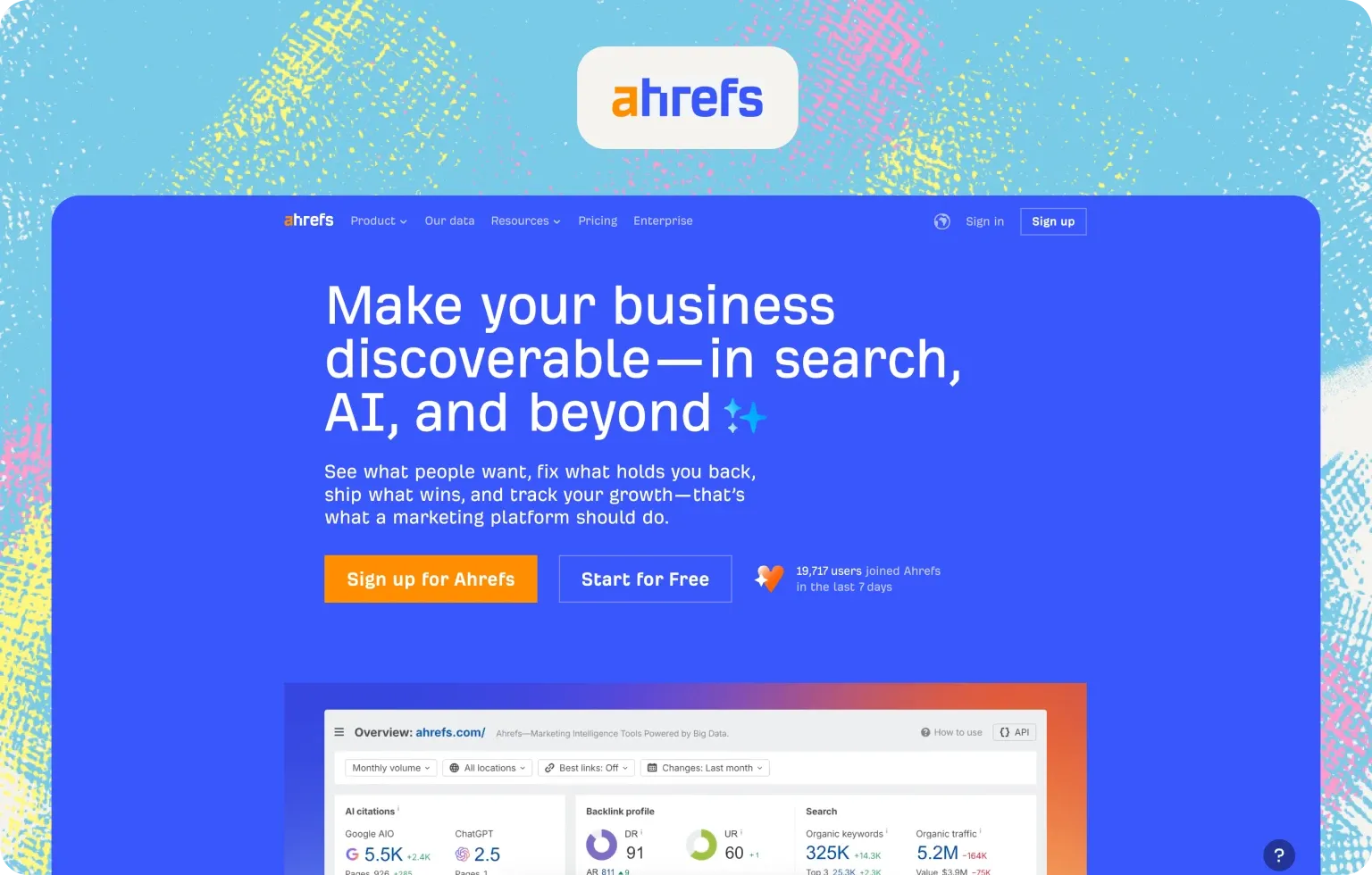
Ahrefs’ Brand Radar is built on a database of 254M+ monthly prompts sourced from real user searches, not synthetic queries. For teams already living in Ahrefs, this gives AI visibility data that connects directly to actual buyer behavior and their existing backlink and organic search analysis.
Best for
Growth and SEO teams already invested in the Ahrefs ecosystem who want AI visibility data
Key features
Watch-outs
The per-engine pricing model makes full coverage expensive quickly — AI indexes start at $398/mo for select platforms or $699/mo for all engines, on top of a base Ahrefs plan from around $129/mo. There’s also no action layer. Ahrefs surfaces citation data but doesn't generate content briefs or execution backlogs.
When to choose Ahrefs over Promptwatch
Pricing
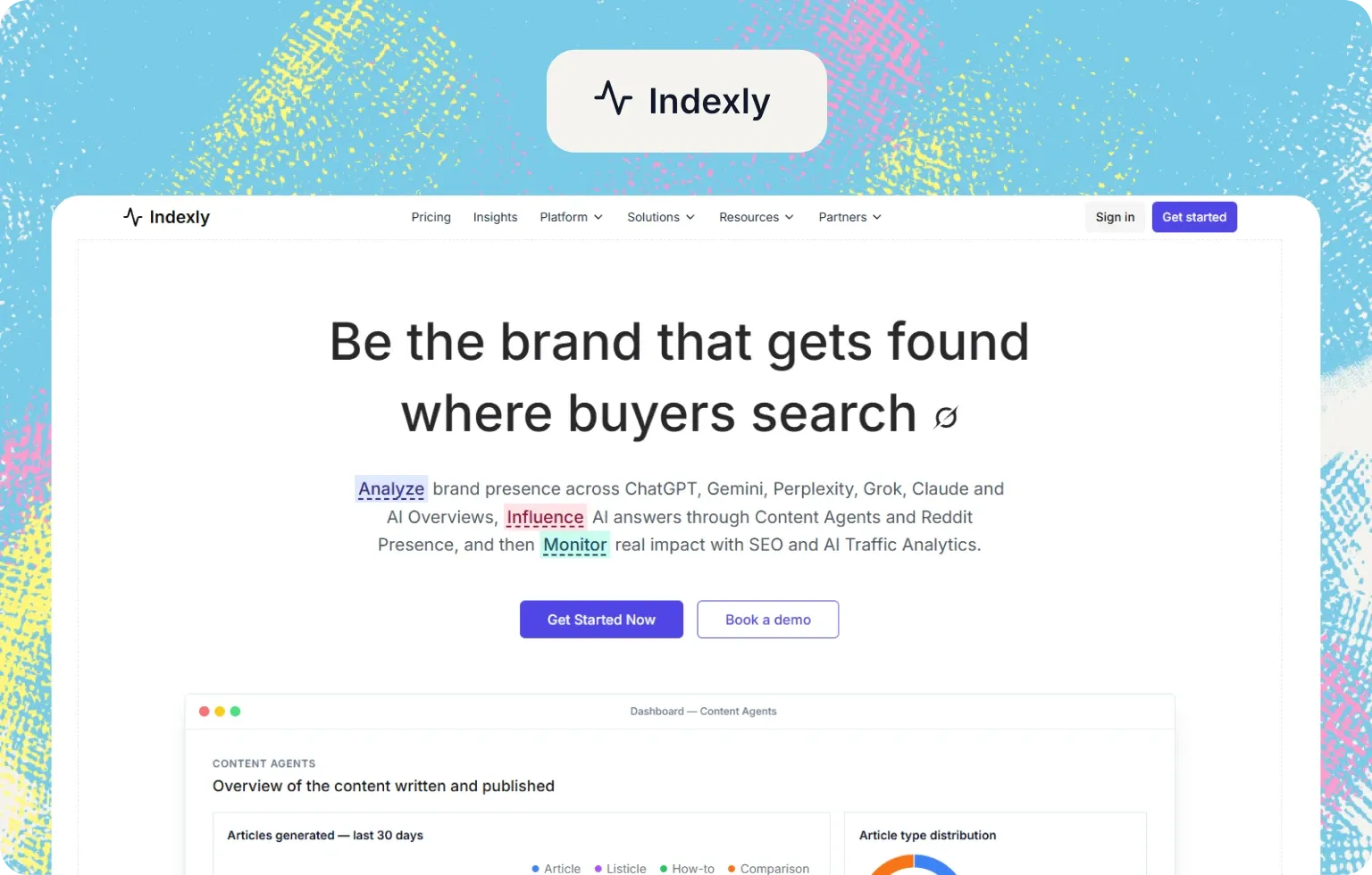
Indexly combines traditional SEO and AI visibility, tracking brand presence across 6 AI engines alongside a full traditional SEO suite. Its higher tiers include a content generation layer with an Auto-Pilot Engine that can draft and publish articles directly to your CMS.
Best for
Startup and scaleup teams that want traditional SEO monitoring and AI visibility in one platform, and are ready to use automated content generation to close citation gaps.
Key features
Watch-outs
Indexly's Starter plan comes with only 50 prompts and it monitors only one ChatGPT. This is the same prompt cap as Promptwatch's Essential plan. Multi-engine coverage starts at $299/mo, for 3 models and 100 prompts. The Auto-Pilot Content Engine is useful for teams that need content volume, but it produces output at scale rather than a citation-intelligence-led diagnosis of which existing pages to fix and which third-party domains to target first.
When to choose Indexly over Promptwatch
Pricing
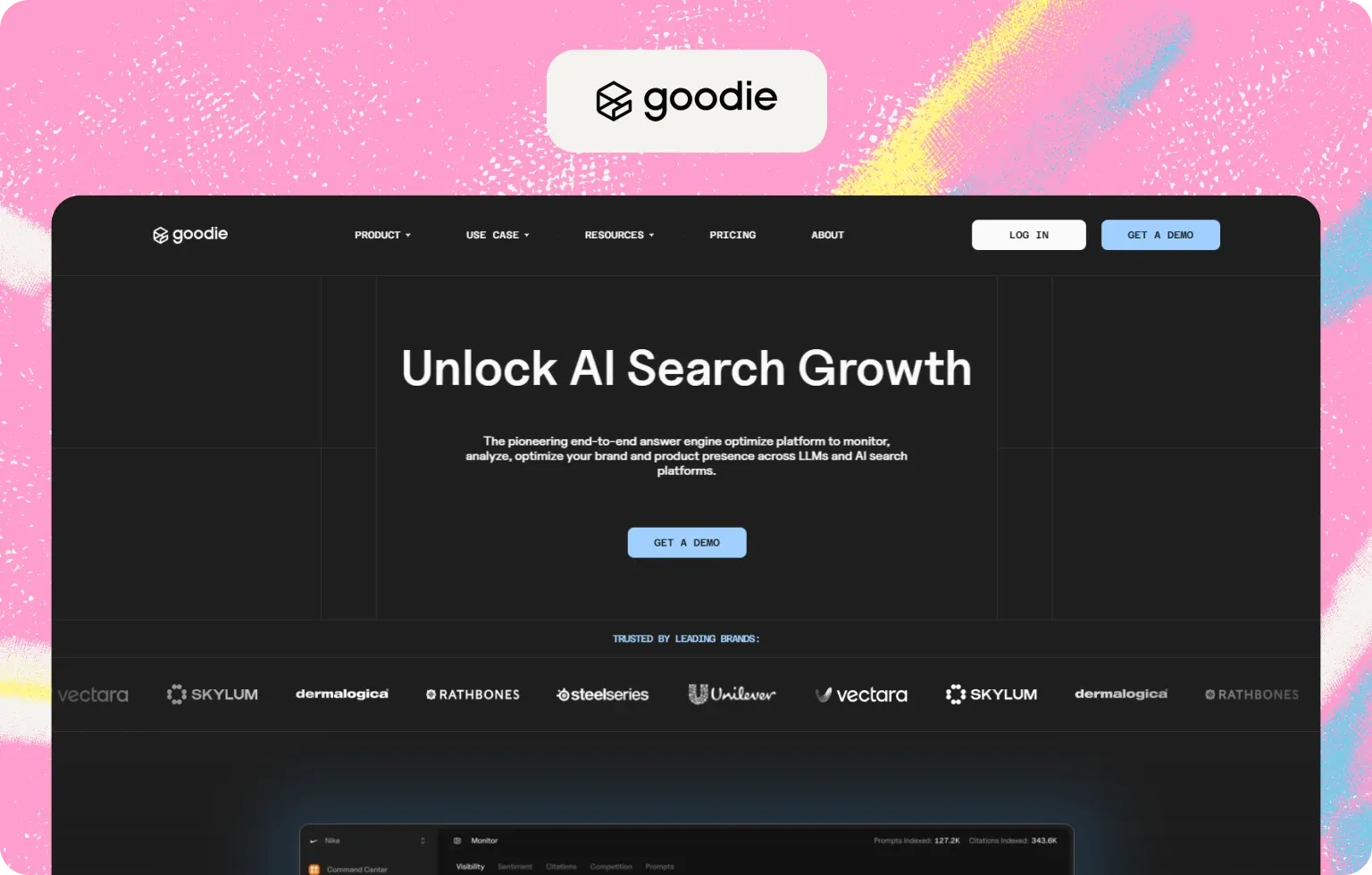
Goodie AI is an enterprise-grade Answer Engine Optimization platform built around a full lifecycle covering everything from prompt intelligence and visibility monitoring through to a prioritized optimization playbook, AI-generated content, and revenue attribution. Its Agentic Commerce Suite is one of the few features in this category specifically built for brands that need product visibility in ChatGPT Shopping, Amazon Rufus, and other AI-powered commerce surfaces.
Best for
Enterprise brands in retail, SaaS, fintech, travel, or healthcare that need an end-to-end AEO platform handling thousands of pages, SKUs, and prompts.
Key features
Watch-outs
Goodie AI is enterprise-architected. There's no published pricing, no self-serve trial, and interested teams need to book a demo to understand costs. For a startup growth marketer using prompts as a distribution lever, the procurement process and likely price point make it a poor fit unless the organization has scaled to the point where enterprise tooling is justified.
When to choose Goodie AI over Promptwatch
Pricing
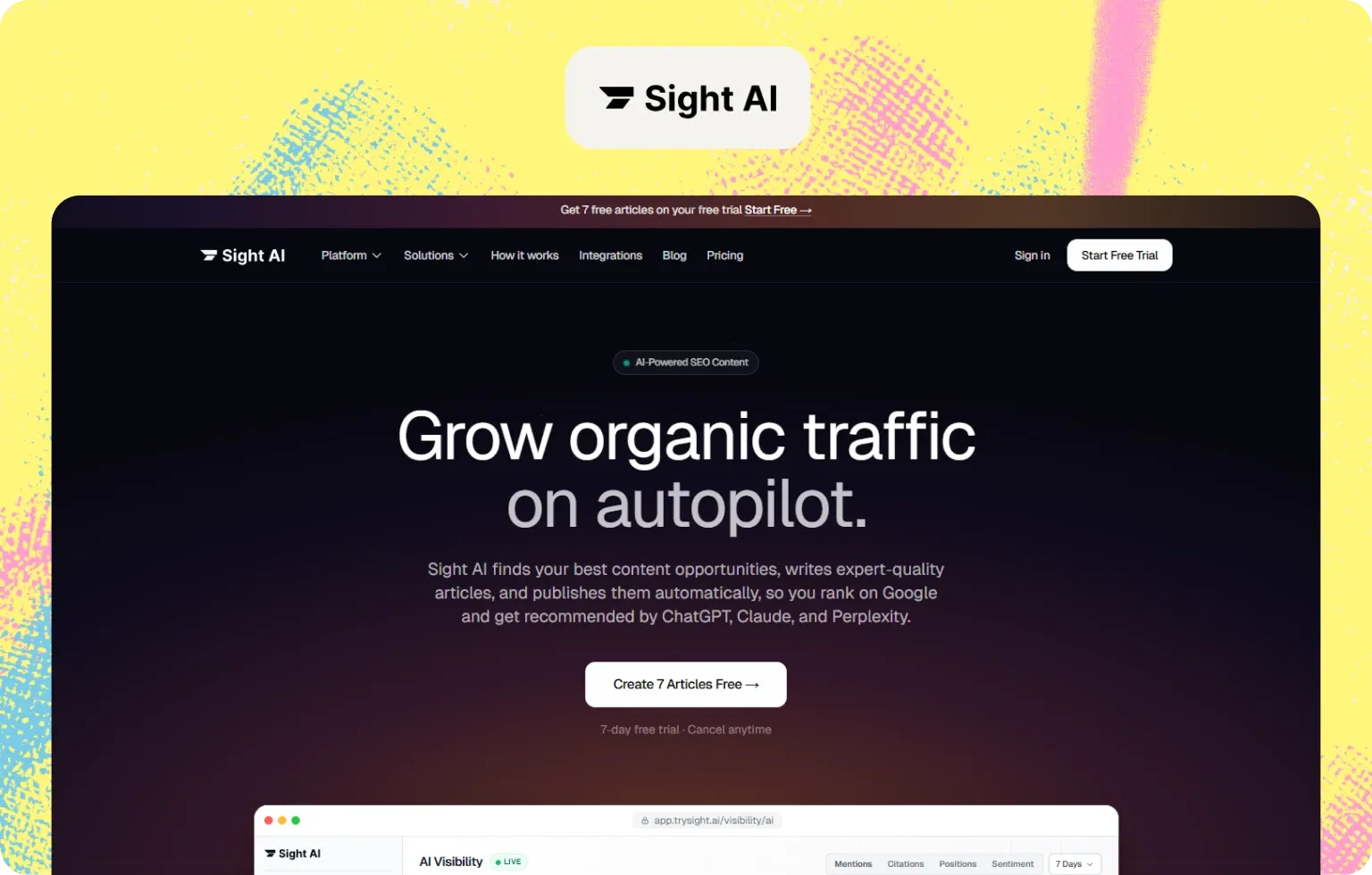
Sight AI is a content automation platform that approaches AI visibility from the production side. It discovers content gaps, writes SEO/GEO-optimized articles using specialized AI agents, and publishes them directly to your CMS with automatic IndexNow submissions to Google and Bing. It tracks 6 AI search engines.
Best for
Startup and growth teams that have identified content gaps in their AI visibility but don't have a dedicated content team to close them.
Key features
Watch-outs
Sight AI is primarily a content production platform with AI visibility data layered in. It’s not an AI visibility monitoring platform with a content layer. There's no geographical-level tracking orURL-level citation intelligence showing why a competitor wins a specific prompt.
When to choose Sight AI over Promptwatch
Pricing
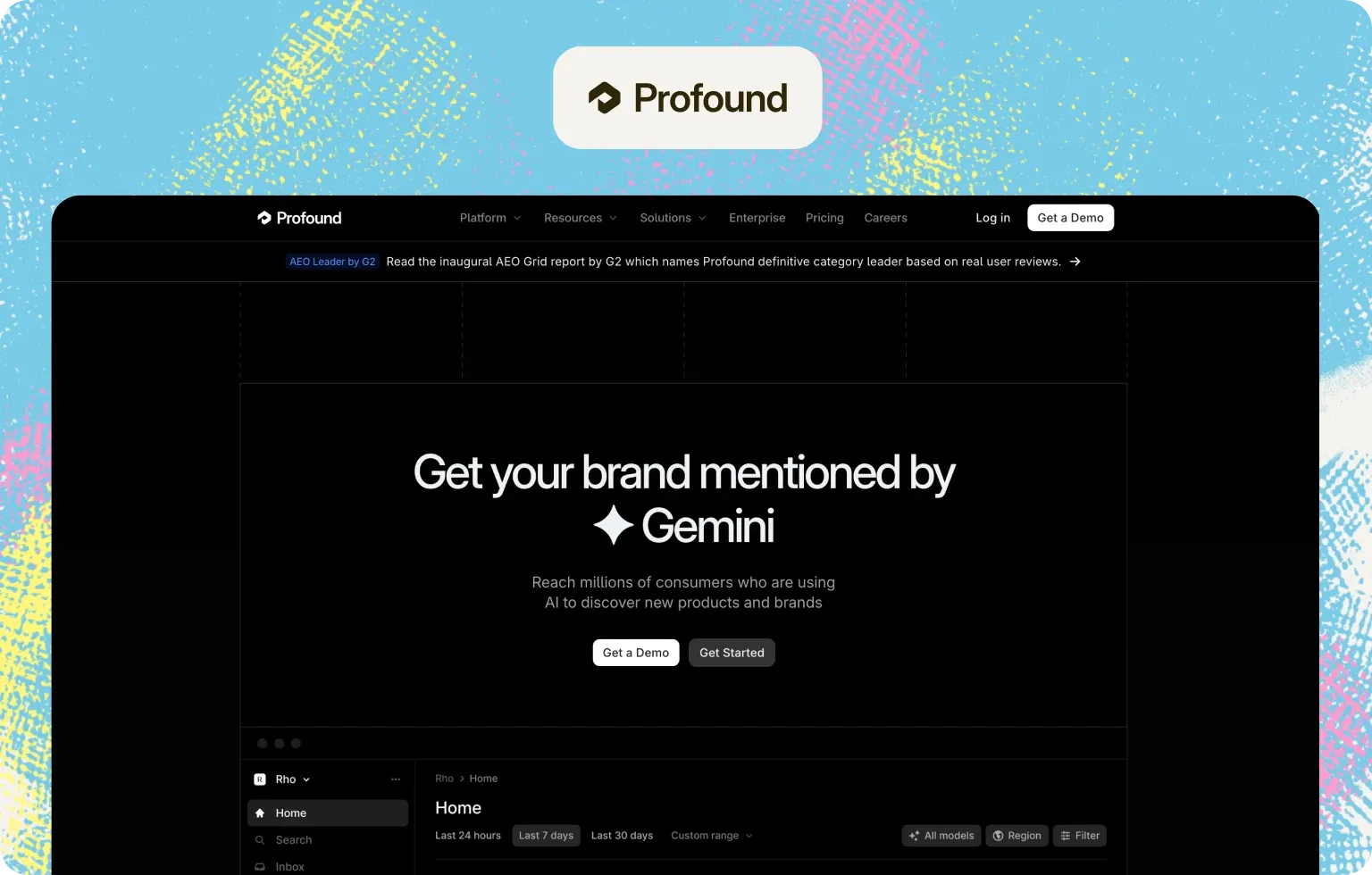
Profound is an enterprise-grade AI visibility tool built around one of the most distinctive data assets in the category. Its Conversation Explorer covers 400M+ real user conversations. Where most tools track your brand across a set of manually chosen prompts, Profound surfaces the prompts users are actually asking.
Best for
Enterprise growth and SEO teams that need to understand real AI search demand at scale — specifically those that want to see which prompts are growing in volume, how ChatGPT Shopping is influencing purchase-stage visibility.
Key features
Watch-outs
Profound's geo coverage is limited to 1 country and 1 language on self-serve plans. The Starter plan provides access to the platform's monitoring features, but the Conversation Explorer depth and white-glove support that justify the price are more accessible at the Growth tier ($399/mo) and above. Lean startup teams that need weekly execution output rather than market-research-grade analytics may want to consider Profound alternatives.
When to choose Profound over Promptwatch
Pricing
Before you commit, run any shortlisted tool through these checks in a single session. This is designed for a growth marketer or AI lead who needs to validate fit quickly without a lengthy procurement process.
Enter your top 10 prompts and note which ones the tool already suggests unprompted
Run a competitor prompt and check what citation data comes back
Check inclusion rate or equivalent metric
Test geo by running the same prompt in two different country settings
Look for an action output, not just a data view
Check the refresh cadence against your content publishing pace
Verify prompt cap math at your target scale
Ask about coverage and per-geo pricing
The gap most monitoring tools leave open isn't measurement — it's what comes after. Omnia is built for teams that need to know which prompt clusters are driving outcomes and exactly what to build next to win the ones they're losing.
Every tracked prompt is connected to the citation sources driving competitors’ recommendations. That means Monday morning starts with a ranked list of specific gaps, the third-party domains to target for placements, and the page-level fixes that shift citation outcomes. There’s not a vague visibility score for you to spend all day interpreting.
For multi-country teams, prompts run via real browsers in actual geographic locations, so the data reflects what users in each market actually see. And because monitoring is continuous rather than weekly, you can measure the impact of a content change within days, not at the next refresh cycle.
Book a demo to see Omnia with your own brand data, or start your 14-day free trial on the Growth plan and run your first prompt set today.
Omnia offers a 14-day free trial on the Growth plan.
No credit card required. See exactly where your brand shows up (or doesn't) across AI engines, then let the platform's recommendations guide your next move.

AI content monitoring tracks what AI tools generate when given a topic. It's primarily a brand safety and output quality concern. AI search visibility monitoring tracks whether and how your brand appears in AI answers across major AI platforms like ChatGPT, Perplexity, and Google AI Overviews when real users ask questions relevant to your category. For marketing teams focused on AEO, search visibility monitoring is the more actionable discipline — it tells you where you stand relative to multiple brands and gives you the raw data to improve it.
The answer is in citation-level data. AI search results draw from specific sources, and a tool with URL-level citation tracking will show you exactly which of those sources are driving competitor AI mentions. Once you know which content is being cited, you can identify the pattern, replicate it, target the same third-party domains for placements, or build content that competes directly.
The three metrics that give you the clearest picture are inclusion rate (how often your brand appears across your full prompt set), answer share (your visibility relative to named competitors), and citation depth (which specific URLs AI engines are pulling from). Visibility tracking based on mention count alone is too blunt — it can't tell you whether you're winning high-intent prompts or low-value ones, or why a competitor is being recommended instead of you.
A few tools offer free tiers, and several others offer free trials ranging from 7 to 14 days. Most serious AI tracking tools sit in the $29–$99/mo range at the entry level, which is modest enough that the data you'd use to justify AI visibility investments typically pays for the tool within the first month. If you want to test visibility across multiple AI models before committing, Omnia's free AI Visibility Checker gives you a baseline without a signup.
The strongest alternatives to Promptwatch for answer engine optimization are tools that go beyond AI responses and surface the citation sources driving visibility insights. For lean teams, Omnia is the top pick. It combines multi-engine monitoring across major AI search platforms with URL-level citation intelligence and a built-in action layer. If budget is the primary constraint, Peec AI offers solid monitoring across multiple AI models at a lower entry price, though without the execution layer.
Written By
 JoseGrowthatOmniaJoseGrowthatOmnia
 AndreiHead of GrowthatOmnia
 AndreiHead of GrowthatOmnia
 AndreiHead of GrowthatOmnia
 AndreiHead of GrowthatOmnia
No credit card required · Free for 14 days · See your AI visibility within 3 minutes