
LLMs
How To Run a GEO Audit (Step by Step) in 2026

 AndreiHead of GrowthatOmniaAndreiHead of GrowthatOmnia
TL;DR
Finding the best LLM SEO checking tools in 2026 comes down to four things. How many AI models does the platform cover, does it track citations by URL and domain (not just brand mentions), does it support geographic-specific testing, and does it produce actions or just dashboards? Our top pick is Omnia for VC-backed founders and Heads of Growth who need to move from citation gap to shipped content weekly. If you only shortlist three tools, start with Omnia, Peec AI, and Otterly AI.
Your next customer probably won’t find you through a blue link. Organic Google search traffic dropped 33% globally from November 2024 to November 2025, and news executives surveyed by the Reuters Institute expect search referrals to fall 43% within three years.
The buyers who remain on Google increasingly see an AI summary instead of 10 organic results. You need to know whether your brand appears in those answers, which sources get cited instead of you, and what to change. The 10 best LLM SEO checking tools ranked below measure all three.
LLM SEO checking tools are software platforms that measure how often your brand, products, or content appear in AI-generated answers. They track mentions and citations across models and prompt sets, often by country. This enables you to see your performance compared to competitors. For founders under pressure to prove AI search traction, these tools answer the question that traditional rank trackers can’t. Are we visible where buyers are actually asking?
If you’re evaluating the best LLM SEO checking software, the category breaks down into two tiers:
Traditional SEO Checker tools and Google SEO Checker platforms were built for a time where buyers clicked blue links. An SEO audit tool crawls your site for technical issues. A rank tracker reports your position on a SERP. None of that tells you whether ChatGPT recommended your product this morning, or which sources Perplexity cited instead of you.
The best tools for LLM SEO operate on different signals:
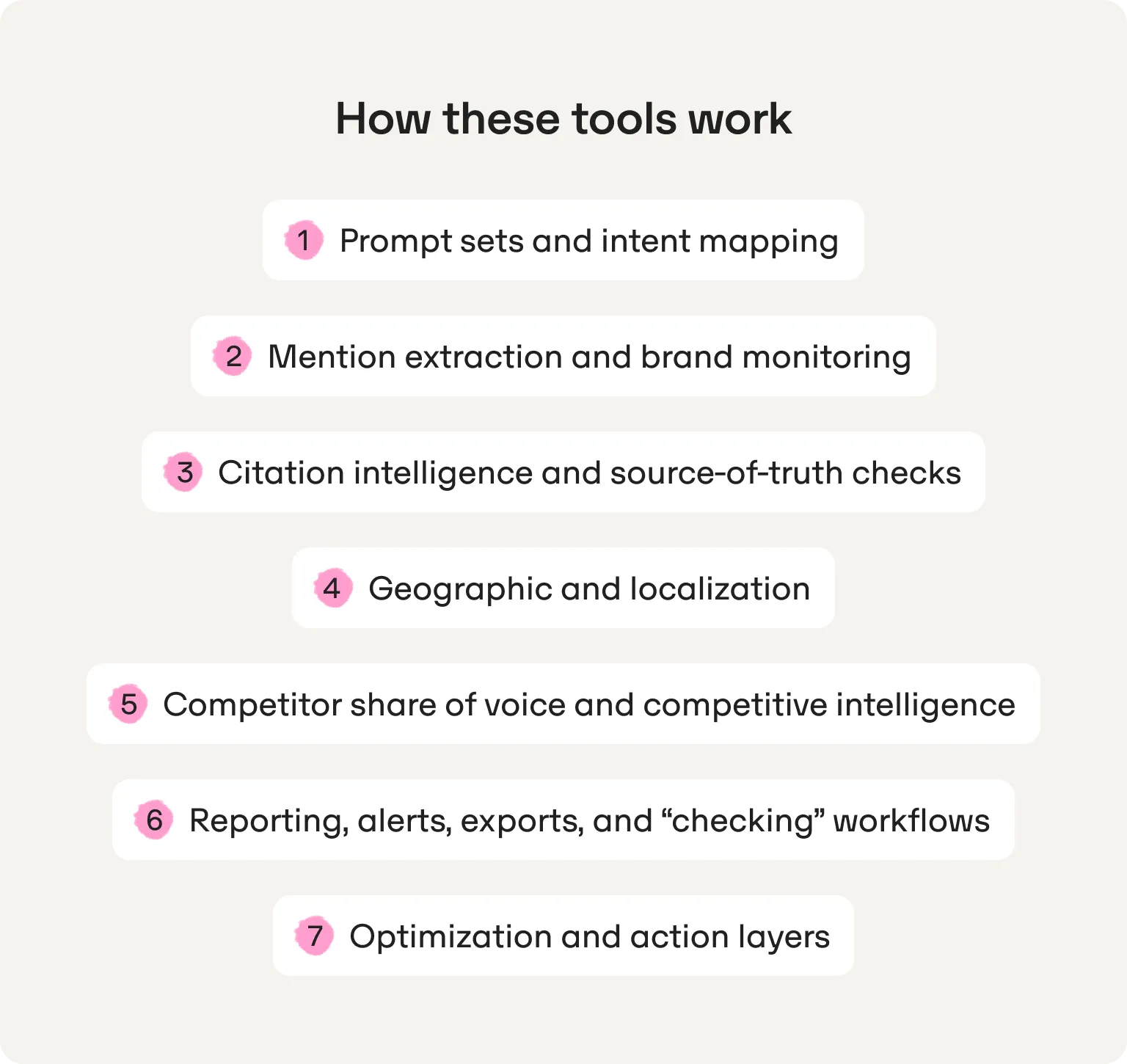
Every AI visibility tool runs a set of prompts across AI search engines, captures the answers, extracts brand mentions and citation URLs, normalizes AI search results over time, and reports trends. The main thing to understand is that LLM outputs are probabilistic.
The same prompt can produce different answers on different days, in different countries, or across different models. That variability is the nature of conversational AI.
Prompts are the atomic unit of LLM visibility tracking. Tools cluster them by intent: commercial ("best X software"), comparative ("X vs Y"), and informational ("how does X work").
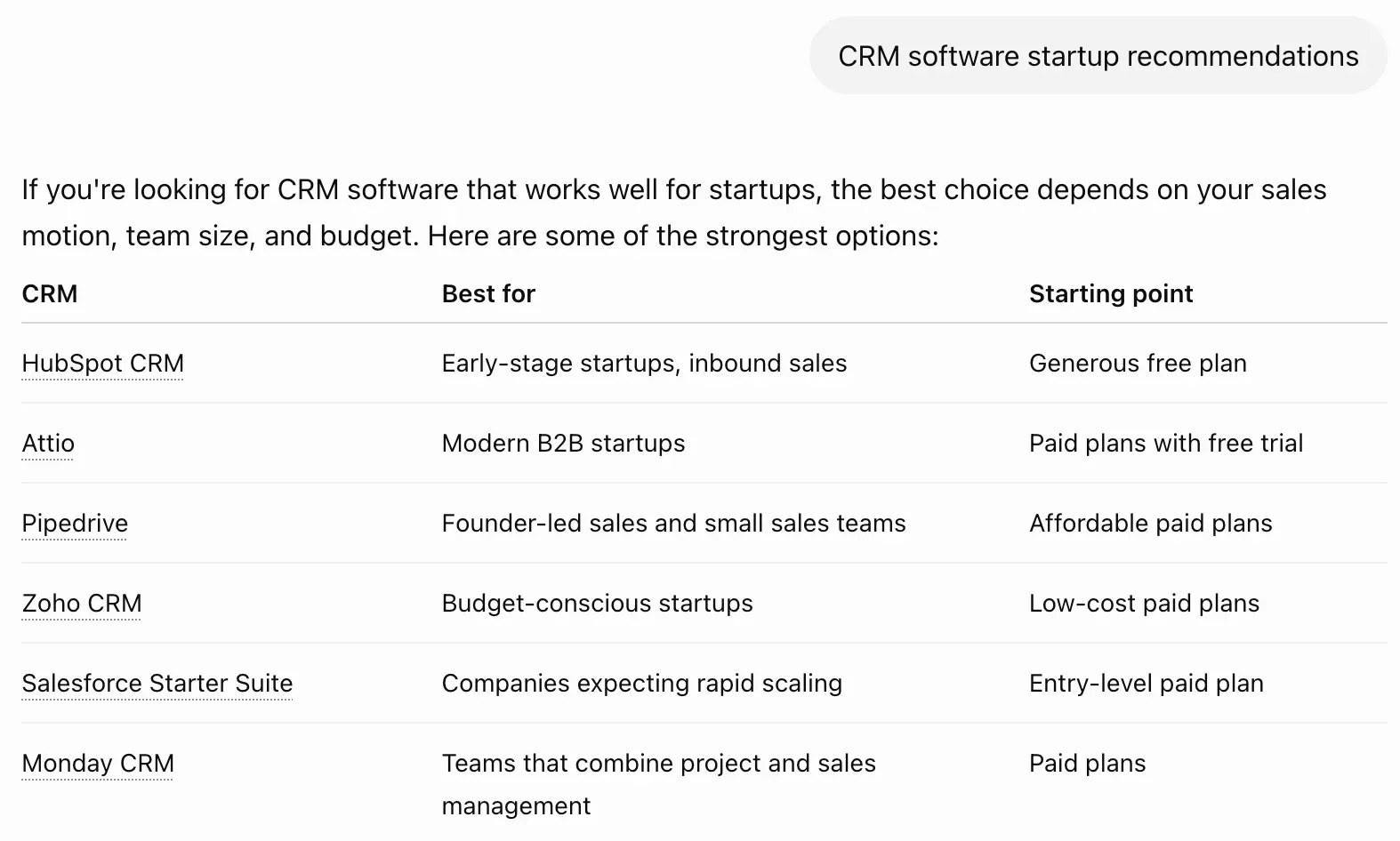
Phrasing also matters, as “Best CRM for startups” and “CRM software startup recommendations” can surface completely different winners.
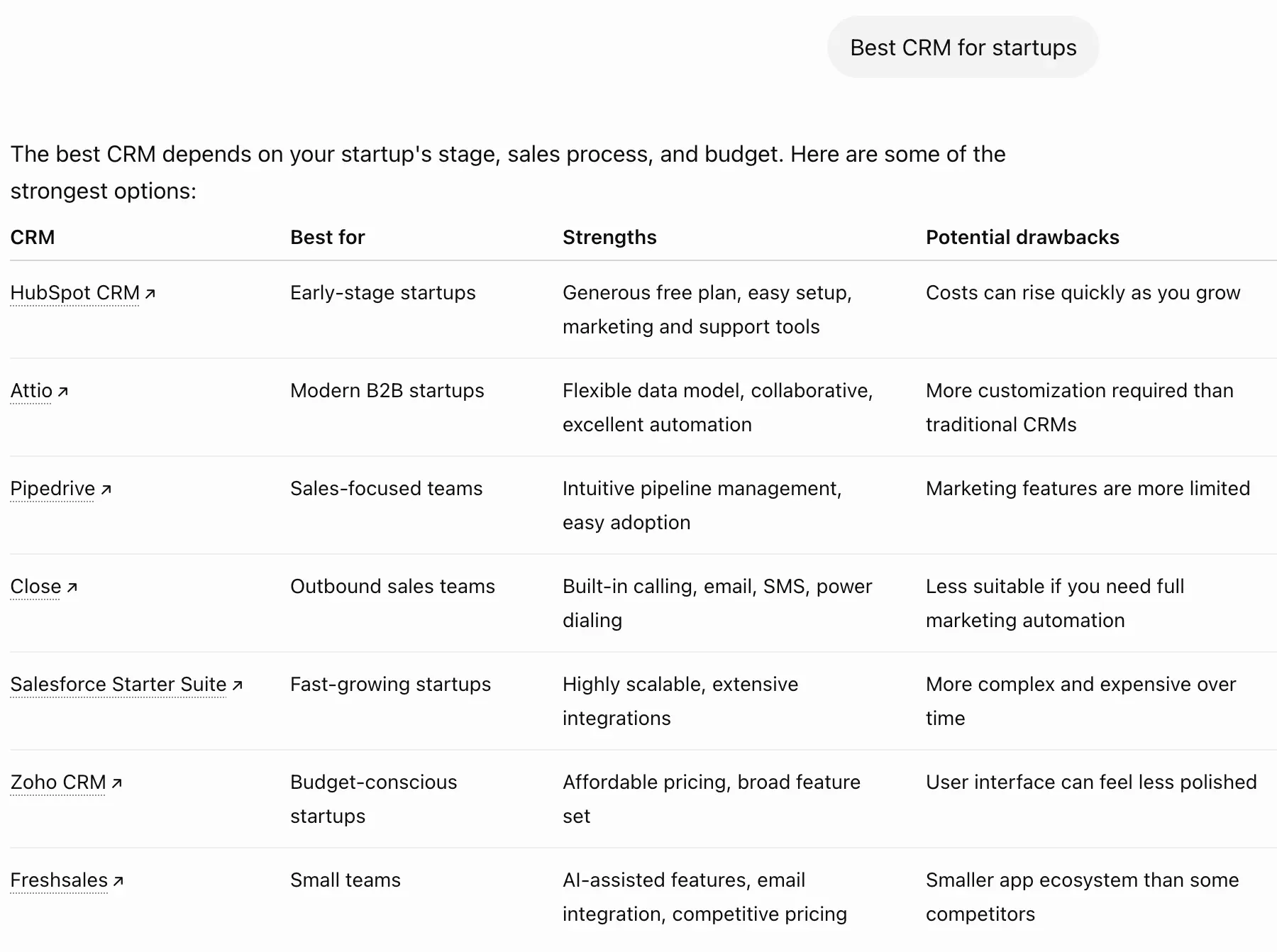
With the first prompt, Close and Freshsales appear on the shortlist. But when the phrasing changes, these two tools are nowhere to be found, and Monday CRM makes the bottom of the list instead.
The best LLM keyword tracker tools help you discover which prompt variants drive the most visibility for your category and cluster them so you can prioritize high-intent prompts over informational ones.
Tools detect brand references using exact matching, product name variants, and common misspellings. For early-stage brands with limited recognition, this matters because even a single mention in a high-traffic answer can shift pipeline. The best tools for tracking LLM brand visibility flag when your brand appears, disappears, or gets mentioned alongside competitors.
Citations are the links and domains that LLMs reference in their answers. If a competitor is cited from G2, a review site, and their documentation, the citation layer tells you exactly where to focus. The best LLM visibility analysis software surfaces which URLs and domains drive AI recommendations, so you can target the sources that actually move visibility.
Prompts run from different countries and languages surface different sources and recommendations. A US query might cite The New York Times while the same query from the UK might cite The Guardian. Look for country-level testing so you can optimize for regional AI answers.
Share of voice (SOV) measures how often each brand appears across a prompt set and which sources drive that visibility. The best competitor analysis tools for AI search LLM brand visibility help you prioritize prompts with high intent and low competitor lock-in, so you invest in the gaps most likely to shift recommendations.
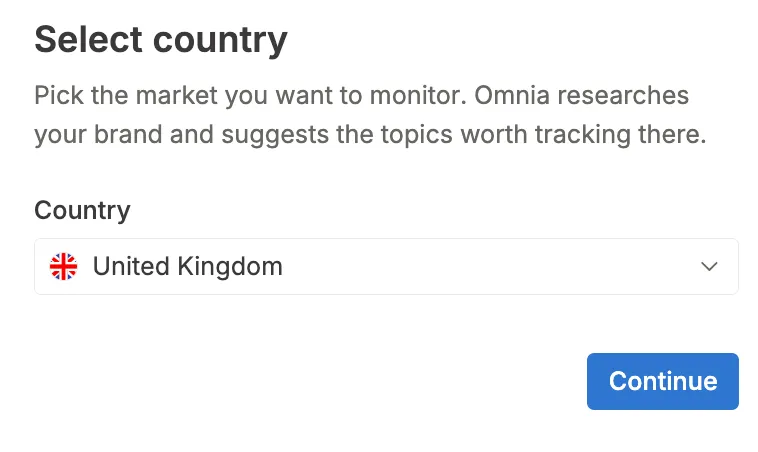
Omnia makes this easy with AI Prompt Discovery. Simply select the market you want to monitor and the platform suggests topics based on your brand.
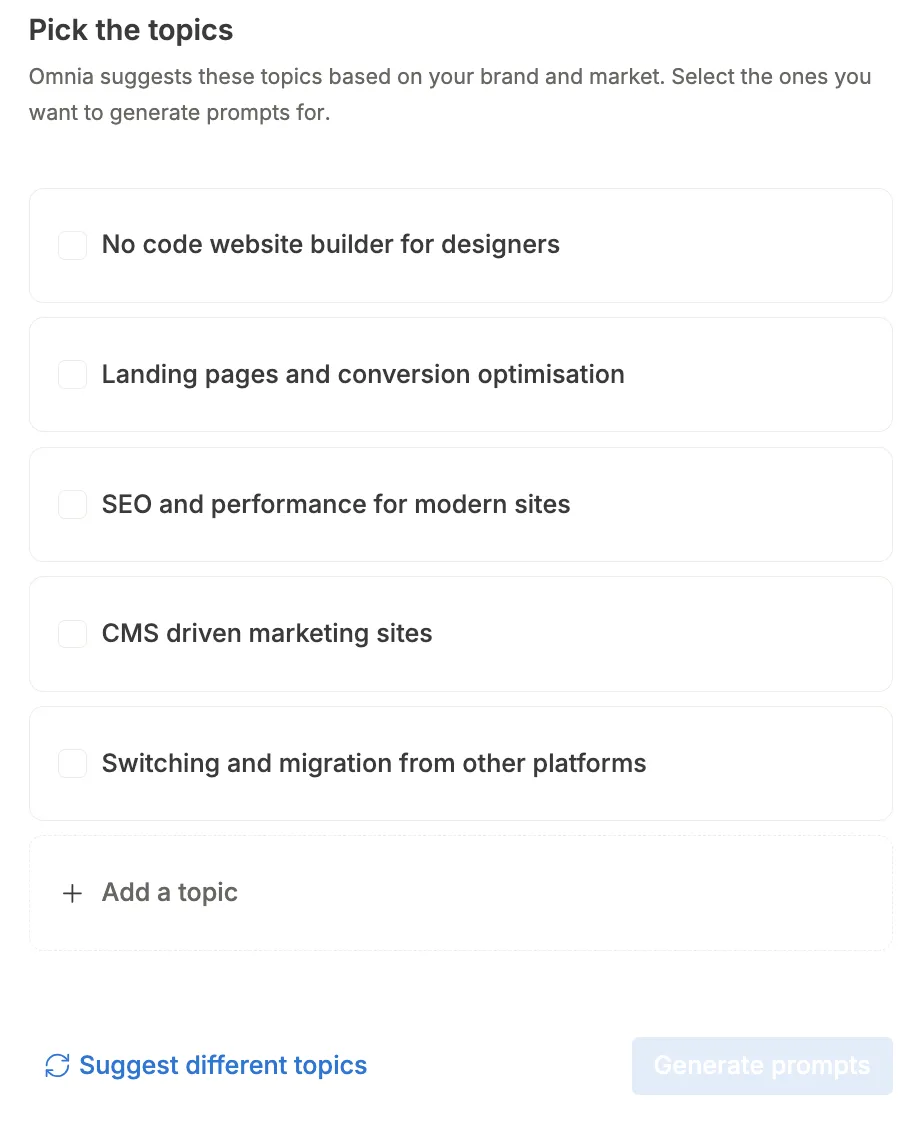
Choose the topic you want to generate prompts for and Omnia suggests ideas you can then choose to monitor.
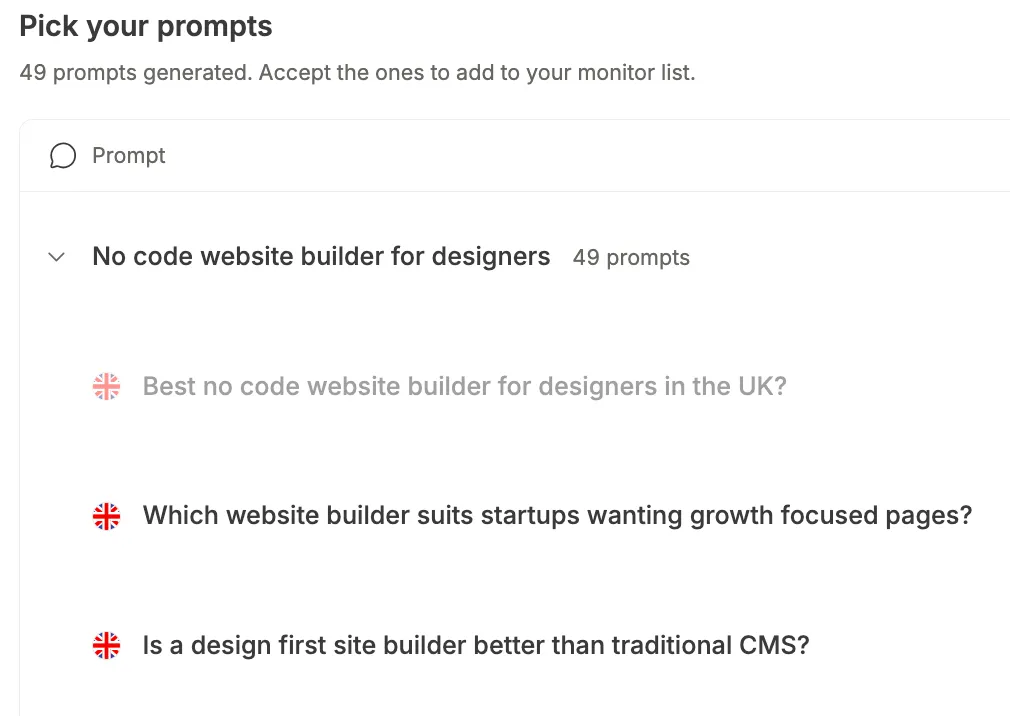
Operational teams need weekly checks, alerts for visibility drops, and exportable prompt-level evidence for leadership. The best LLM visibility checking tools support automated alerts, CSV exports, and dashboard sharing. This makes it easy for visibility data to become part of your regular workflow rather than a quarterly audit.
Dashboards aren’t what move citations. Actions are. An action layer means the platform tells you what to create, what to update, and where to publish, not just that you disappeared from an answer. The best LLM visibility optimization tool can produce content briefs, placement targets, on-page recommendations, and technical fixes that connect visibility data to execution.
Knowing what to prioritize can be tricky. Use this rubric to score any tool on a 0-5 scale:
| Criterion | What to score |
|---|---|
| Model coverage | How many AI search engines are tracked |
| Prompt set management | Can you add, cluster, and prioritize custom prompts by intent |
| Geo/localization | Country-level testing with real browser sessions, not VPN approximations |
| Citation extraction | URL and domain-level intelligence, not just "brand mentioned" |
| Competitor SOV | Transparent methodology for share of voice across prompt sets |
| Refresh cadence | How often prompts are re-run (daily, weekly, on-demand) |
| Action layer | Does the platform produce briefs, recommendations, and placement targets |
| Integrations/exports | API, MCP, CSV, Looker Studio, Slack alerts |
| Team features | Seats, reporting, role-based access |
| Pricing transparency | Can you see pricing on the website or must you book a demo |
Before diving into the detailed reviews, read this table to shortlist a few favorite AI visibility platforms.
| Tool | Tier | Best for | Models covered | Geographical tracking | Action layer | Pricing from |
|---|---|---|---|---|---|---|
| Omnia | Pure-play AEO | Startups moving fast | 7 | Unlimited countries and languages |  |
€79/mo |
| Peec AI | Pure-play AEO | Agencies | 3 on base plans, 10 on Enterprise | Unlimited regions and 115+ languages | |
$95/mo |
| Scrunch | Pure-play AEO | Structured monitoring | 4 on Core, 9 on Enterprise | 1 country Core, unlimited Enterprise | |
$250/mo |
| OtterlyAI | Pure-play AEO | Low-cost entry | 4 includes plus paid add-ons | 50+ countries | |
$29/mo |
| AirOps | Pure-play AEO | AI-agent workflows | 1 on Solo, 5 on Pro and Enterprise | 1 region Solo and Pro, multi-region Enterprise | |
$200/mo |
| Semrush | Traditional SEO suites | Enterprise SEO + AI | 3 | Not specified | |
$199/mo |
| Ahrefs | Traditional SEO suites | Authority signals | 5 | Not specified |  |
$199/mo |
| BrightEdge | Traditional SEO suites | Enterprise site fixes | 4 | Not specified | |
Custom |
| Moz | Traditional SEO suites | Growing SEO teams | 3 | Not specified | |
$99/mo |
| SEOptimer | Traditional SEO suites | Quick audits | 1 | 70+ countries | |
$29/mo |
Below are the 10 tools that scored highest across our evaluation criteria, starting with the pure-play AI visibility platforms and followed by the traditional SEO suites that have added AI features. Each review covers what the tool does, who it’s built for, the key features that matter for LLM search visibility, and the watch-outs that should shape your shortlist.
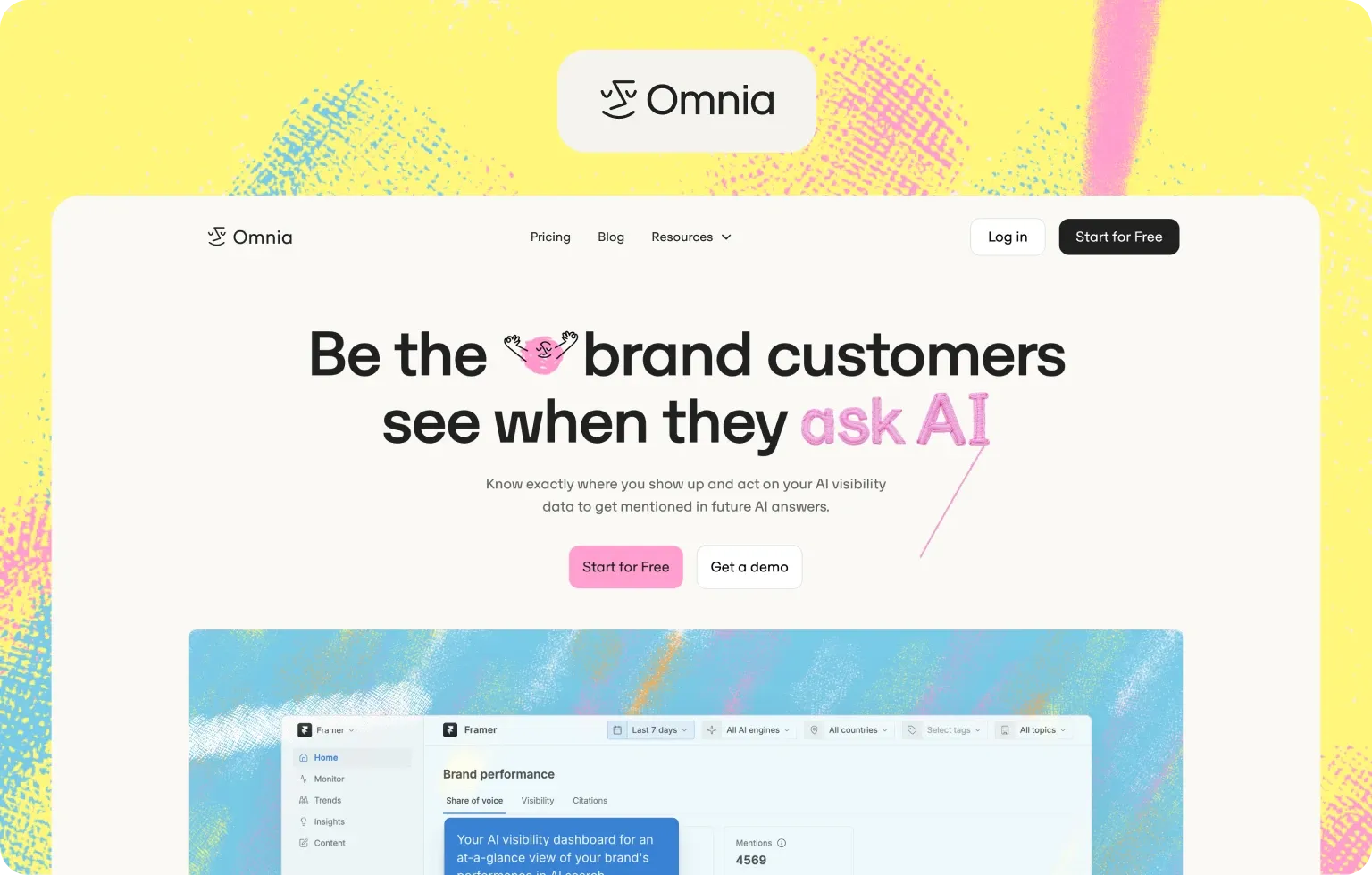
Omnia is an AI visibility platform that turns AI signals into actions. It operates as a centralized answer engine optimization (AEO) layer that tracks AI mentions and citations across models, prompts, and countries in one place.
Competitive share of voice, citation intelligence by URL and domain, prompt discovery and prioritization, and an action layer built for lean teams are all included from the Growth plan. Omnia also includes an MCP connector from €79/mo, so you can pipe visibility and citation data into Claude Desktop or Cursor for execution workflows. If you’re new to AI tracking, you can use Omnia’s free AI visibility checker
Best for
VC-backed founders and Heads of Growth needing extensive geographical coverage, predictable pricing, prompt coverage, and actions without hiring an AEO team.
Key features
Watch-outs
If you only need classic SERP keyword ranks, pair Omnia with a traditional SEO tool. Omnia focuses on seven major AI platforms, so you may need another tool if your coverage extends to more niche LLMs.
Good fit if
You’re a lean startup or scaleup that needs to move from citation gap to shipped content weekly, across multiple markets, without an enterprise contract.
Not a fit if
You need 10+ engine coverage including long-tail models, or you need a full traditional SEO toolkit in the same platform.
Pricing
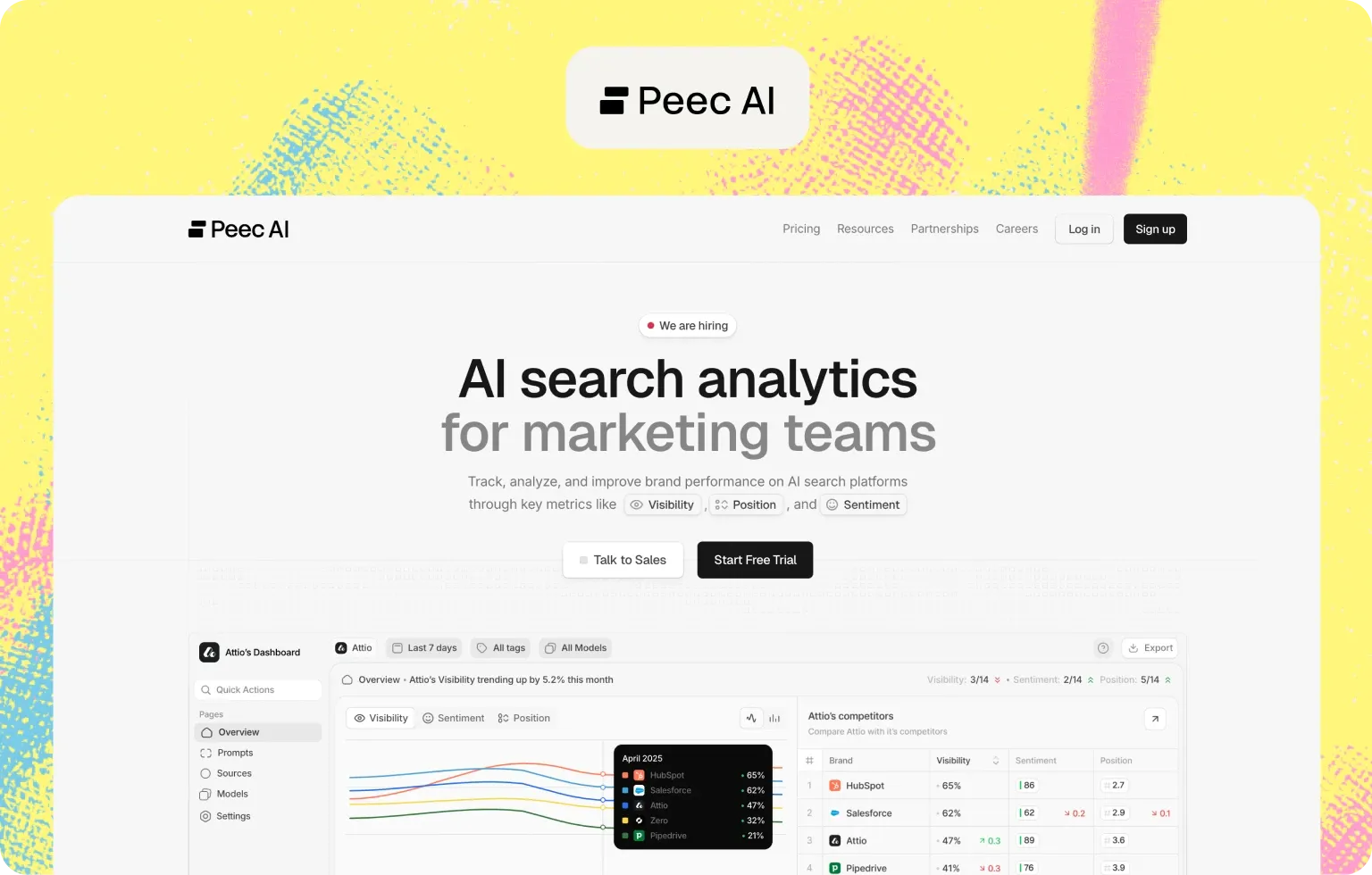
Peec AI is an AI search platform built around prompt tracking management, cross-country tracking, and stakeholder-ready reporting. Its MCP integration lets teams pipe data into Claude or Cursor for content generation, and the Actions feature clusters citation gaps by content type to calculate competitive gaps.
Best for
Agencies and teams wanting MCP-driven workflows and multi-platform coverage.
Key features
Watch-outs
Peec AI’s action layer is more analytical than execution-driven. If you want to track more than 3 AI engines, you must subscribe to the enterprise tier. High pricing causes many teams to consider Peec competitor tools.
Good fit if
You’re an agency managing multiple client brands and want MCP-driven workflows with multi-country tracking.
Not a fit if
You need more than 3-engine tracking on a non-Enterprise budget or a native action layer that produces content briefs without piping data into a separate AI tool.
Pricing
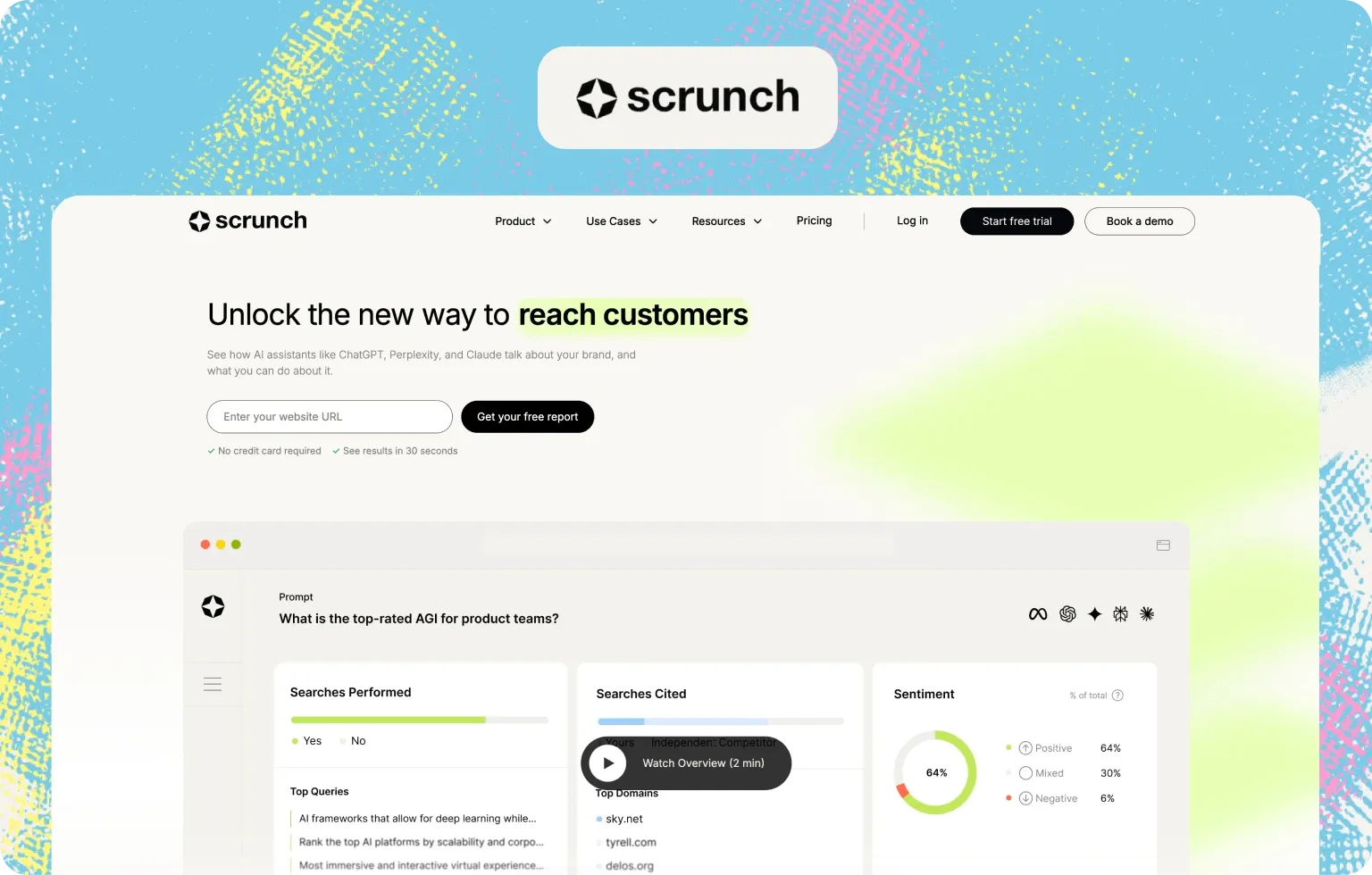
Scrunch provides structured brand monitoring with site audit data and a clean reporting layer. Its Core plan includes 125 prompts across 4 LLMs, Insights and Recommendations, and 5 site audits per month. The AXP (Agent Experience Platform) is available at the enterprise tier for deeper execution workflows.
Best for
Brands and agencies that need structured AI visibility monitoring alongside site audit data, and want a clear upgrade path from core monitoring to full agent experience workflows at enterprise scale.
Key features
Watch-outs
Full model coverage (9 engines) and multi-country tracking are only on the enterprise custom tier. MCP is enterprise-only and the Core plan allows you to track just 1 country.
Good fit if
You need structured AI visibility monitoring with site audit integration and can commit to an enterprise plan for full capability.
Not a fit if
You need multi-country tracking without an enterprise contract, consider Scrunch AI alternatives instead.
Pricing
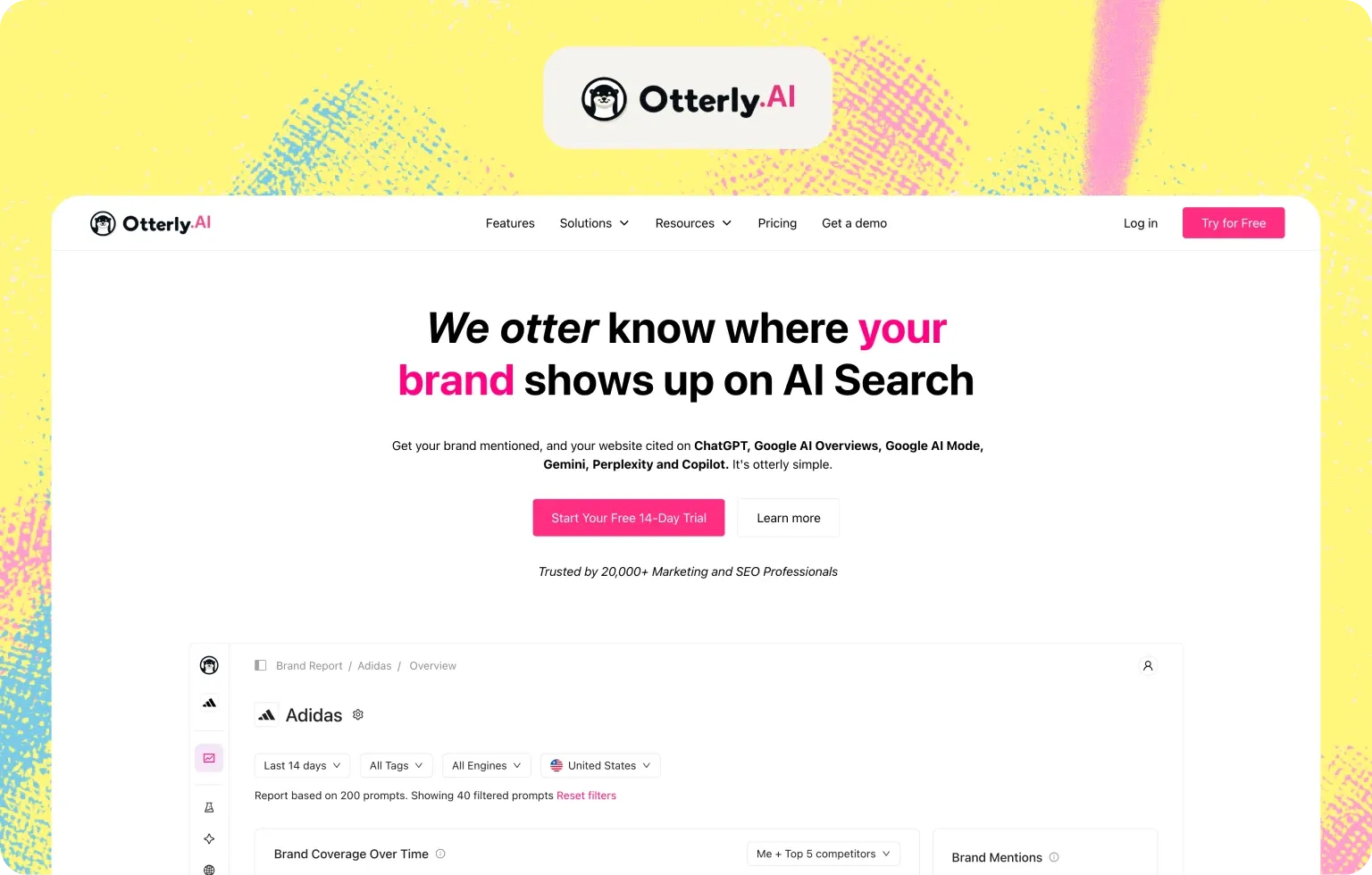
OtterlyAI is a lean AI search monitoring platform that offers 4 core engines (ChatGPT, Google AI Overviews, Perplexity, MS Copilot) with Claude, Google AI Mode, and Gemini available as paid add-ons. Otterly shows which specific content and links are driving AI citations, so you can understand not just that you appeared in an answer but what’s behind that appearance. AEO insights and optimization recommendations give teams a starting point for action, even without a full content brief workflow.
Best for
Marketing teams and solo operators who need the lowest-cost entry point into AI visibility monitoring, with the flexibility to add engines as budget allows.
Key features
Watch-outs
Additional engines beyond the 4 core aren’t included in base plans but rather as paid add-ons. There’s no traditional SEO toolkit if that’s something you’re looking for alongside AI tracking.
Good fit if
You need the cheapest entry point for AI visibility monitoring across core engines and are comfortable paying add-on fees for broader coverage.
Not a fit if
You need full model coverage without paying add-on fees (consider Otterly AI competitors), or a native action layer that produces content briefs.
Pricing
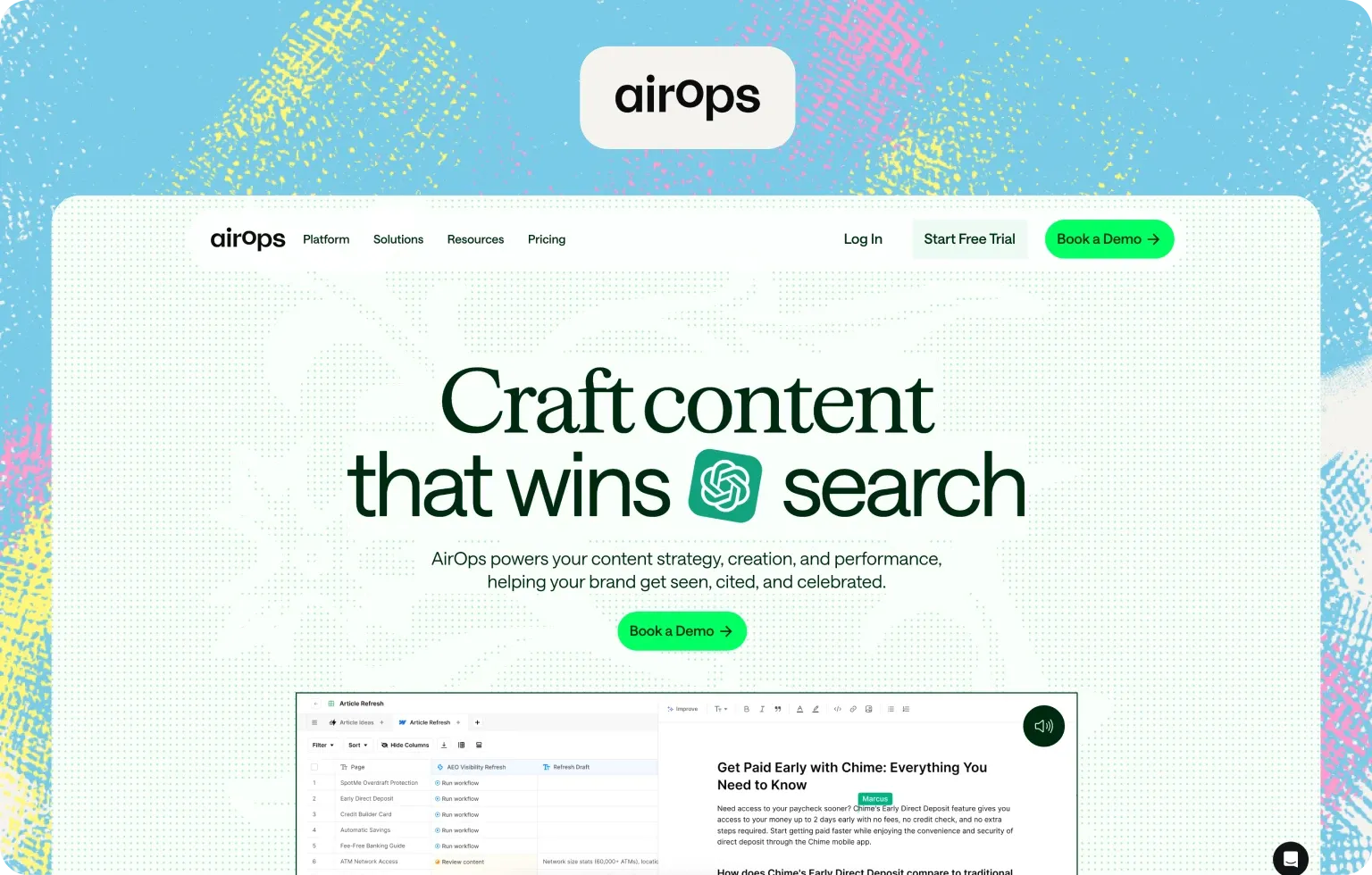
AirOps is a growth platform for AI search and AEO that combines visibility dashboards with an AI agent called Quill. Quill translates a defined metric into a strategy brief with brand context, then executes and coordinates team handoffs. The platform connects visibility data to content execution, helping teams identify which third-party sources control their category and measure the impact of placements on those sources.
Best for
Teams wanting an AI-agent-driven content workflow that connects visibility insights to execution.
Key features
Watch-outs: AirOps’ Solo plan only includes ChatGPT insights; multi-engine requires Growth tier. No explicit geo/country tracking. Pricing not publicly listed. No traditional SEO toolkit.
Good fit if
You want an AI-agent-driven content workflow that connects visibility insights to execution and you already use AI assistants as a work surface.
Not a fit if
You need affordable multi-engine tracking, more flexible pricing, or a traditional SEO suite.
Pricing
Deciding between AirOps and Profound? We broke down how each platform handles visibility, citations, and execution in our AirOps vs Profound comparison — including why Omnia is the third option startups actually need.
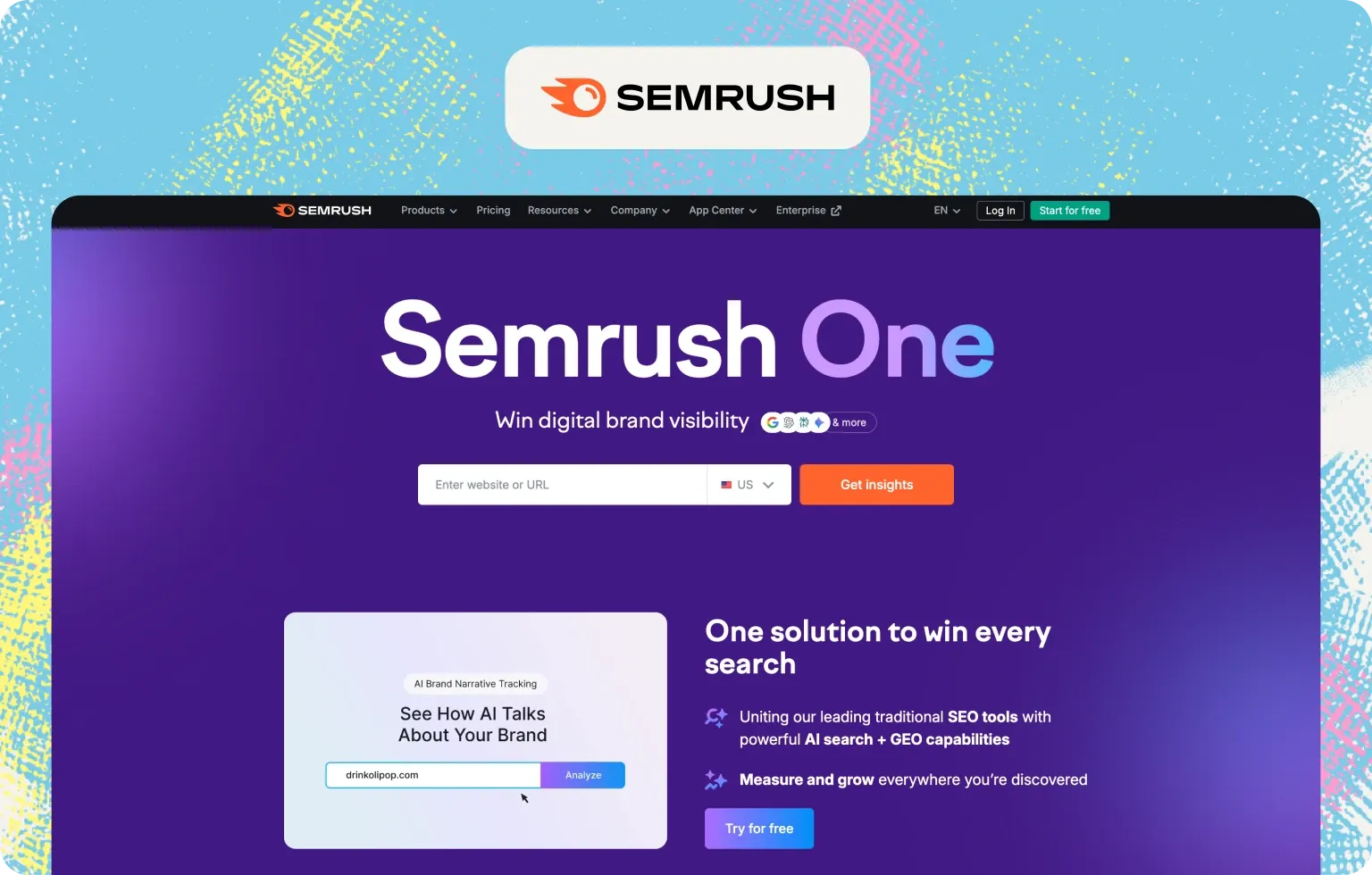
Semrush One unites SEO and AI visibility in one platform, built on years of search intelligence. Its AI Visibility toolkit monitors 289M+ LLM prompts, and the AI Visibility Index provides a framework for understanding and improving AI search presence.
Best for
Enterprise teams already familiar with Semrush who need traditional SEO + AI visibility in one platform.
Key features
Watch-outs
Model coverage is limited compared to pure-play AEO tools (it only covers 4 engines). AI visibility features are newer additions to a platform primarily built for traditional SEO.
Good fit if
You need a full traditional SEO toolkit alongside AI visibility monitoring and have the budget for an enterprise-grade platform.
Not a fit if
You need broader model coverage or a lightweight, startup-friendly tool focused purely on AI visibility.
Pricing
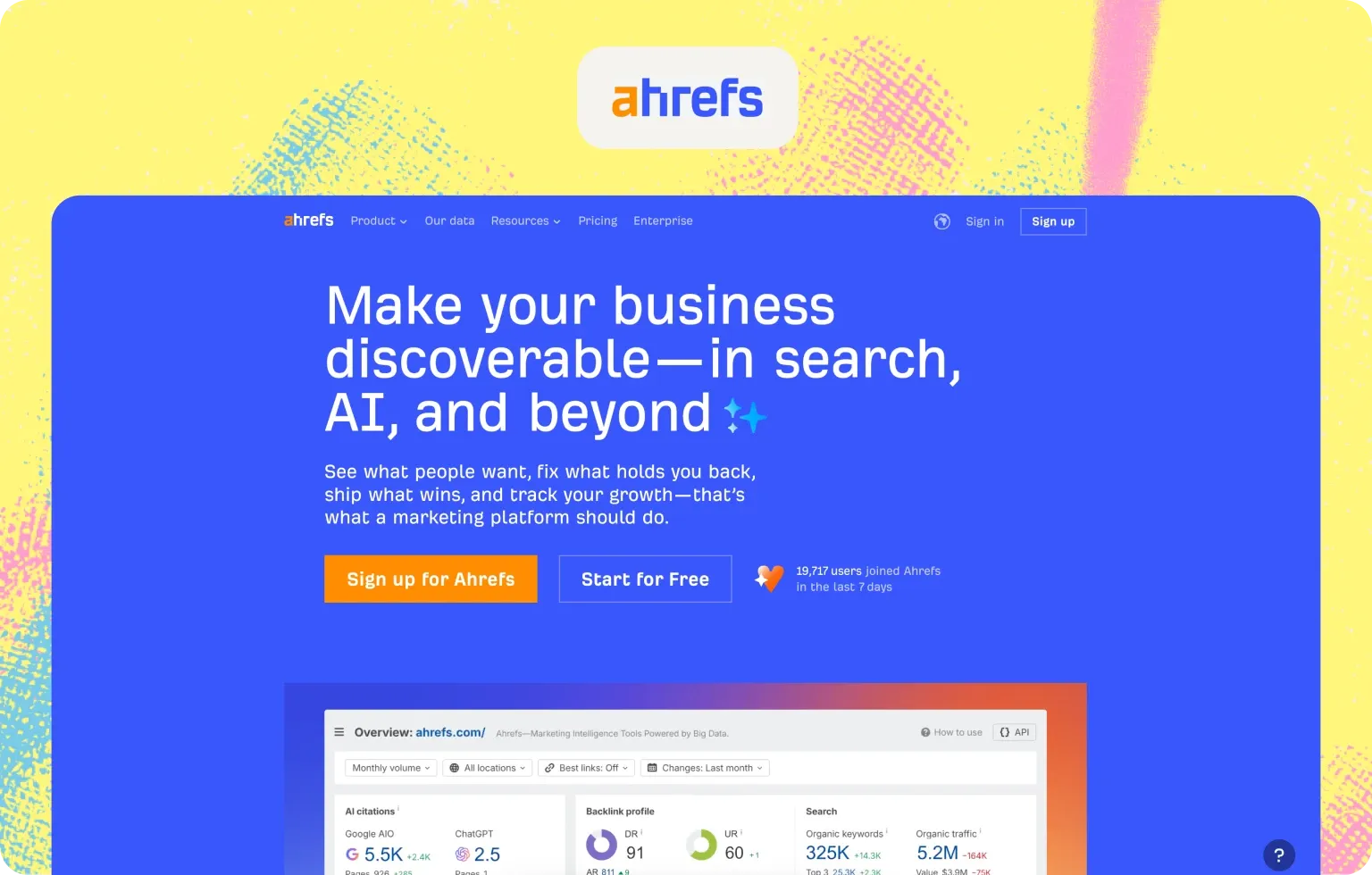
Ahrefs Brand Radar tracks brand visibility across AI answers, YouTube, Reddit, and TikTok. It offers the largest AI visibility database powered by search-backed prompts (391M+ organic prompts), not synthetic ones. Custom prompts let teams track exactly how their brand shows up in conversations that matter.
Best for
SEO teams that already rely on Ahrefs for backlink data and want to layer AI visibility monitoring into an existing workflow without adopting a separate platform.
Key features
Watch-outs
Ahref doesn’t currently have a native action layer for content briefs or placement targets. It’s primarily a traditional SEO platform with AI visibility as an add-on. Users wanting AEO to be a bigger focus should look at Ahrefs alternatives.
Good fit if
You already use Ahrefs for traditional SEO and want to add AI visibility monitoring within the same platform.
Not a fit if
You need broader model coverage, a native action layer, or more detailed country-level AI visibility data.
Pricing
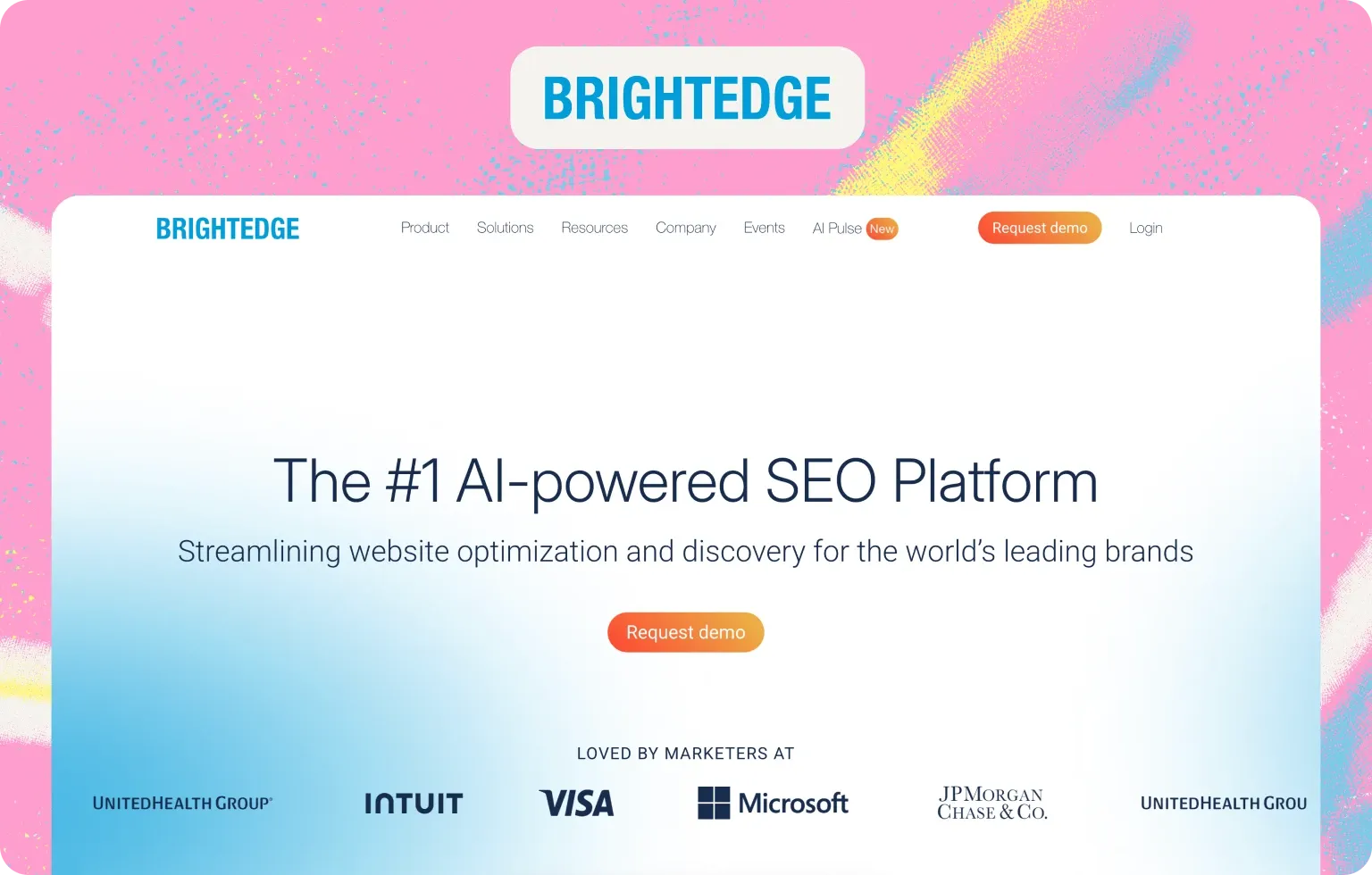
BrightEdge is another tool that brings SEO and AEO together in one platform. Its AI Hyper Cube reveals hidden AI conversations shaping demand, showing which brands are mentioned or cited and the sentiment around those responses. Copilot provides insights while Autopilot handles fully automated on-site optimizations.
Best for
Enterprise teams SEO and AEO in one platform with automated site fixes.
Key features
Watch-outs
Pricing is enterprise-only and model coverage only extends to AI Overviews, ChatGPT, and Perplexity is not confirmed. The platform’s complexity may not suit lean teams.
Good fit if
You’re an enterprise team that needs unified SEO + AI optimization with automated site fixes and has the budget for a custom enterprise contract.
Not a fit if
You’re a startup needing transparent pricing, broader model coverage, or a lightweight tool. Consider BrightEdge alternatives instead.
Pricing
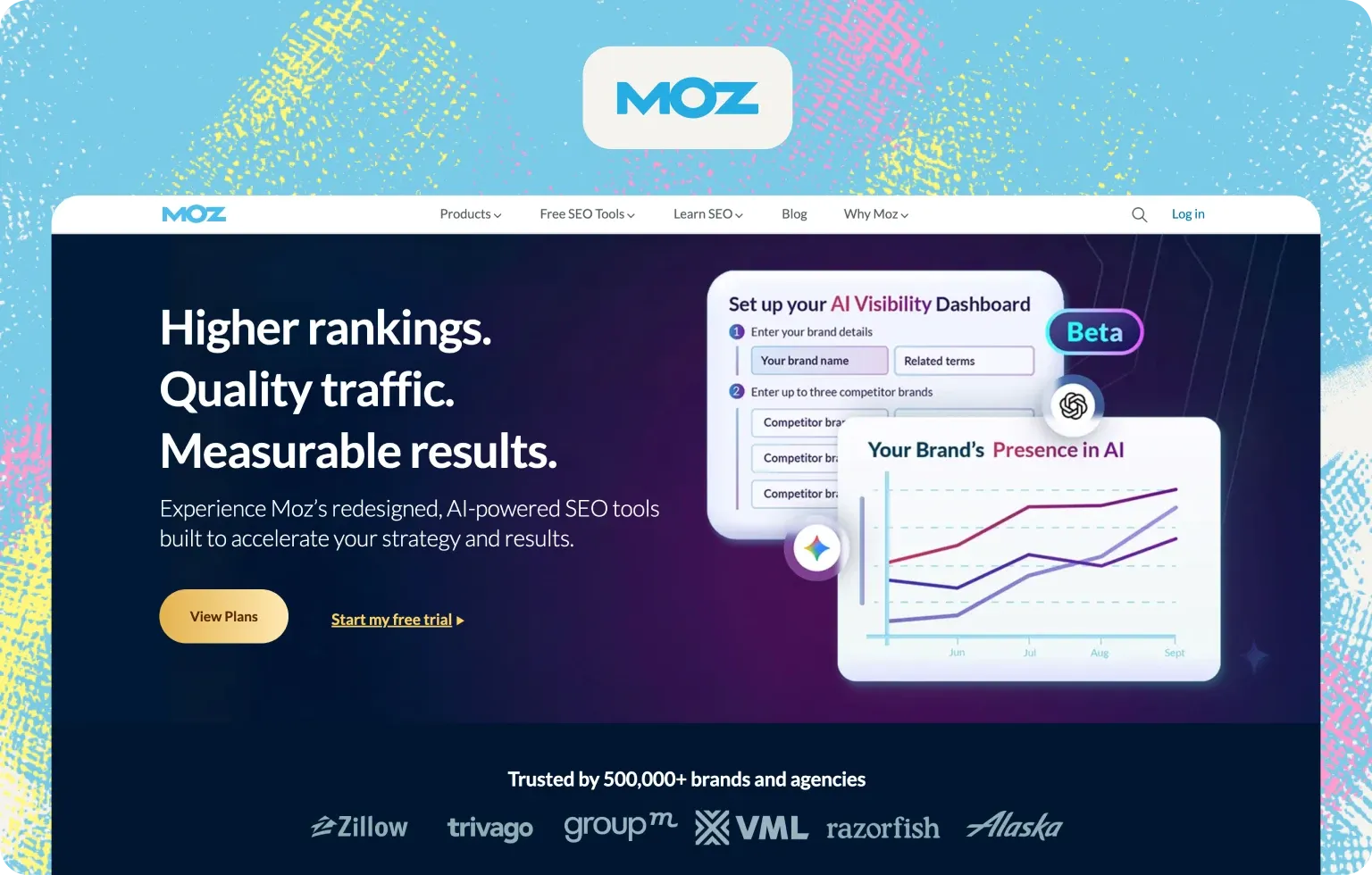
Moz Pro tracks brand presence in Google AI Mode, ChatGPT, and Gemini from one dashboard. It combines traditional SEO authority metrics (Domain Authority, Brand Authority) with emerging AI visibility tracking.
Best for
Growing SEO teams wanting trusted authority metrics alongside emerging AI visibility tracking.
Key features
Watch-outs
Moz only covers 3 AI engines. The platform is less mature than specialized AEO tools for AI visibility.
Good fit if
You already use Moz for traditional SEO and want trusted authority metrics alongside emerging AI visibility tracking.
Not a fit if
You need coverage beyond Google AI Mode, ChatGPT, and Gemini, or specialized AEO tool features with deeper citation intelligence.
Pricing
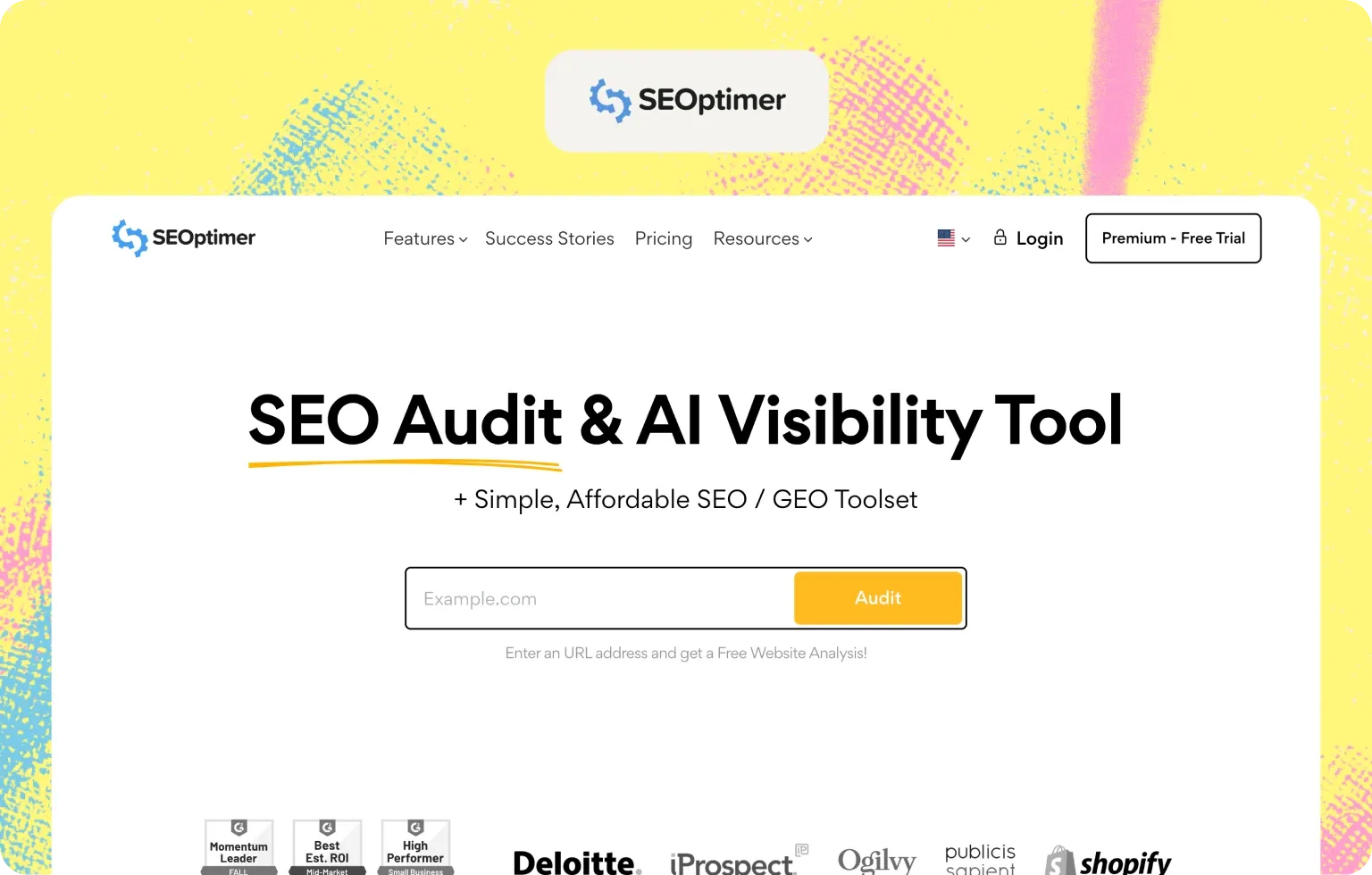
SEOptimer is a free SEO audit and AEO tool that analyzes websites. It reports current Google AI Search rankings and identifies factors that influence AI visibility, like LLM accessibility, identity, and citability. Keyword tracking by country, language, search engine, and device type also supports localized monitoring.
Best for
Quick, free AI visibility audits and SEO/AEO checks at the lowest price point.
Key features
Watch-outs
Only covers Google AI Search; no multi-engine LLM tracking. No citation intelligence at URL/domain level. No competitor share of voice across AI platforms.
Good fit if
You need a quick, free AI visibility audit and SEO check, or you’re an agency wanting white-label audit tools at a low price point.
Not a fit if
You need multi-engine LLM tracking, citation intelligence, competitor SOV, or an action layer that produces content outputs.
Pricing
Picking a tool is step one. Proving it works is step two. The fastest way to do that is a 30-day baseline. Whether you choose Omnia, Peec AI, or any other platform on this list, the workflow is the same.
Here’s a sample to model yours by:
| Prompt | Intent | Country | Model | Winner | Cited domains | Action |
|---|---|---|---|---|---|---|
| "Best CRM for startups" | Commercial | US | ChatGPT | Competitor A | g2.com, competitorA.com | Create comparison page |
| "HubSpot vs Salesforce" | Comparative | UK | Perplexity | Competitor B | forrester.com, competitorB.com | Pitch to Forrester analyst |
Free tools and trials give you a snapshot. There’s a handful of prompts, one or two models, but no geographical testing and minimal exports. That’s enough to confirm you have a visibility problem. It’s not enough to solve one.
The best free LLM rank tracker options include Omnia’s free AI visibility checker and SEOptimer’s free audit. Both tell you if you’re visible. They both also stop short of answering why your competitors are winning and what you need to do about it at scale. Start free for a baseline, then move to a paid plan when you need repeatability, geo coverage, and action workflows.
VC-backed founders and Heads of Growth share three constraints. They have limited time, minimal headcount, and pressure to show traction fast. They can’t afford to spend a month interpreting a dashboard.
They need:
Omnia was built for this profile. It stops you from guessing sources by showing which URLs and domains drive AI recommendations. The citation layer reveals not just that a competitor is mentioned but why. It breaks down which review site, which documentation page, or which Wikipedia entry.
The inclusion rate metric tells you how often you appear relative to the total prompt set. And the action layer turns every citation gap into a content brief, a placement target, or an on-page fix.
For teams that need to move from insight to shipped content weekly, Omnia’s combination of 7-engine coverage, unlimited countries, MCP access, and native action workflows means you spend time executing, not exporting CSVs and guessing what to write next.
Book a demo or start a 14-day free trial on the Growth plan today.
Omnia offers a 14-day free trial on the Growth plan.
No credit card required. See exactly where your brand shows up (or doesn't) across AI engines, then let the platform's recommendations guide your next move.

Traditional SEO checkers report SERP rankings and technical site health. LLM visibility checking software measures whether your brand appears in AI responses, which sources get cited, and your brand's AI visibility across multiple AI platforms and geographies.
It should show the specific URLs and domains that AI chatbots cite when recommending competitors, your AI visibility score relative to theirs, and the citation gaps where they appear and you do not. Without URL-level citation intelligence, you cannot identify which sources to target forAIsearch optimization.
Prioritize tools that run prompts from real browser sessions in target countries, not VPN approximations. Check whether the platform supports country-level filtering in dashboards and exports, and whether it covers ChatGPT, Gemini, and other engines that surface different sources by region. Omnia and Peec AI both offer unlimited country tracking while Scrunch requires Enterprise for multi-country.
It is optimizing the content, sources, and technical signals that influence whether AI crawlers and AI chatbots cite your brand. That includes creating content that addresses high-intent prompts, earning citations from authoritative domains, and fixing technical issues that prevent AI bot monitoring tools from accessing your pages. This allows you to improve your visibility in AI search.
Written By
 AndreiHead of GrowthatOmniaAndreiHead of GrowthatOmnia
 JoseGrowthatOmnia
 JoseGrowthatOmnia
 AndreiHead of GrowthatOmnia
 JoseGrowthatOmnia
No credit card required · Free for 14 days · See your AI visibility within 3 minutes