Alternatives
Ahrefs vs BrightEdge vs Omnia: Key Differences for 2026

 JoseGrowthatOmniaJoseGrowthatOmnia
TL;DR
AI Mode changes what “ranking” means by turning results into an answer and citations. This guide evaluates 14 AI Mode rank trackers through a reproducible validation protocol, helping you identify tools that actually capture AI-generated responses, not just AI Overviews. Pure monitoring platforms show you visibility gaps by country and competitor, while execution-focused tools like Omnia convert citation intelligence into ready-to-publish content briefs. Choose based on whether you need dashboards or an action layer that turns insights into shipped content within days.
Google's AI Mode doesn't return a fixed list of 10 blue links. It synthesizes answers from multiple sources, which means traditional SEO rank tracking tools can't tell you if your brand is actually visible.
For startups racing to establish authority before competitors claim the AI search space, this is a growth blind spot. You need to know which tools can track inclusion in AI-generated answers, measure citation share by domain and URL, and surface actionable insights on what to do next.
This guide evaluates the best AI mode rank tracker options through a reproducible test, then delivers a shortlist comparison table, tool-by-tool breakdowns, and a clear recommendation based on whether you need pure visibility monitoring or an execution layer that turns insights into content. By the end, you'll know exactly which tracker fits your workflow and how to validate it yourself — moving beyond traditional SEO tools to embrace AI discovery and AI-powered search engines.
An AI rank tracking tool is a specialized solution that measures brand visibility within Google's AI-generated search experiences. Unlike traditional SEO tools, rank no longer means a position in a vertical list of blue links. Instead, AI visibility data tracks whether your brand appears in AI search results, how prominently it's featured, which URLs or domains Google's AI cites as sources, and what share of the answer space you capture relative to competitors.
Google describes AI Overviews as a way to “ask whatever's on your mind to get an AI-powered response, and keep exploring with follow-up questions and helpful web links,” using Gemini's advanced reasoning and multimodal understanding. The same query surfaces different citations depending on location, device, and timing — making position-based tracking unreliable.
Classic rank tracking measures positions in an ordered list. You're either ranking #3 for “project management software” or you're not. AI Overviews introduced complexity by placing a synthesized answer block above traditional results, but the rest of the page still behaves like a classic SERP.
AI Mode abandons the list entirely. When users activate conversational search, the output is a multi-paragraph answer with inline citations, follow-up prompts, and dynamic structure. You won’t find any #1 position because there's no fixed order. That’s why classic SEO platforms are often weak AI Mode SEO checkers.
Here’s a quick overview of classic SERP vs AI Overviews vs AI Mode:
| Output format | What you can measure | What teams mistakenly measure |
|---|---|---|
| Classic SERP | Fixed list of 10 blue links with meta descriptions | Position (1–10), CTR by rank, snippet ownership |
| AI Overviews | Synthesized answer block + traditional results below | Inclusion in overview, cited source count, position in organic results below |
| AI Mode | Multi-paragraph generative answer, inline citations, follow-ups, dynamic structure | Inclusion frequency, citation share (URL + domain), answer prominence, brand mention sentiment |
AI Mode rank trackers use browser automation to capture what Google's generative search actually returns. The best tools run headless browsers with configurable geo-location, device type, and personalization settings to trigger AI Mode responses on a schedule.
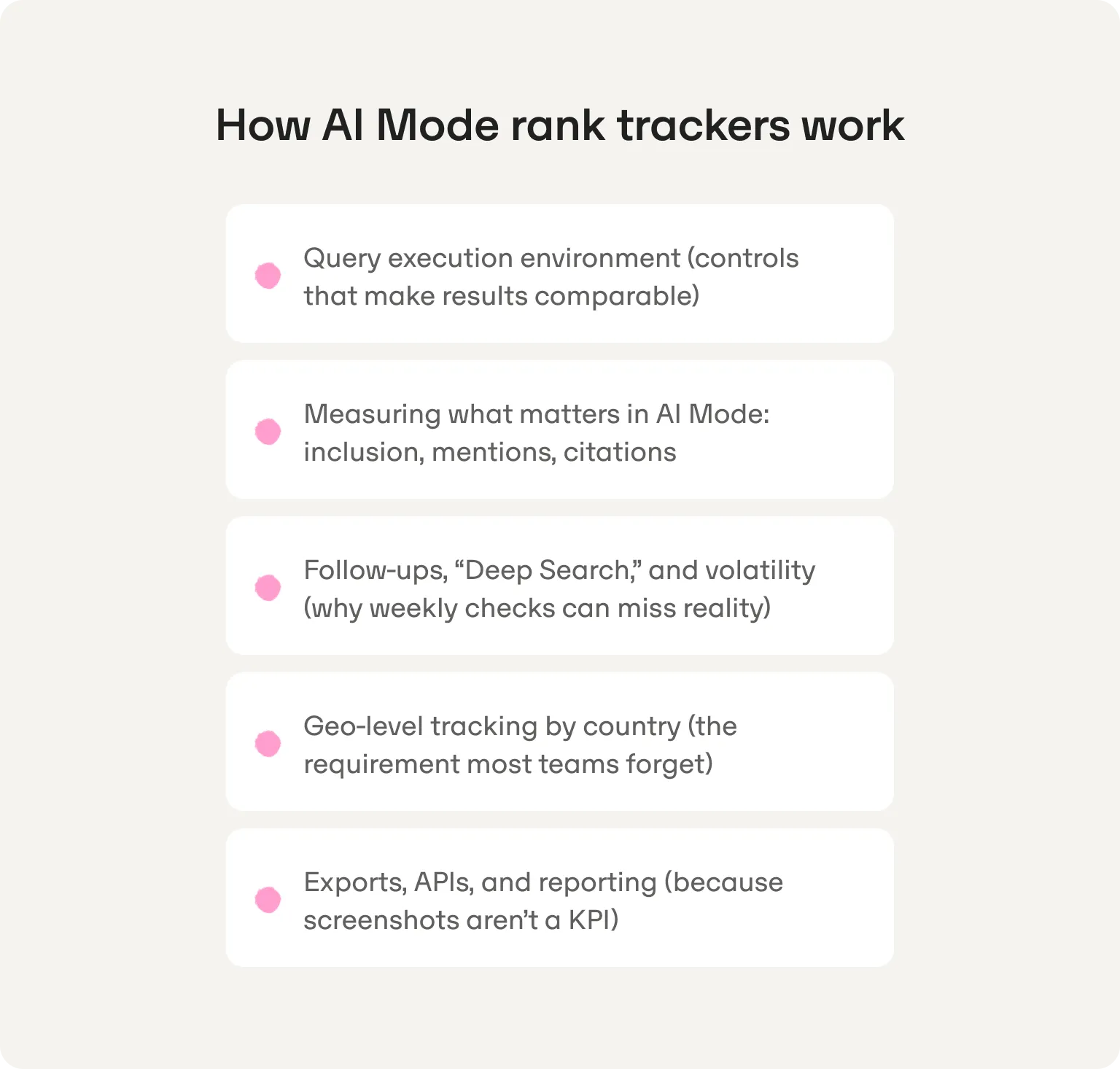
For AI Mode tracking to produce apples-to-apples comparisons, you need standardized execution controls:
Without these controls, you're comparing logged-out US desktop results against logged-in UK mobile results. Most teams start with logged-out desktop queries from their primary market and add mobile or secondary markets later.
Traditional rank tracking asks “what position?” whereas AI Mode tracking asks four questions, each tied to decisions:
Tools combine these metrics to produce actionable intelligence. Inclusion signals content gaps, mentions drive awareness, URL-level citations reveal winning content formats to replicate, and answer share quantifies competitive positioning.
AI Mode is conversational, so a user searching “best email automation software” might see Brand A first, but the follow-up “which has the better mobile app?” could cite Brand B exclusively. Most tools only capture initial queries, missing how citations shift through multi-turn conversations, while advanced trackers run sequential prompt pairs to reveal whether brands maintain visibility as dialogues deepen.
Volatility compounds this. Google ships model updates mid-week that can shift citation logic overnight, making refresh cadence critical. Tools offer daily tracking or weekly snapshots, with the right choice depending on how often you publish. Teams publishing weekly content need daily tracking to measure immediate impact, while established brands with stable content rely on weekly snapshots.
AI Mode rank trackers use geo-location controls in their browser automation to capture country-specific citation patterns. Localization is crucial because brands expanding internationally often track only US results while competitors claim visibility in UK, Germany, or other markets. Tools handle this through configurable country/locale settings that run identical prompts across multiple regions simultaneously, revealing where brands are visible versus invisible.
Screenshots don't scale into executive reporting. Look for CSV exports, API access, and multi-workspace support with roles/permissions.
An exec dashboard needs:
A practitioner dashboard needs:
Tools that force one unified dashboard fail both audiences.
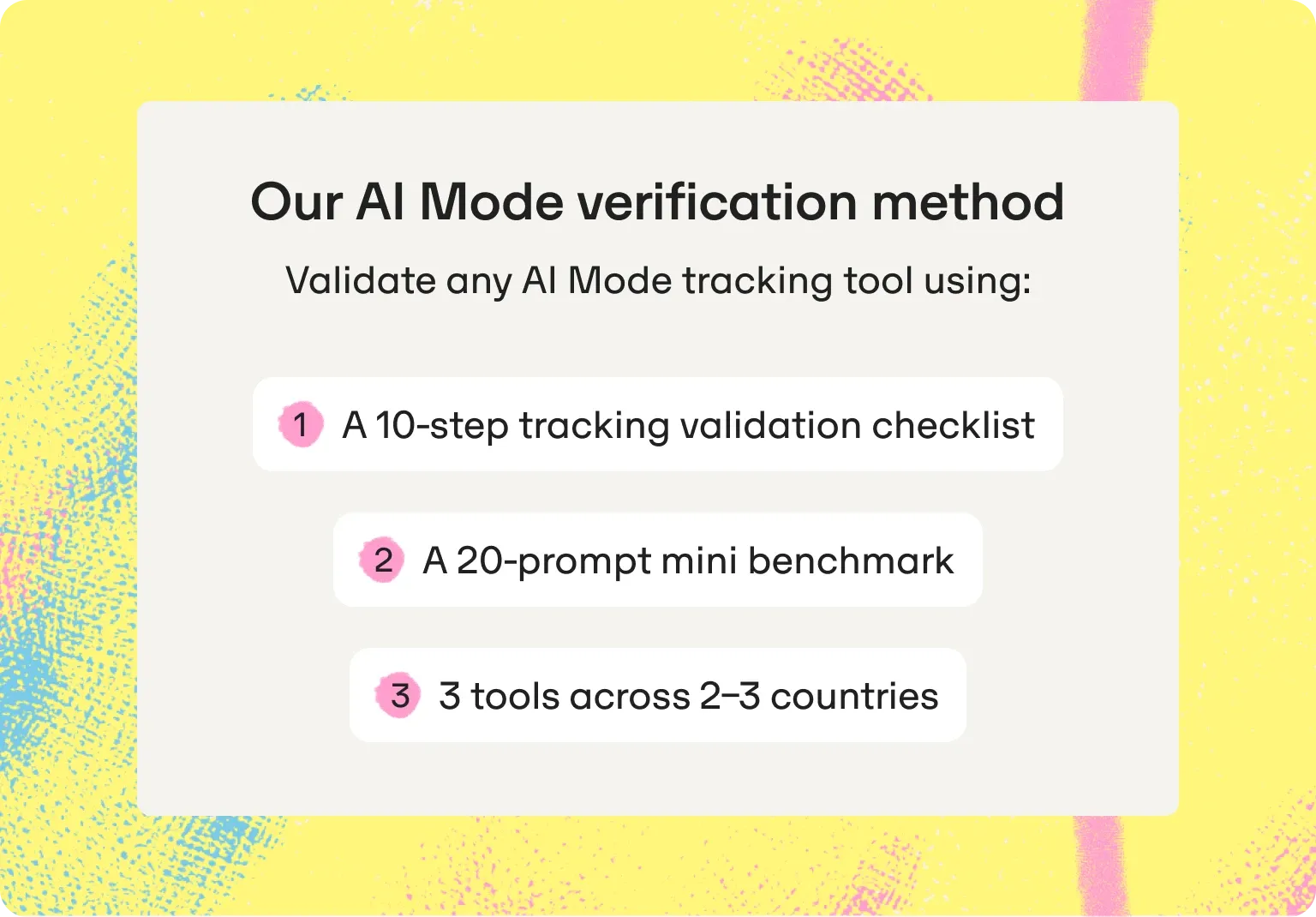
Most vendor demos show polished dashboards with impressive charts, but few prove they're actually tracking AI Mode instead of AI Overviews or simulated results. This 60–90 minute validation protocol lets you confirm what you're buying before signing a contract.
Use this ordered checklist to validate any AI Mode rank tracking tool. Each step includes a clear pass/fail check and vendor demo questions:
1. Country selection test: Configure the tool to track the same prompt from 3 different countries (US, UK, Germany).
✅Tool returns different citations for each country, proving geo-localization.
❌ Same citations across all countries or “coming soon” for multi-country support.
2. Logged-out verification: Confirm the tool runs queries in logged-out mode to avoid personalization contamination.
✅ Vendor can show browser automation settings with “no authentication” or “incognito mode” enabled.
❌ Unclear whether queries run logged-in or can't demonstrate settings.
3. Screenshot evidence: Request a screenshot of the actual AI Mode interface the tool captured, not just parsed data.
✅ Tool provides timestamped screenshots showing “Try AI Mode” interface with full answer text and citations.
❌ Only shows AI Overviews block or no screenshots available.
4. URL-level citation capture: Check if the tool tracks citations at URL-level, not just domain-level.
✅ Dashboard shows specific URLs cited (e.g., “competitor.com/pricing” and “competitor.com/features” as separate line items).
❌ Only shows domain aggregates (“competitor.com cited 5 times”).
5. AI Mode vs AI Overviews distinction: Verify the tool differentiates between AI Overviews and AI Mode.
✅Vendor can explain the technical difference and show separate data for each.
❌ Uses terms interchangeably or only tracks Overviews.
6. Follow-up query handling: Test whether the tool can track multi-turn conversations.
✅Tool supports follow-up prompt configuration and shows how citations change between initial and follow-up queries.
❌ Only tracks single queries with no follow-up capability.
7. Refresh cadence control: Confirm you can set tracking frequency (daily, weekly, on-demand).
✅ Tool offers scheduling options and shows last-updated timestamps per query.
❌ Fixed schedule with no user control or unclear refresh timing.
8. Raw output access: Request access to the raw captured answer text, not just metrics.
✅ Tool provides full answer text with timestamps in exports or detail view.
❌ Only shows aggregated metrics with no raw output.
9. Export availability: Test CSV/API export of tracked data.
✅ Tool exports timestamped data including prompt, country, citations (URLs), mention count, answer text.
❌ No export option or exports miss key fields like URL-level citations.
10. Competitor citation visibility: Verify the tool shows which competitors are cited, not just your brand.
✅Dashboard displays competitor mentions and citations with filtering by competitor name.
❌ Only shows your brand's data with no competitor visibility.
Tools that pass 8–10 checks are production-ready. Tools passing 5–7 checks may be suitable for early-stage tracking but will require workarounds. Tools passing <5 checks are likely mislabeling AI Overviews tracking as AI Mode.
Run a focused 20-prompt benchmark across 2–3 countries using 3 tools to see which captures the most accurate AI Mode data. Track 10 brand queries, 5 category queries, and 5 competitor queries, then compare inclusion rates and citation accuracy. This 90-minute test reveals which tools miss AI Mode outputs or only track AI Overviews, helping you make a data-backed decision before committing.
Here’s how to run it:
The AI mode rank tracker tools have been compared based on their refresh cadence, action layer, and whether Google AI Mode is included in the base plan. Use this table to shortlist two or three tools, then read about them in detail below:
| Tool | Best for | Google AI Mode included in base plan | Refresh cadence | Action layer | Price range per month |
|---|---|---|---|---|---|
| Omnia | Startups needing execution support |  | Daily | | €79–custom pricing |
| Peec AI | B2B teams wanting accurate daily tracking | | Daily |  | €89–custom pricing |
| Scrunch AI | Enterprises prioritizing brand safety | | Daily | | $100–custom pricing |
| AirOps | Teams needing AI writing + tracking | | Daily | | Custom pricing |
| Semrush | Existing Semrush users | | Daily | | $99 |
| Ahrefs | SEO teams already using Ahrefs | | Daily | | $199–$699 |
| BrightEdge | Large enterprises with dedicated SEO teams | | Daily | | No published pricing |
| SE Visible | Agencies managing multiple client brands | | Daily | | $99–$355 |
| Rankability | Agencies wanting all-in-one content + tracking | | Weekly | | $199–$799 |
| seoClarity | Enterprise teams needing unlimited scale | | Daily | | Custom pricing |
| Rankshift | Agencies needing citation gap analysis | | Daily to weekly | | $92–$473 |
| Keyword.com | Small teams wanting flexible scheduling | | Hourly to weekly | | $24.50+ |
| Profound | Mid-market to enterprise teams | | Daily | | $99–custom pricing |
| SE Ranking | SEO teams with existing SE Ranking accounts | | Daily | | $129–custom pricing |
Each tool review below provides pricing, key features, limitations, and best-fit scenarios to help you choose the right AI Mode tracker for your team.
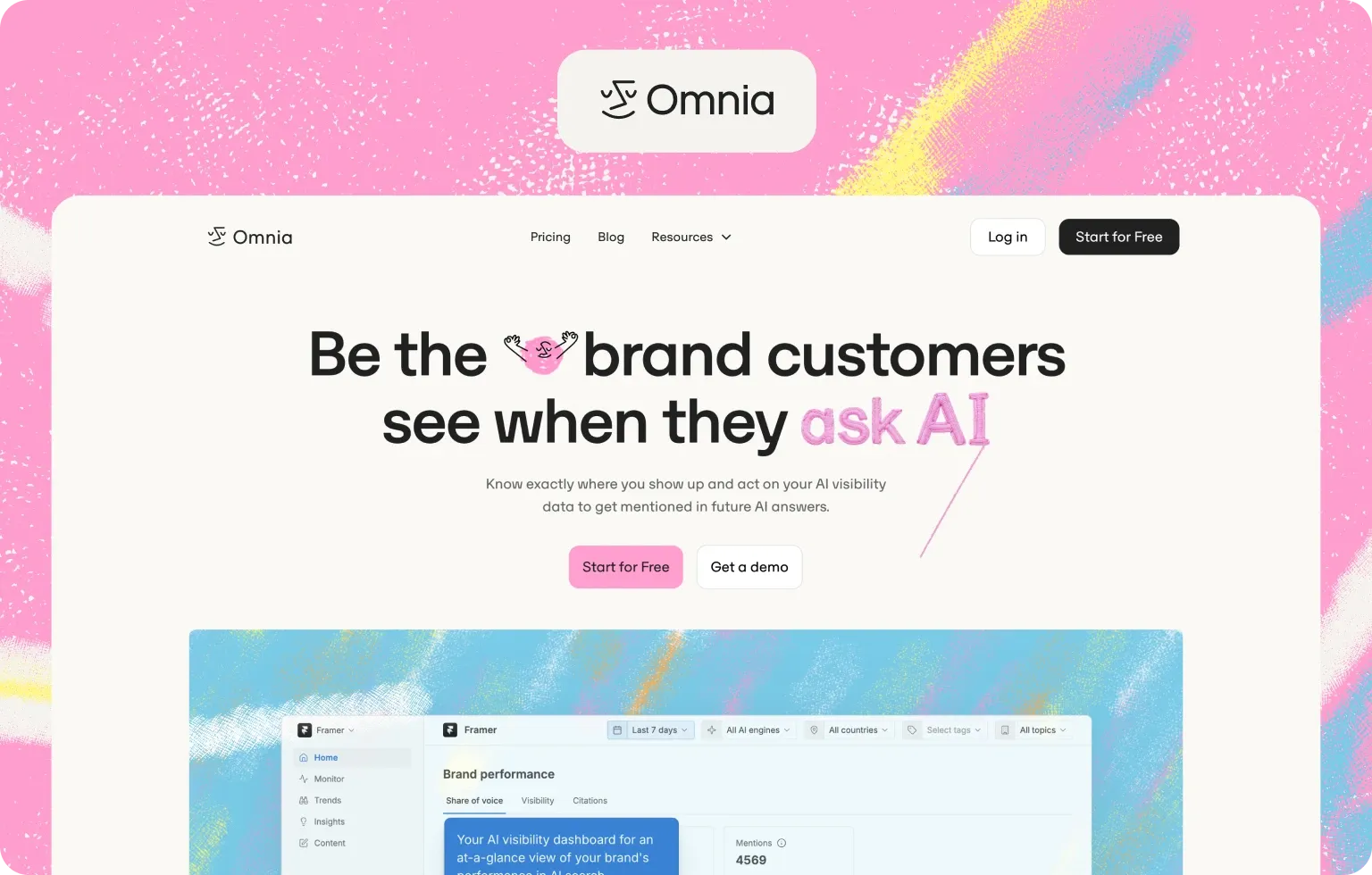
Omnia is an AI visibility platform built for SEO and product teams who need to understand not just if they're visible in Google AI Mode, but why competitors are cited and what actions will shift AI answers in their favor.
Best for
Startups and scaleups tracking Google AI Mode visibility across countries who need execution support, not just dashboards, to turn citation intelligence into shipped content.
What it does well
Omnia monitors your AI search visibility by tracking inclusion, mentions, citations, and answer share. Then, it turns those gaps into content recommendations you can act on. Unlike passive monitoring tools that show you charts and leave execution entirely to your team, Omnia tells you exactly what content to create, how to structure it, and where to publish it.
The platform's citation intelligence goes deeper than domain-level tracking. It reveals which specific pages AI engines trust, then provides content briefs structured around the patterns from winning citations, showing you what format, depth, and angles to replicate.
For teams publishing once or twice a month who can't compete on volume alone, this source transparency eliminates guesswork. You publish what AI actually references, backed by concrete evidence of citation patterns in your category.
Key features
Watch-outs
Omnia focuses on execution and content recommendations alongside tracking, which means setup includes configuring brand knowledge and content workflows. Teams wanting only passive monitoring without the action layer may find the platform more comprehensive than needed.
Good fit if
Not a fit if
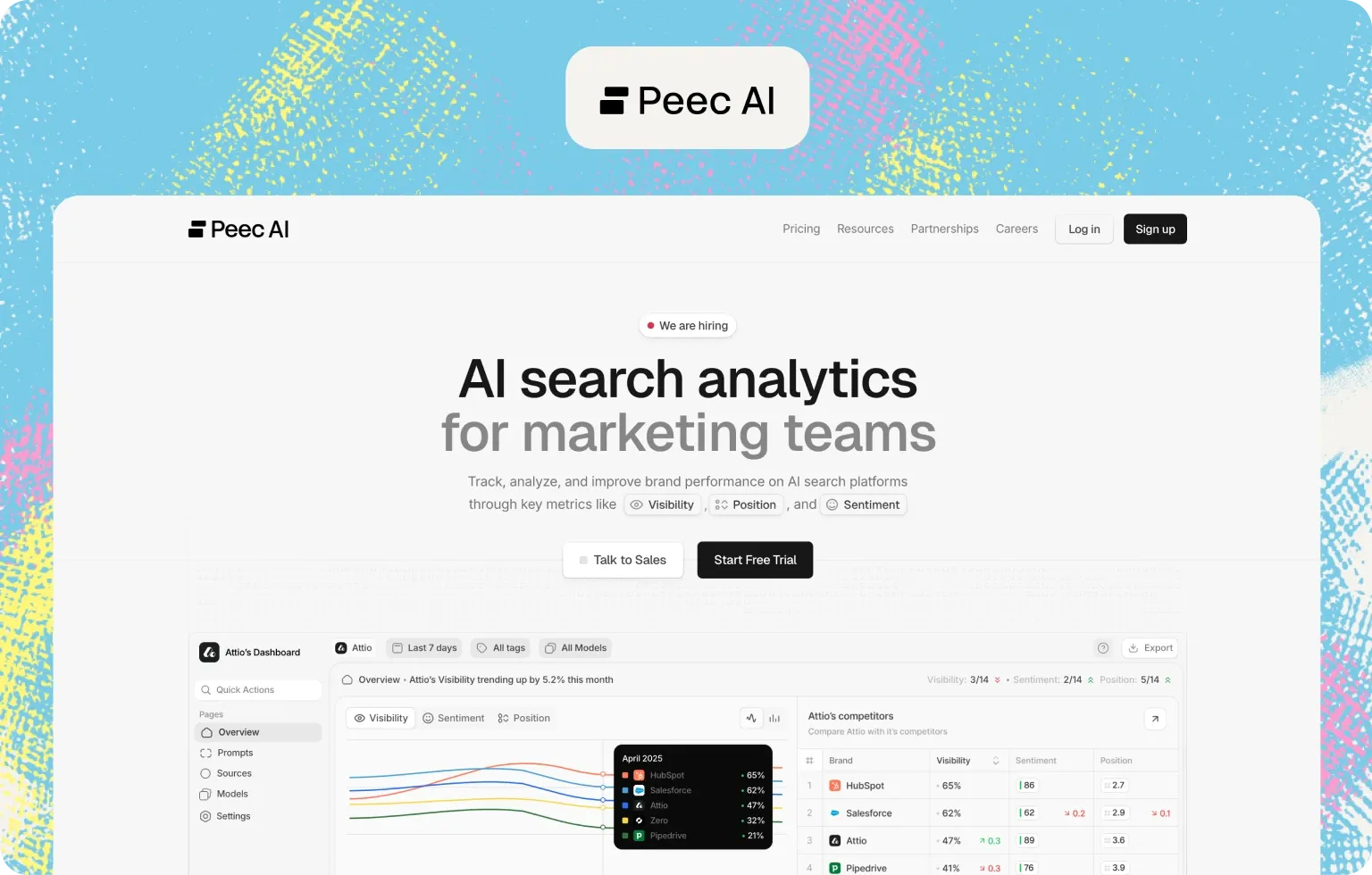
Peec AI is an AI search analytics platform that tracks brand visibility across multiple AI engines, including Google AI Mode, through UI scraping technology that simulates real user interactions.
Best for: Marketing teams at growing B2B companies who need accurate daily visibility tracking across AI platforms without enterprise-tier pricing.
Key features:
Watch outs: Peec is monitoring-only with no workflow. It shows you visibility gaps but doesn't generate content recommendations, briefs, or workflows to fix them.
Pricing
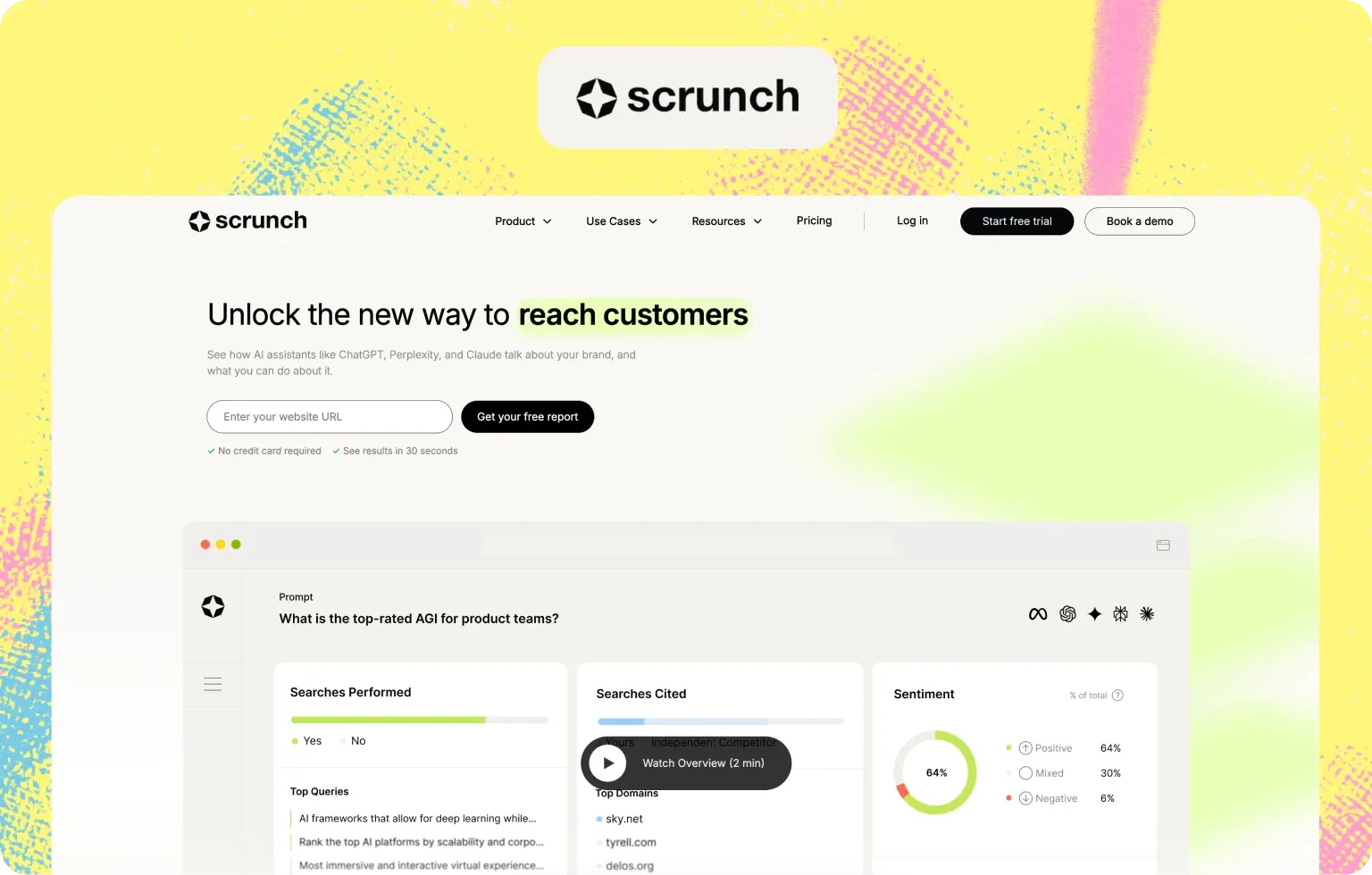
Scrunch AI is an enterprise AI visibility platform that tracks brand presence across major AI engines including Google AI Mode.
Best for
Enterprise teams and agencies that are willing to pay for extensive model coverage and an infrastructure layer to fix technical crawling issues preventing AI visibility.
Key features
Watch outs
Google AI Mode tracking requires the Enterprise plan (which is custom pricing) as the Core plan only includes four LLMs and excludes AI Mode. The platform is monitoring-first without an action layer.
Pricing
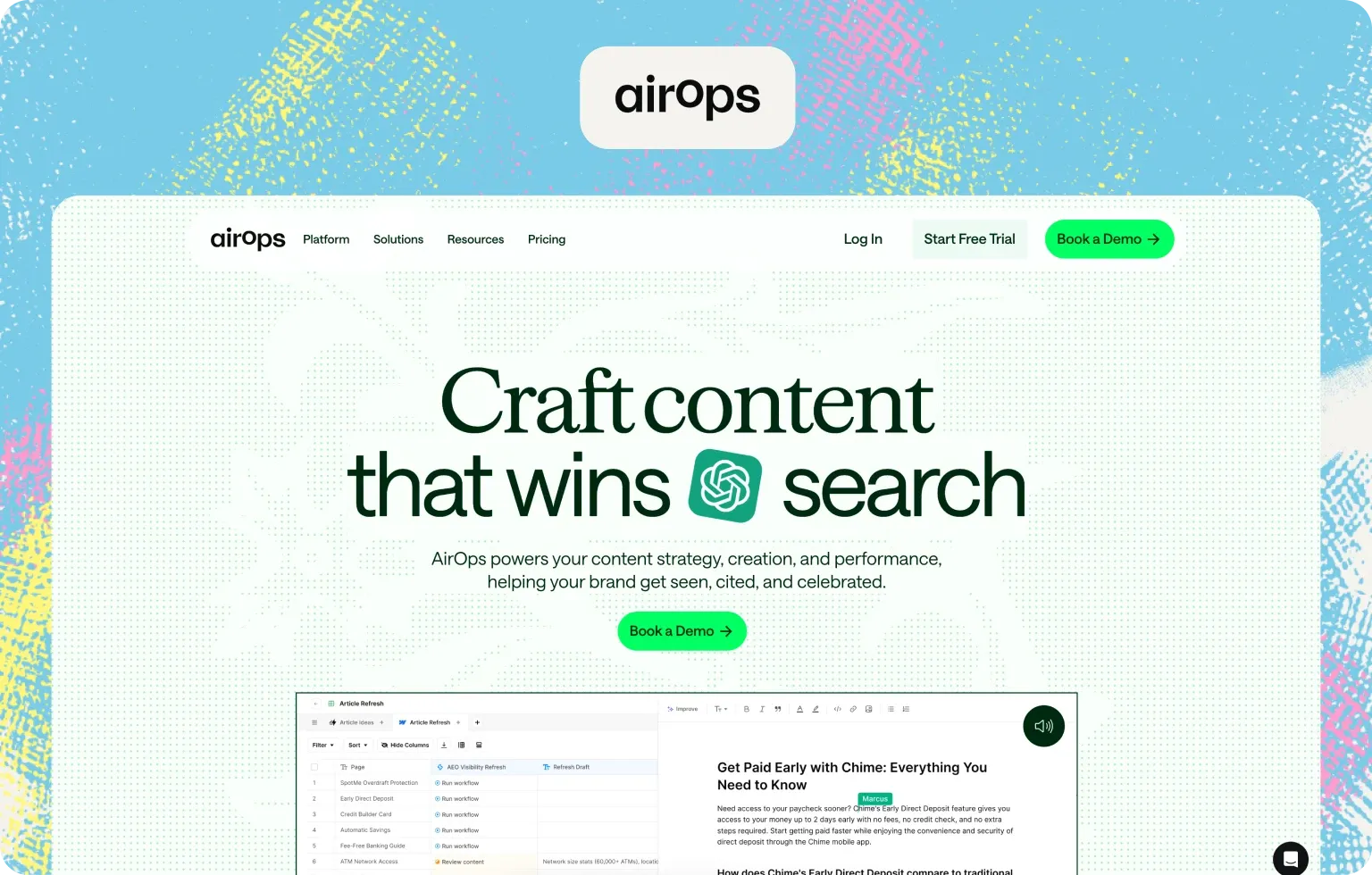
AirOps is a content operations platform that combines AI Mode visibility tracking with workflow automation for content creation, publishing, and optimization.
Best for
Established content teams that want to move from AI visibility insights to automated content fixes without switching tools — and have budget for the Pro tier.
Key features
Watch outs
The base plan excludes AI Mode entirely. Multi-engine AI Mode tracking requires the Pro plan which starts at $2,000/mo, unreasonable for startups and scaleups.
Pricing
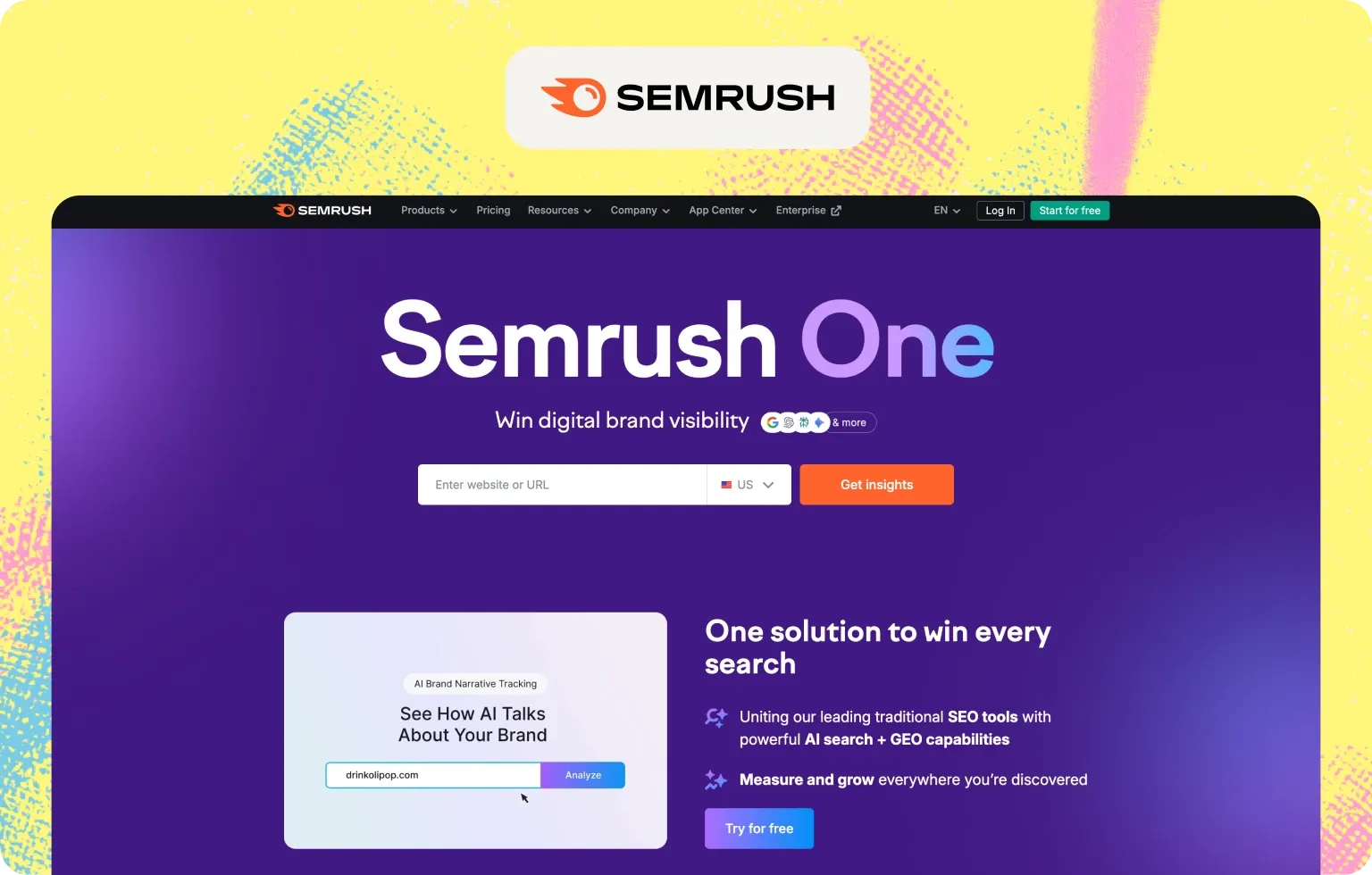
Semrush offers AI Mode tracking through its AI Visibility Toolkit and Position Tracking tool, integrated within the Semrush ecosystem alongside traditional SEO features.
Best for
Teams already using Semrush for SEO who want to add AI Mode visibility tracking to their existing workflow without switching platforms.
Key features
Watch outs
The standalone AI Visibility Toolkit costs $99/mo but only includes 25 tracked prompts and one domain. Scaling for agencies or multi-brand teams becomes expensive quickly.
Pricing
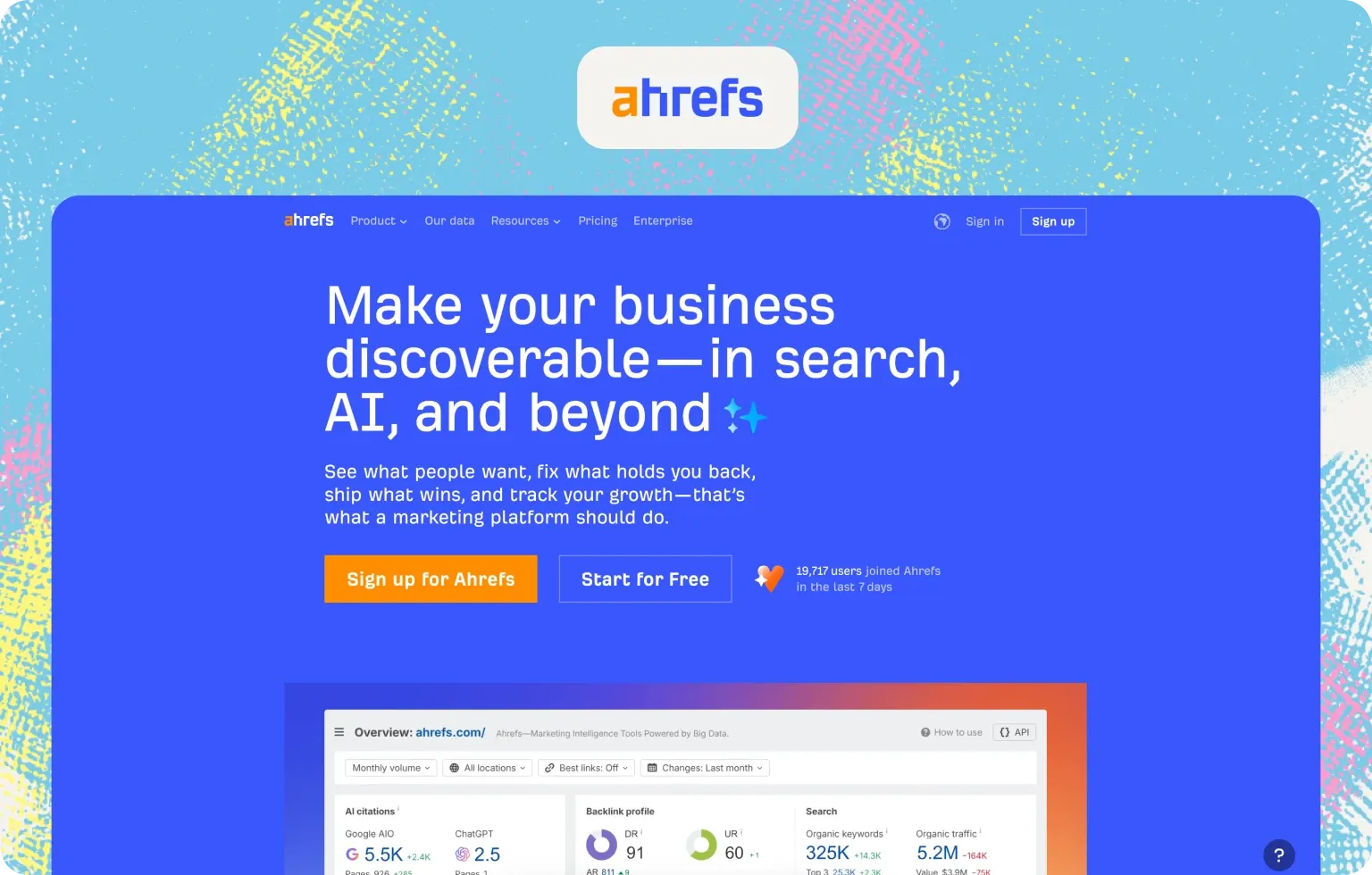
Ahrefs has an AI visibility tracking add-on called Brand Radar integrated into the SEO platform.
Best for
Teams already using Ahrefs for SEO who want AI Mode tracking layered onto their existing backlink and keyword research workflow.
Key features
Watch outs
Monthly refresh rate on AI platforms creates blind spots for fast-moving markets. A Base Ahrefs subscription is required plus $199/mo per AI platform.
Pricing
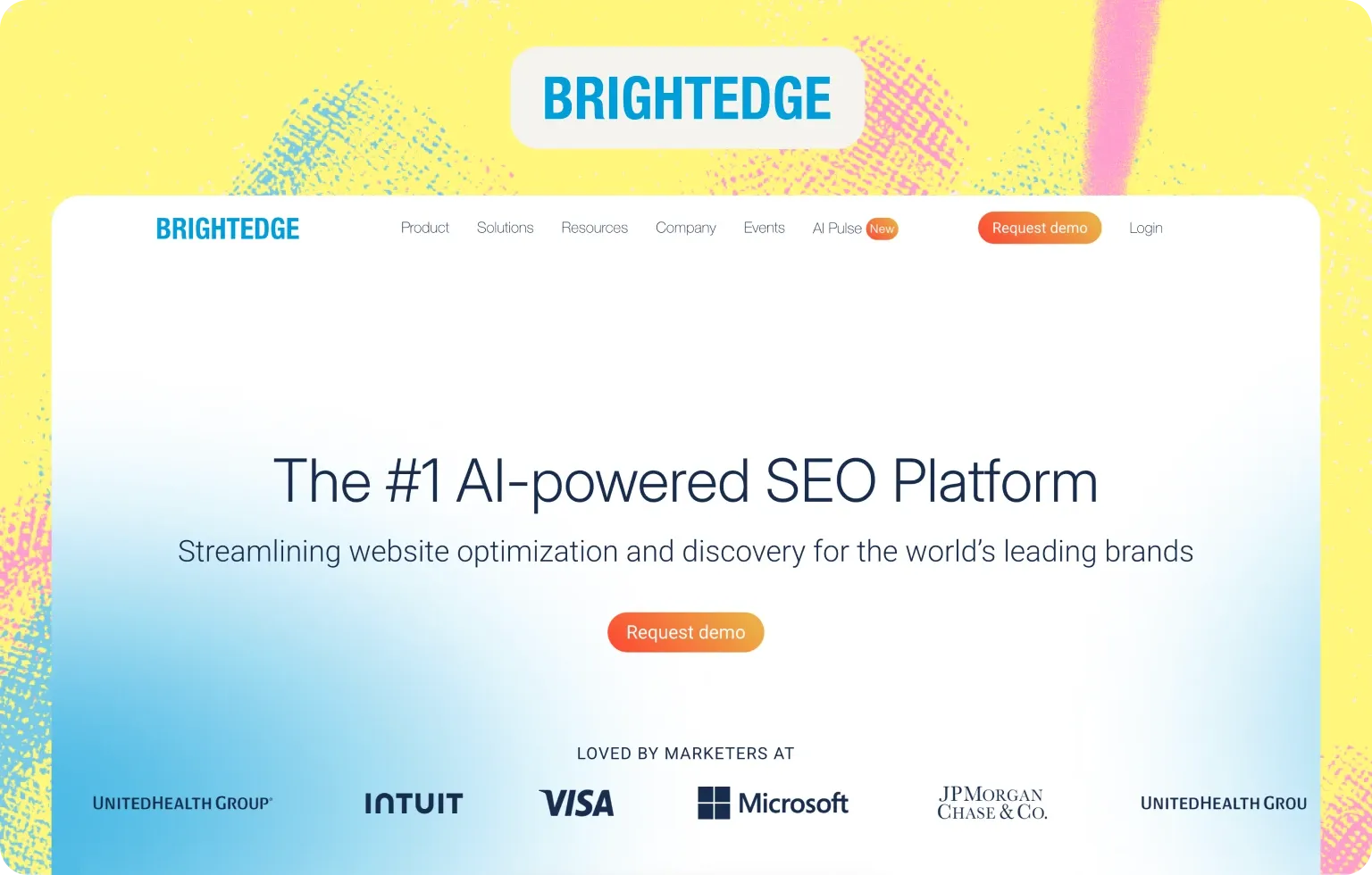
BrightEdge is an enterprise SEO platform with AI Catalyst that monitors Google's AI-driven search experiences.
Best for
Large enterprises requiring governance, executive-level reporting, and deep historical trend analysis for Google AI Mode alongside traditional SEO.
Key features
Watch outs
Features enterprise-only pricing with no published rates. BrightEdge is monitoring-focused without a content execution layer and has weekly refresh cycles.
Pricing
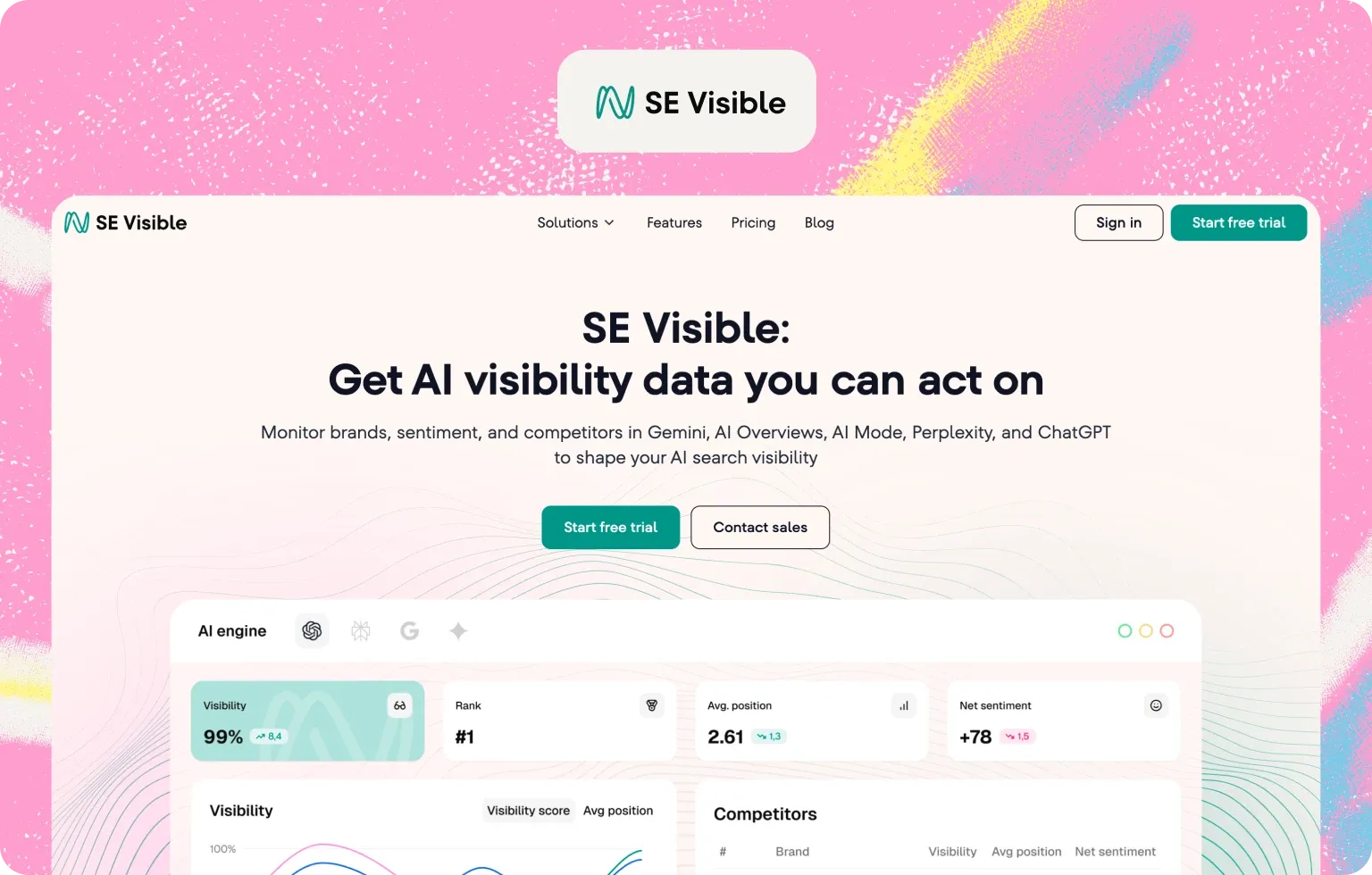
SE Visible is a purpose-built AI visibility platform created by the SE Ranking team, designed specifically for monitoring brand presence across AI search engines including Google AI Mode.
Best for
Agencies and multi-brand teams that need unlimited user seats, clear visibility dashboards, and strategic AI search monitoring without the overhead of a full SEO platform.
Key features
Watch outs
SE Visible is a monitoring-only platform without built-in content creation or optimization workflows. Export options are limited to CSV only.
Pricing
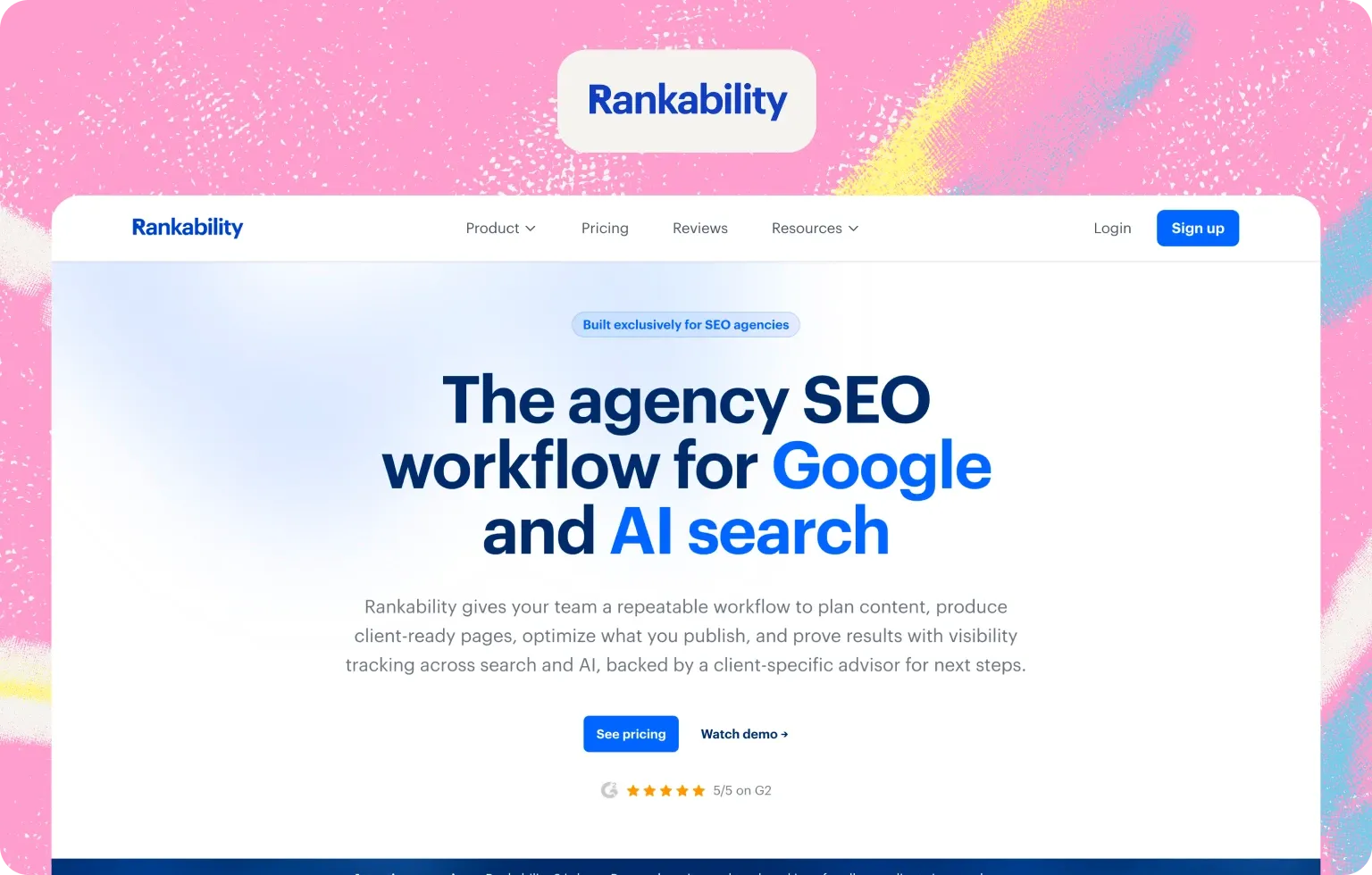
Rankability is an AI SEO platform built for agencies that includes Reporter, a rank tracking tool that monitors visibility across traditional search engines and AI platforms including Google AI Mode.
Best for
SEO agencies managing multiple clients who need a unified visibility metric (SPI score) that combines traditional rankings, AI mentions, and AI citations in shareable client dashboards.
Key features
Watch outs
Rankability is positioned as a full AI SEO platform (research, content creation, optimization, tracking) rather than a standalone visibility tracker. The Reporter module is one piece of a broader toolkit.
Pricing
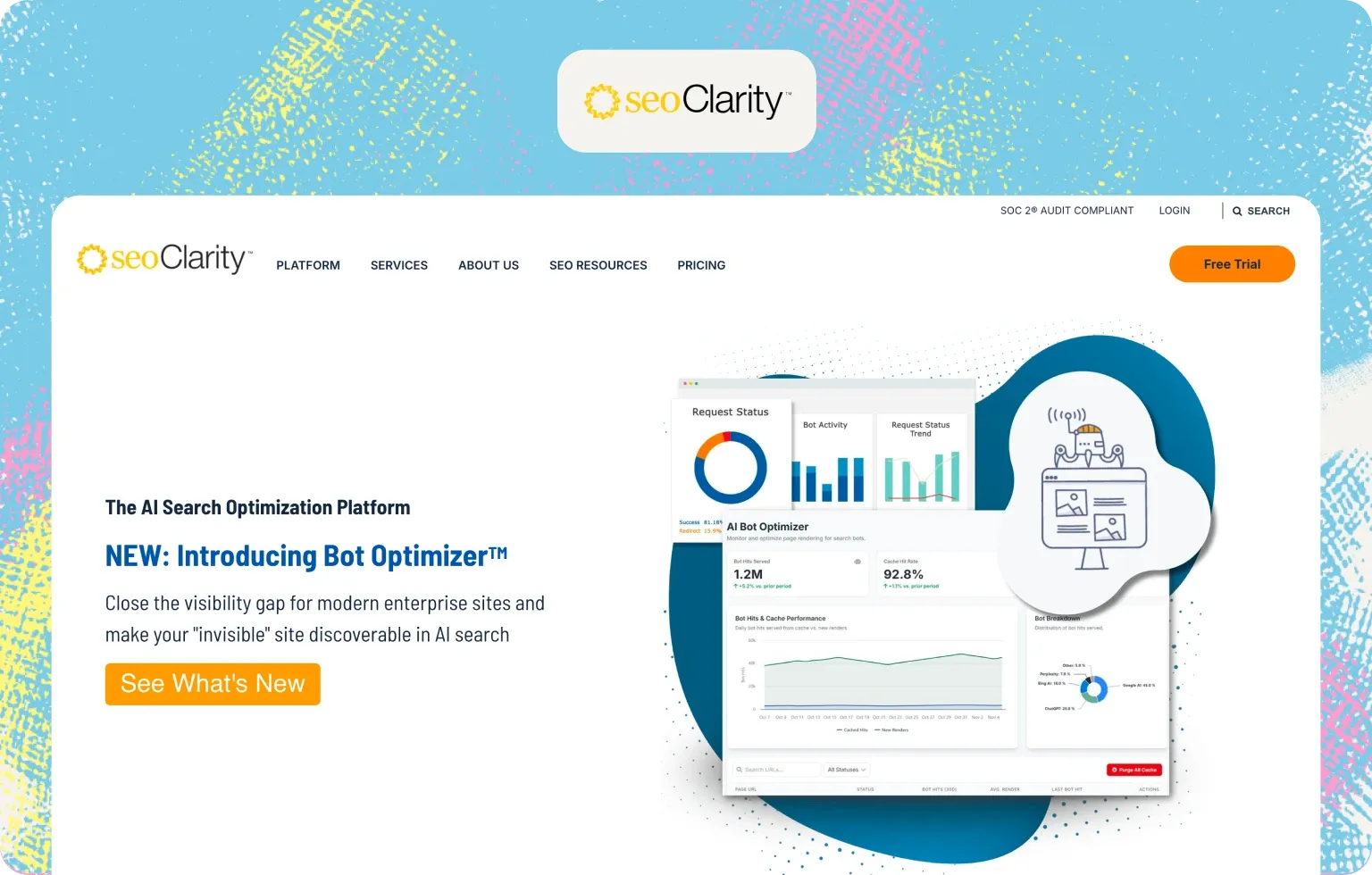
seoClarity is an enterprise AI search optimization platform that integrates Google AI Mode tracking with a full-stack SEO suite.
Best for
Global enterprises with mature SEO programs, dedicated data teams, and budgets for comprehensive AI search visibility.
Key features
Watch outs
seoClarity has a steep learning curve that requires onboarding support. Custom quote-based pricing places it in premium territory, making it inaccessible for small or mid-sized teams without enterprise budgets
Pricing
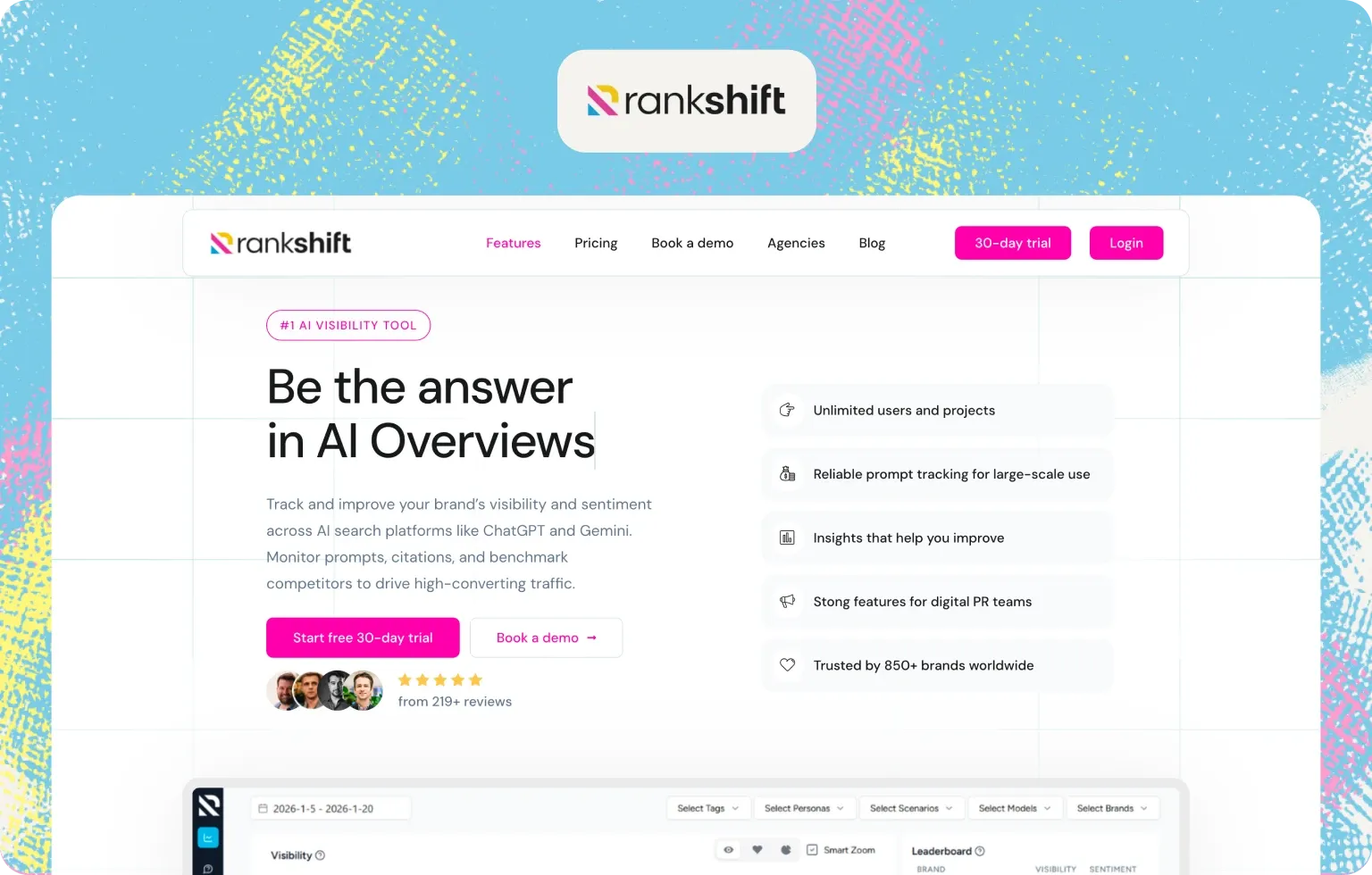
Rankshift is a purpose-built AI visibility monitoring platform that focuses exclusively on tracking presence across major language models.
Best for
SEO teams and agencies expanding into AI search monitoring who need citation-gap analysis and competitor intelligence with unlimited user access.
Key features
Watch outs
Founded in 2025, Rankshift is one of the newest platforms on this list with limited long-term performance data or user reviews.
Pricing
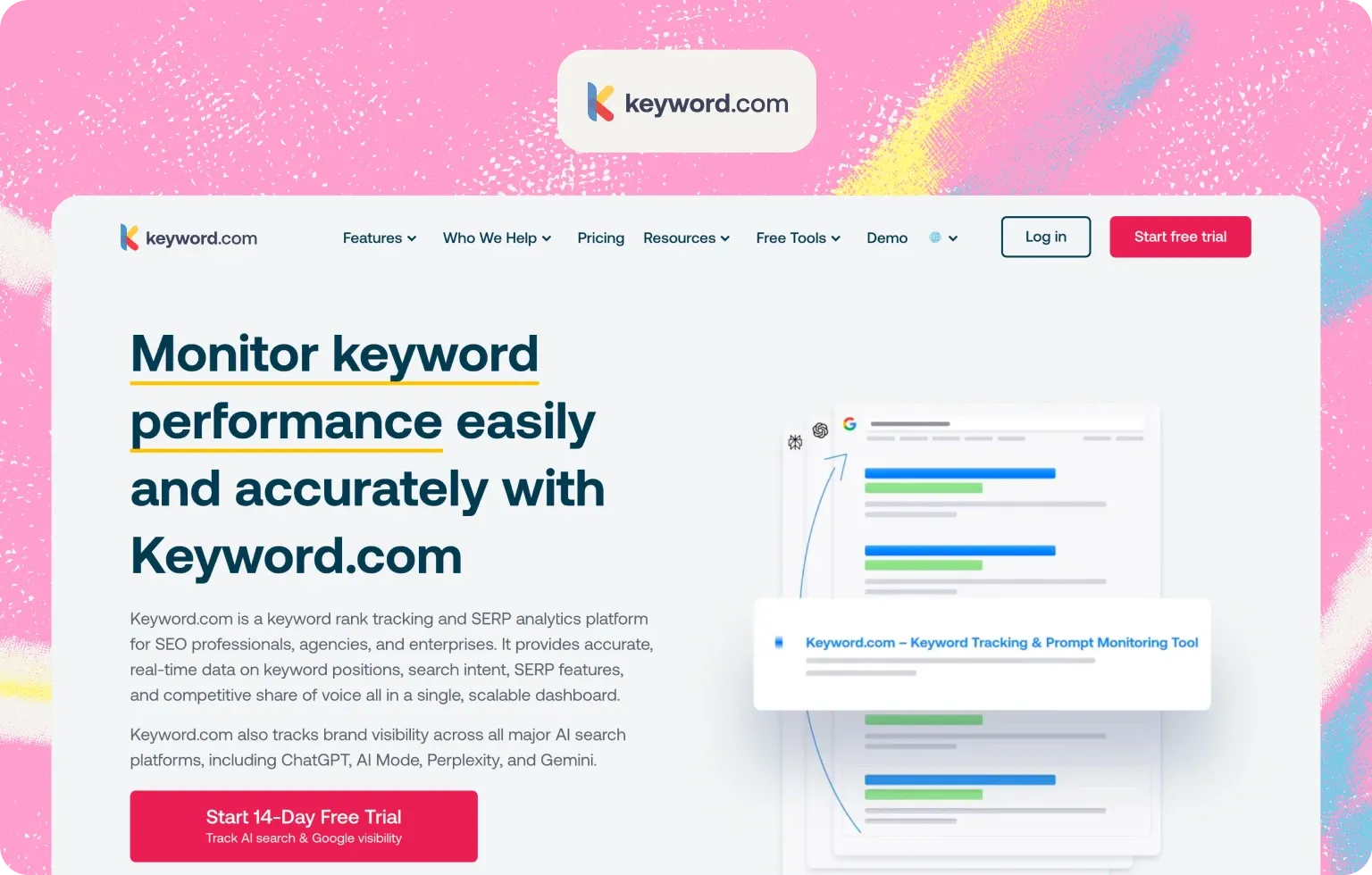
Keyword.com is a rank tracking platform that offers AI Mode visibility monitoring as a credit-based add-on to its core SEO tracking service.
Best for
Small teams and agencies that want precise, verifiable AI visibility tracking with flexible scheduling options at budget-friendly pricing.
Key features
Watch outs
Credit-based billing can become expensive for heavy users or agencies running frequent refreshes across multiple engines. Credits reset monthly without rollover, making budget forecasting challenging for teams with variable tracking needs.
Pricing
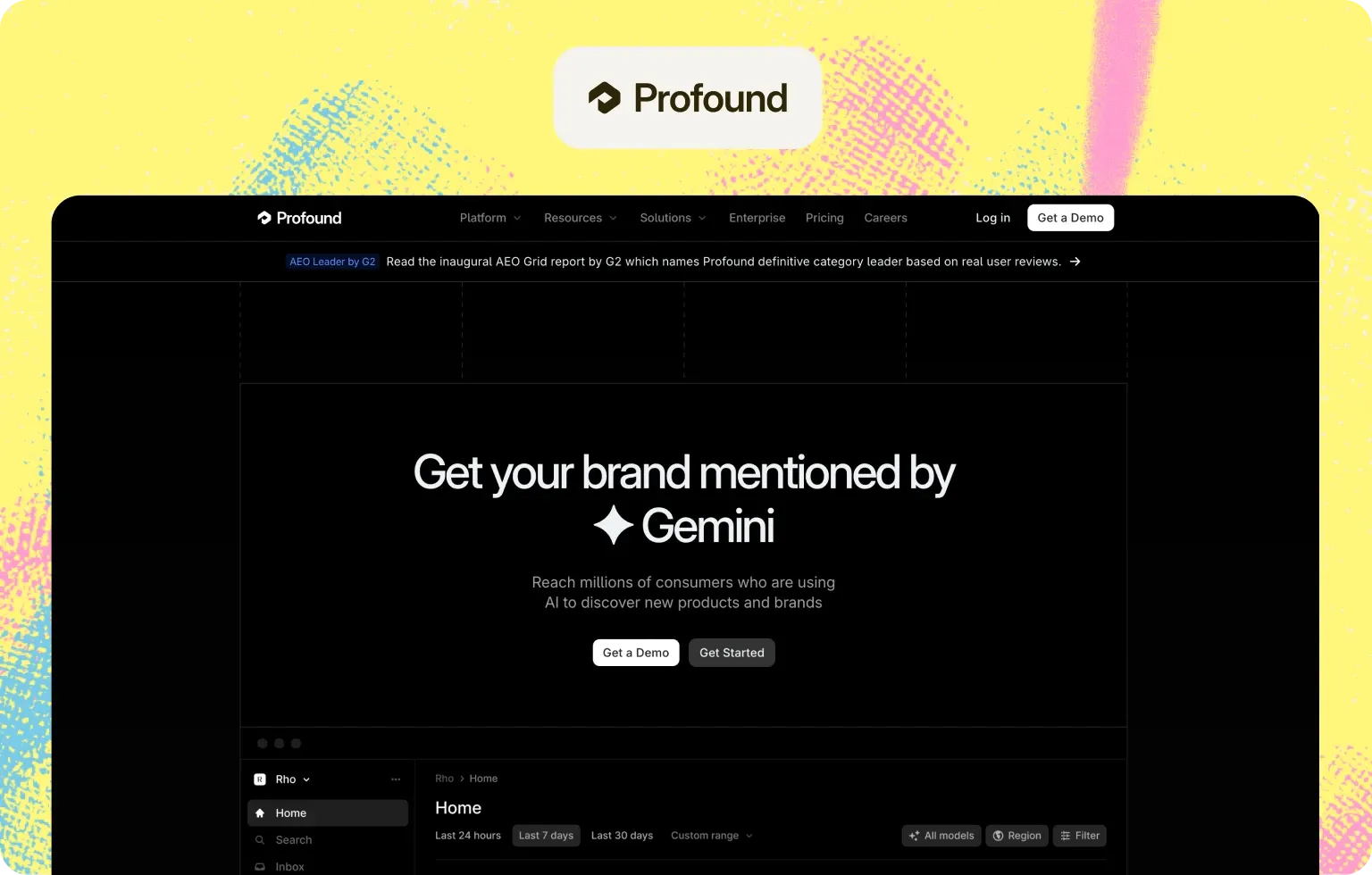
Profound is an enterprise AI visibility platform that supports Google AI Mode alongside its multi-engine tracking capabilities.
Best for
Enterprise brands and Fortune 500 companies requiring SOC 2 compliance, SSO integration, and API access for large-scale AI visibility monitoring with dedicated analyst support.
Key features
Watch outs
Google AI Mode is not available in the Starter plan, meaning teams need to spend at least $399/mo.
Pricing
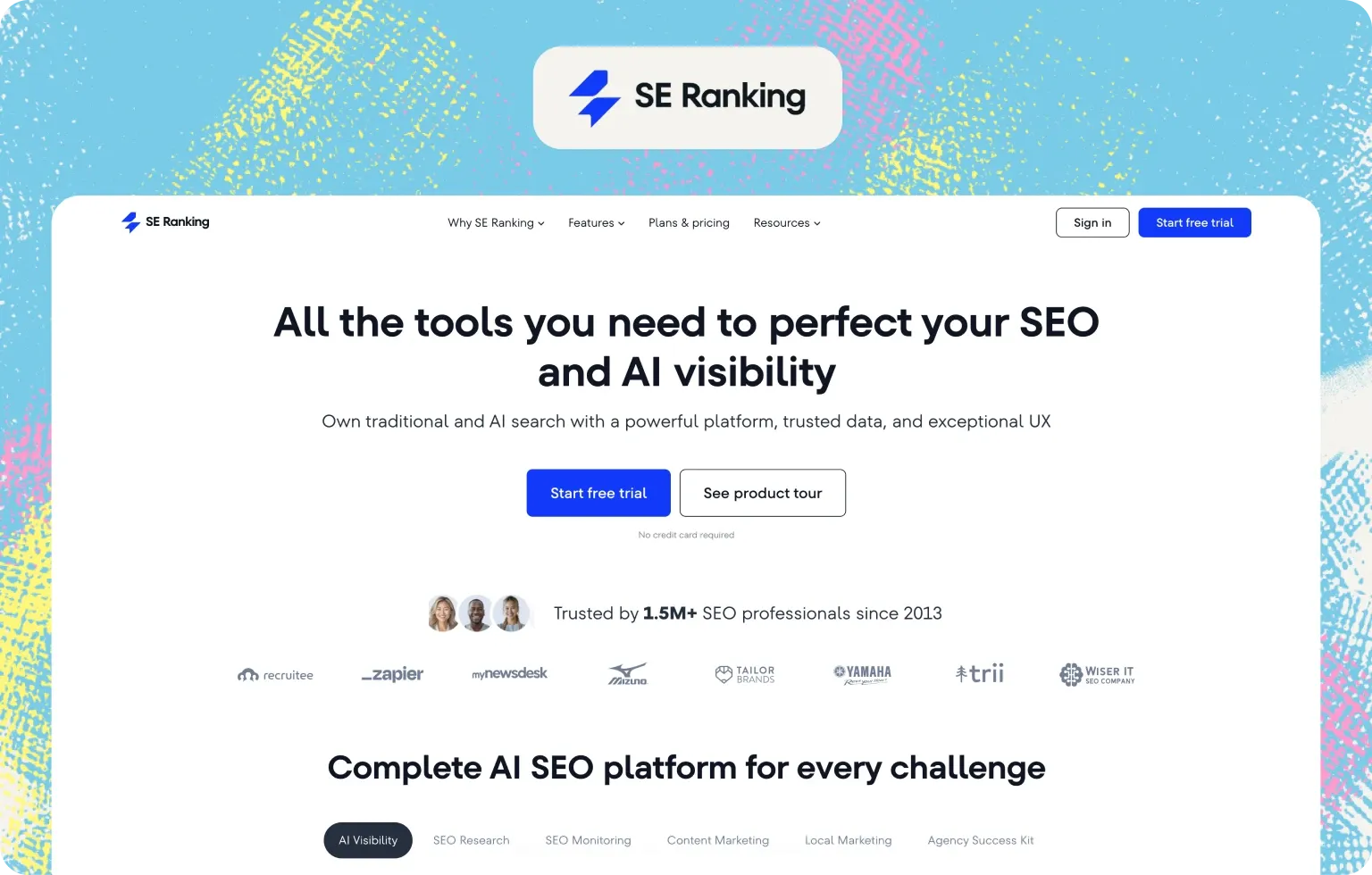
SE Ranking is an all-in-one SEO platform that includes an AI Mode Tracker as part of its AI Search Toolkit, integrated alongside traditional SEO features.
Best for
SEO teams and agencies that want AI Mode tracking bundled with a full SEO suite (rank tracking, site audits, backlink analysis, keyword research).
Key features
Watch outs
While SE Ranking includes SEO and AEO in the base plan, there’s an additional $89/mo add-on to track, analyze, and optimize brand visibility across AI platforms.
Pricing
Most teams configure 200 random prompts, set everything to daily refresh, then wonder why nobody looks at the dashboard three weeks later. This seven-day plan gets you from a signed contract to actionable weekly reports with clear ownership.
Choose 2–3 countries, select 3–5 competitors, and assign prompt ownership. This includes SEO (category/comparison), Content (educational/use-case), and PR (brand/reputation).
Start with 80–100 prompts across four tiers:
Set three alert tiers based on urgency:
Make sure everyone is aligned on their responsibilities. Follow the RACI matrix and assign ownership appropriately:
Build a 5-minute Monday email template with five key sections:
Configure your prompts, set alerts, schedule first refresh, create a dashboard, schedule the Monday 10am review, and verify your data collection.
Total time: 13 hours.
As you’re running this week-long plan, avoid these common mistakes:
Most AI visibility tools answer one simple question: “Do we show up today?” They'll report 47% inclusion this week versus 51% last week, then leave you to figure out what to do about it. That's useful baseline data, but it's not the question that keeps founders awake at night. They want to know which prompts are winnable for a 15-person startup competing against category leaders? Or how competitors are dominating a high-intent query, and what exactly are they doing differently?
Omnia addresses these questions for teams where one marketer manages the blog, publishes twice monthly, and reports to a founder who needs to justify AI visibility spend to a board that still thinks “SEO” means keywords. The platform's Insights feature analyzes your monitoring data and auto-generates prioritized task lists. It turns “Competitor X dominates this prompt” into specific actions like “Post an FAQ-style reply in r/ProjectManagement” or “Add a comparison table to your pricing page.”
You're not buying another dashboard to check Mondays and ignore by Wednesday. You’re buying a workflow that makes it realistic to compete in AI search without adding headcount, focused on prompts where you have realistic odds rather than chasing high-volume terms owned by companies with 50x your budget.
Book a demo to see how Omnia turns AI visibility insights into shipped content. Or sign up for the Growth plan for a 14-day free trial.
Omnia offers a 14-day free trial on the Growth plan.
No credit card required. See exactly where your brand shows up (or doesn't) across AI engines, then let the platform's recommendations guide your next move.

No, AI-generated results don't use traditional position-based rankings like classic rank tracking. Instead, AI models synthesize information from multiple sources into conversational answers with inline citations, making traditional SEO metrics like position 1-10 irrelevant.
Request timestamped screenshots showing the actual “Try AI Mode” interface with full answer text and citations, not just the AI Overviews block at the top of search results. True AI search tracking tools can demonstrate the technical difference and show separate visibility data for each format during vendor demos.
An AI visibility dashboard tracks your presence across multiple AI-powered search engines (ChatGPT, Perplexity, Gemini, Google AI Mode), while an AI Mode tracker focuses specifically on Google's conversational search experience. Both represent a departure from traditional SEO rank tracking by measuring inclusion, citations, and answer share rather than fixed positions.
Traditional SEO tools like Semrush and Ahrefs now offer AI discovery and tracking visibility features, but AI Mode support often requires a paid add-on to their core features. These platforms work well if you already have deep integration with their existing SEO rank tracking and want to consolidate tools, but dedicated AI search tracking platforms may offer more comprehensive AI presence monitoring.
Daily tracking is ideal for brands actively publishing content marketing and needing to measure immediate impact, while weekly snapshots work for established brands with stable content. The key difference from traditional SEO tracking is that AI models can shift citation logic overnight with model updates, making more frequent monitoring valuable for capturing these changes.
Report AI answer share and inclusion rates rather than traditional SEO metrics like rankings, since AI-generated summaries don't have fixed positions. Connect visibility data to business outcomes by showing how AI presence correlates with branded search demand and organic traffic trends through Google Analytics integration, providing actionable insights that demonstrate ROI beyond vanity metrics.
Written By
 JoseGrowthatOmniaJoseGrowthatOmnia
 AndreiHead of GrowthatOmnia
 AndreiHead of GrowthatOmnia
 AndreiHead of GrowthatOmnia
 AndreiHead of GrowthatOmnia
No credit card required · Free for 14 days · See your AI visibility within 3 minutes