Alternatives
Ahrefs vs BrightEdge vs Omnia: Key Differences for 2026

 JoseGrowthatOmnia
 AndreiHead of GrowthatOmnia
TL;DR
The best Athena HQ AI alternatives help you go beyond basic monitoring by doing three things: they show how your visibility changes by country, reveal the specific URLs competitors get cited from, and turn that information into content briefs and placement targets for you to act on. Athena HQ is strong on citation tracking and recommendations, but credit limits on the Self-Serve plan can constrain lean teams running high-volume prompt testing, and deeper citation features require Enterprise pricing. Omnia is the #1 pick if you need to act on competitor citation data without hitting volume ceilings or Enterprise paywalls. It's built for growth marketers and AI leads who want a direct path to producing content that improves performance.
If you’re looking for Athena HQ replacement tools, you’ve likely reached a point where you need more than visibility tracking. Perhaps you want to see exactly which URLs AI engines are citing rather than domains, or monitor performance across multiple countries without paying for each market separately. Maybe you want built-in content briefing and content creation tools so you can act on insights faster.
This guide focuses on Athena HQ, the AI search visibility and brand mentions tracking platform, not other products that use the Athena name.
Below, you'll find the best Athena HQ alternatives for growth marketers and AI leads at scaleups. We compare platforms based on their country-level visibility, URL-level citation data, and features that help teams produce published content without adding extra work.
Athena HQ is a good fit for funded startups, scaleups, and enterprise teams that need guidance alongside AI visibility data. Rather than leaving teams to interpret dashboards on their own, it’s designed to help identify opportunities and prioritize what to work on next.
The platform's Action Center turns citation and visibility data into prioritized recommendations, and Ask Athena lets you explore performance through natural language questions without building custom reports. Search Console, Shopify and Google Analytics integrations connect visibility changes directly to traffic and revenue.
Athena HQ works particularly well for teams that need AI search performance visibility for multiple stakeholders. Unlimited seats on self-serve plans mean SEO, content, marketing teams and leadership can all work from the same data without per-user cost pressure as the team grows.
Use this table to quickly shortlist platforms before diving into detailed reviews below:
| Tool | Best for | Why consider it over Athena HQ | Starting price |
|---|---|---|---|
| Omnia | Growth marketers and AI leads at scaleups who want to act on citation data across markets | URL-level citations and native content briefs | €79/mo |
| Scrunch AI | Enterprise teams with SOC 2 requirements | AI crawler analytics alongside citation output | $250/mo |
| Peec AI | Teams wanting granular daily citation data | No per-seat pricing, daily tracking | $95/mo |
| Profound | Regulated industries needing compliance certifications | 400M+ prompt database, SOC 2 and GDPR | $99/mo |
| Otterly AI | Teams validating AI search on a budget | Lowest entry price, on-page audit tool | $29/mo |
| AirOps | Teams prioritizing content production speed | Connects citation data to CMS publishing | $200/mo |
| Semrush | SEO teams already in the Semrush ecosystem | AI visibility within existing SEO workflow | $99/mo add-on |
| Ahrefs | SEO teams already using Ahrefs | Backlink-to-citation correlation at scale | $199/mo |
| BrightEdge | Existing BrightEdge enterprise customers | AI visibility without adding a new vendor | Contact vendor |
Each profile below covers how the platform tracks AI visibility, features that go beyond monitoring, and whether it fits lean marketing teams. See which alternatives to Athena for AI search are right for you.
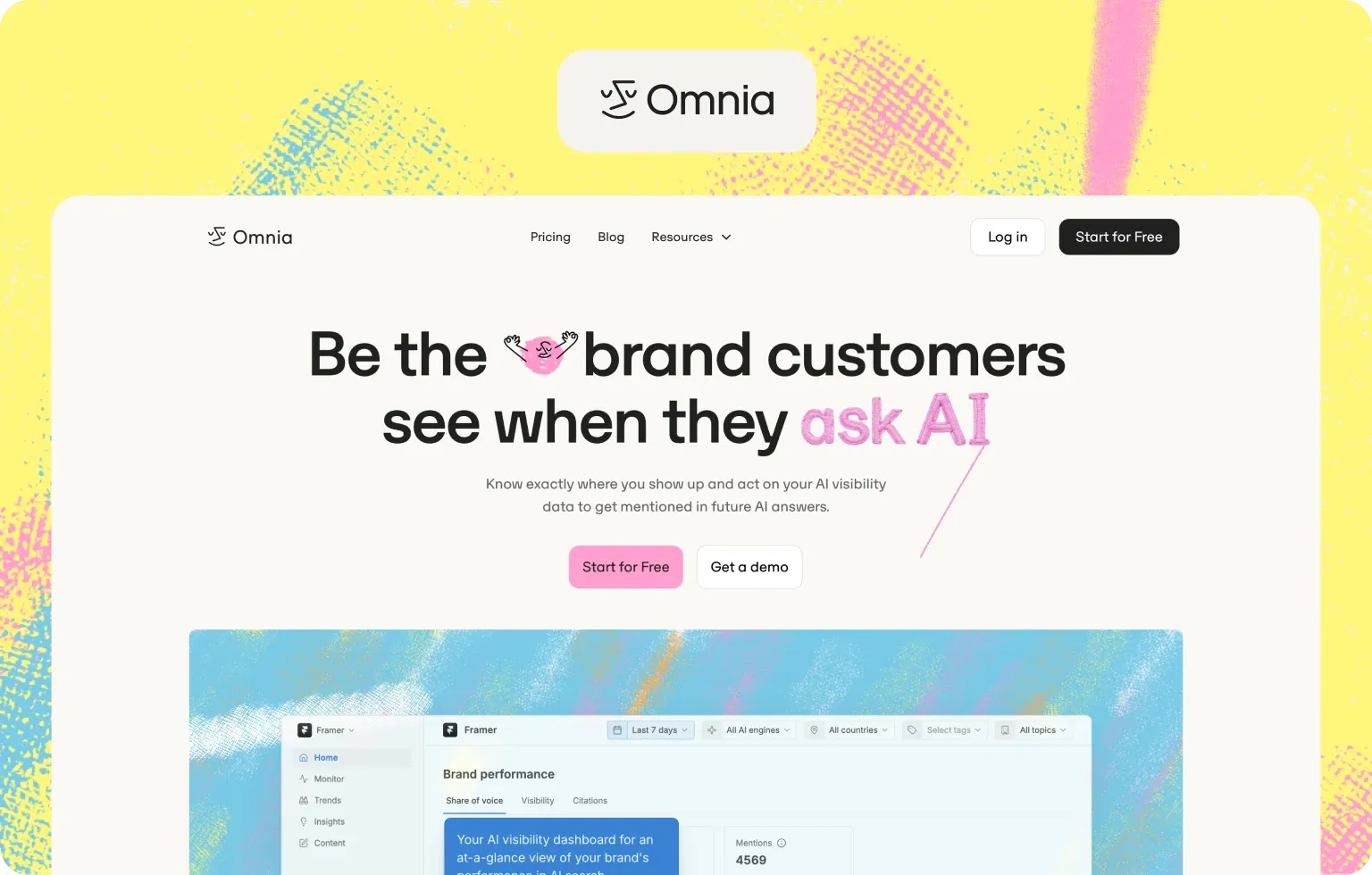
Omnia is an AI search visibility platform that tracks where and how your brand appears across ChatGPT, Perplexity, Google AI Overviews, Google AI Mode, Claude, Gemini, and Copilot, down to the specific competitor URLs earning citations in your category. When competitors are winning citations you should own, it generates a content brief or placement target your team can act on.
Growth marketers and AI leads at scaleups who need to track AI search visibility across different markets, understand why competitors are getting cited, and quickly turn those insights into content briefs.
Omnia solves the core problems that force teams to look for AthenaHQ alternatives. Omnia uses real browser sessions in each market it tracks, so you see the answers users in the UK, Germany, or Spain get from AI engines. Citation data goes down to the page level, showing exactly which competitor URLs are being cited rather than just which domains appear.
That level of detail matters because AI citations change constantly. If a competitor is winning a prompt such as "best AI research platform for enterprise teams," Omnia shows the specific page earning those citations and recommends what to do next, whether that's creating new content, updating an existing page, or targeting a third-party publication.
Omnia also breaks down how AI engines talk about your product in areas like pricing, usability, and support, compared with competitors. This helps teams understand which perceptions are helping or hurting visibility and where improvements are most likely to have an impact.
Teams still need to create and publish the content themselves. Omnia provides recommendations and content briefs.
Choose Omnia when you need to understand why competitors are being cited in AI answers and what to do about it. It shows the exact pages earning citations, highlights where competitors are outperforming you, and helps turn those insights into content plans without relying on additional tools.
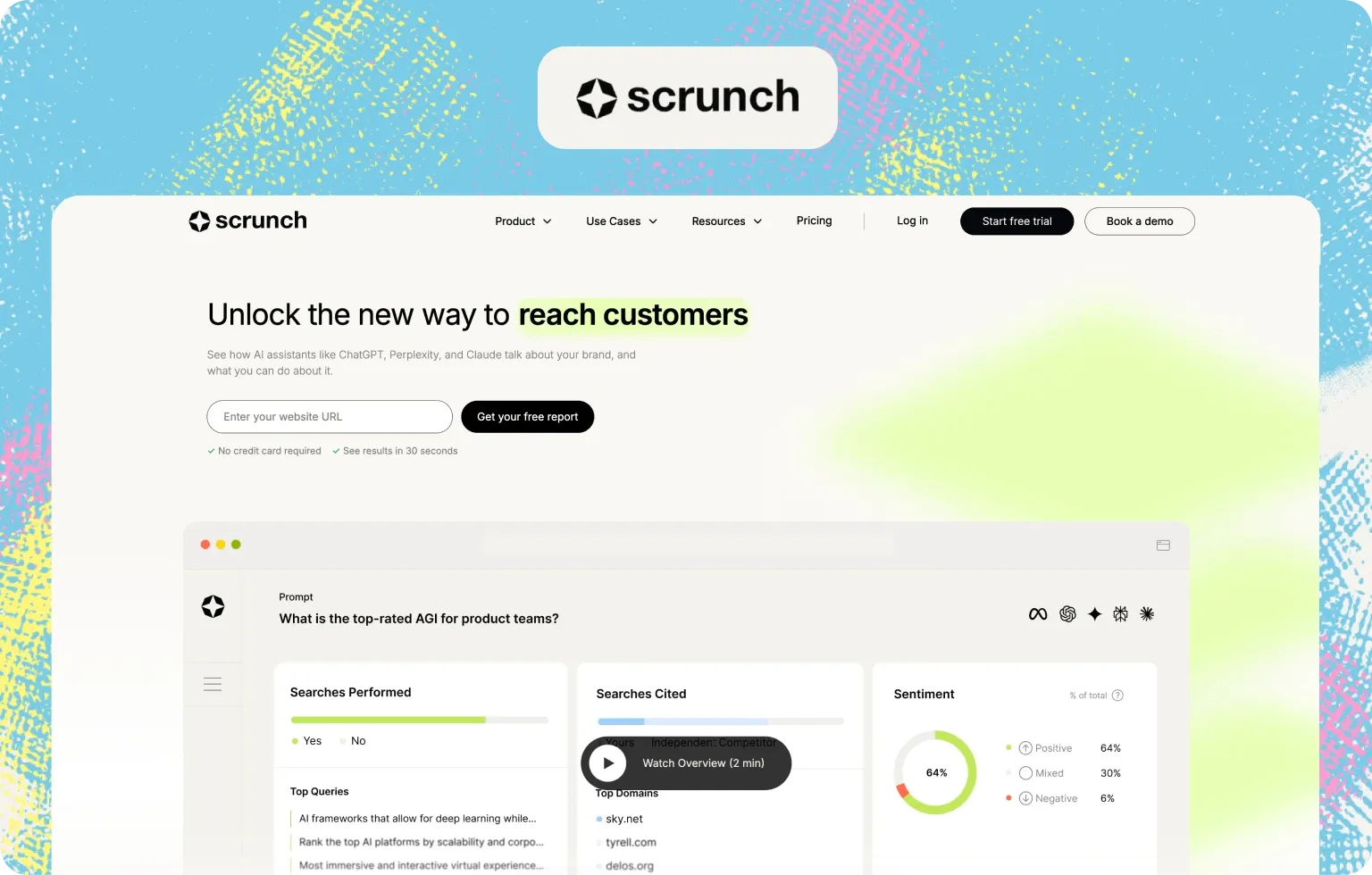
Scrunch AI is an enterprise AI visibility platform that tracks where your brand appears in AI answers alongside when and how AI crawlers access your content.
Enterprise teams and large agencies where SOC 2 certification is a must-have and detailed citation data matters more than execution speed.
Scrunch's crawler feed logs when AI bots visit your pages, how frequently, and which pages they return to. That access data helps explain why certain pages get cited and others don't. Citation lists include influence scores showing which domains carry the most weight in AI recommendations.
There is no native way to turn citation data into content briefs or placement targets, so your team still needs to act on insights themselves or use a Scrunch alternative. The Core plan covers 4 engines only, with 9-engine coverage requiring Enterprise pricing.
Choose Scrunch when your team needs to diagnose why AI engines aren't citing your pages at a technical level, or when you’re looking for Athena HQ alternatives for agencies and multi-client management is non-negotiable.
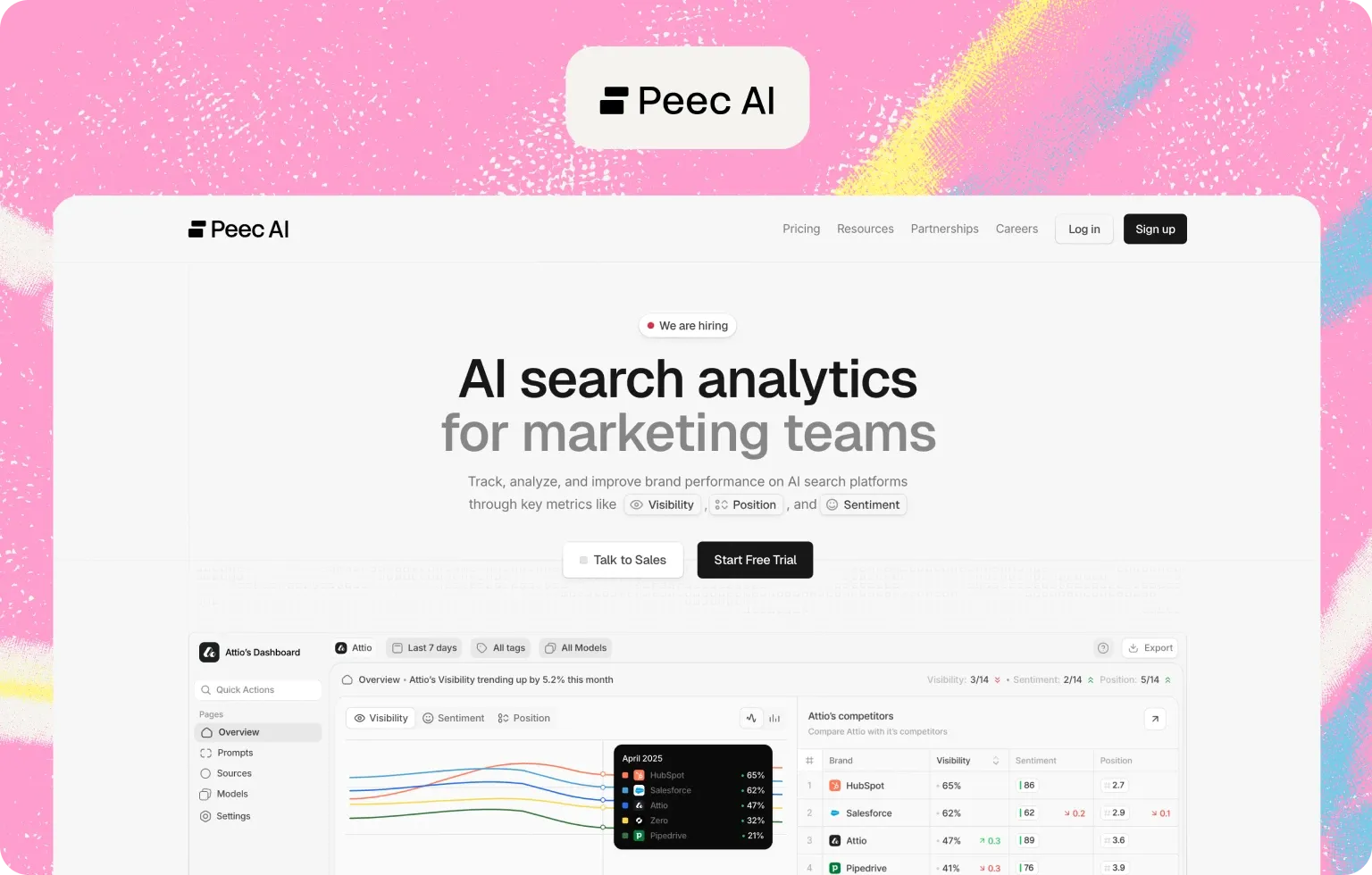
Peec AI is a credit-based AI citation monitoring platform with URL-level citation data and daily tracking.
SEO and growth teams that want detailed citation data without paying per seat.
Peec AI breaks down what type of content competitor citations come from (e.g. editorial, Reddit, or user-generated) so you know what kind of content to produce along with which domains to target. Daily tracking means you catch competitive shifts as they happen.
Unlike some Peec AI competitors, multi-country tracking is restricted at every plan below Enterprise, and the action layer routes through external tools via MCP rather than generating content briefs within the platform.
Choose Peec AI when citation data granularity and daily tracking matter more than native content brief generation, and your team is comfortable using external AI tools to act on the data.
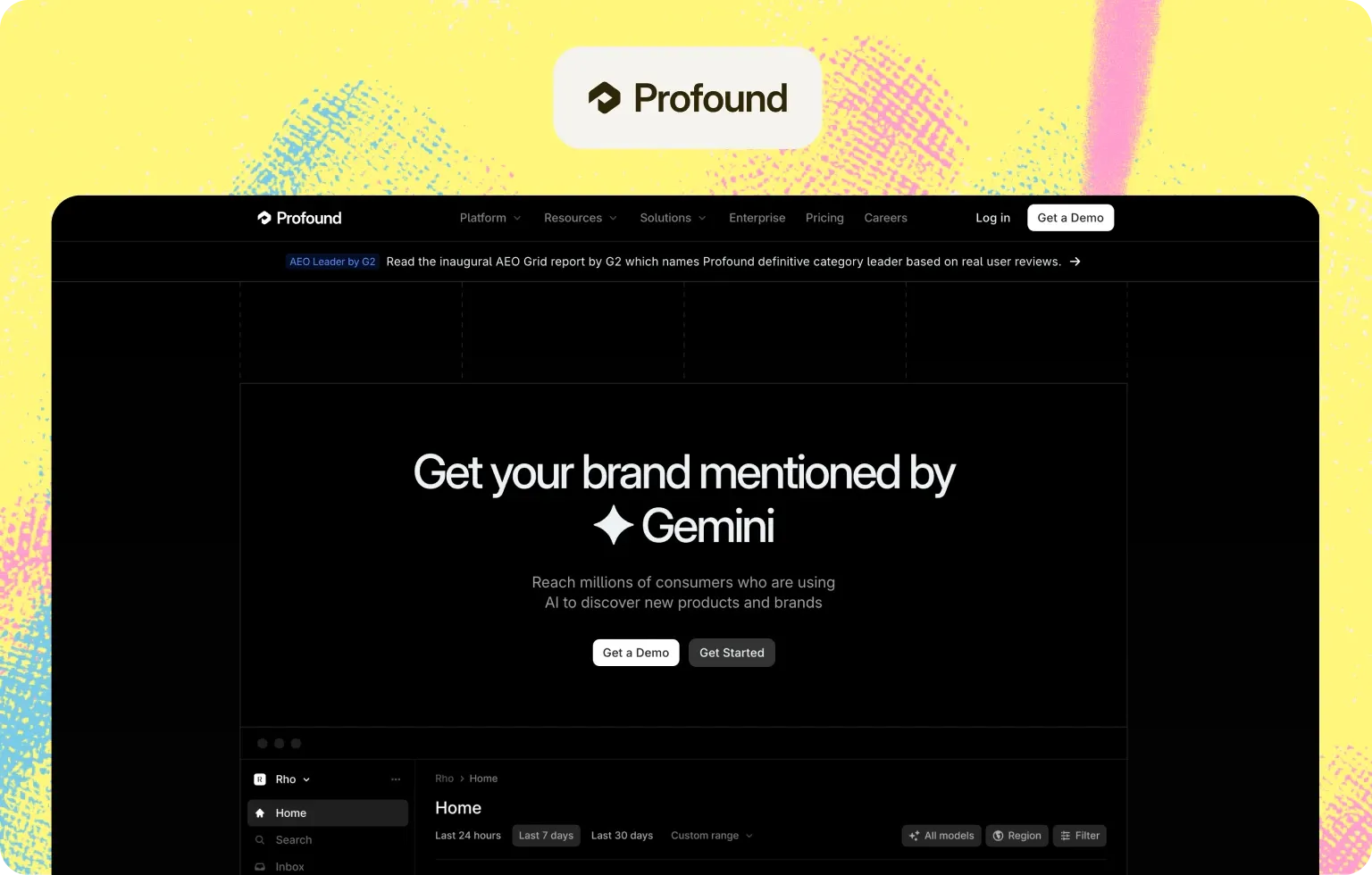
Profound is an enterprise AI search tracking platform built around data governance and market-research-grade analytics.
Enterprise teams in regulated industries where security certifications and audit trails have top priority.
Profound's Conversation Explorer uses data from more than 400 million conversations to show what people are asking across AI platforms, giving teams a large pool of real-world questions to build prompt sets from. Different stakeholders can view the data through role-specific dashboards, making it easier to share insights across teams.
The Starter and Growth plans both lock you to one region and one language, so you’ll need the highest tier for multi-country and multi-language tracking or a Profound alternative.
Choose Profound when white-glove support and compliance infrastructure justify the Enterprise features and plan price.
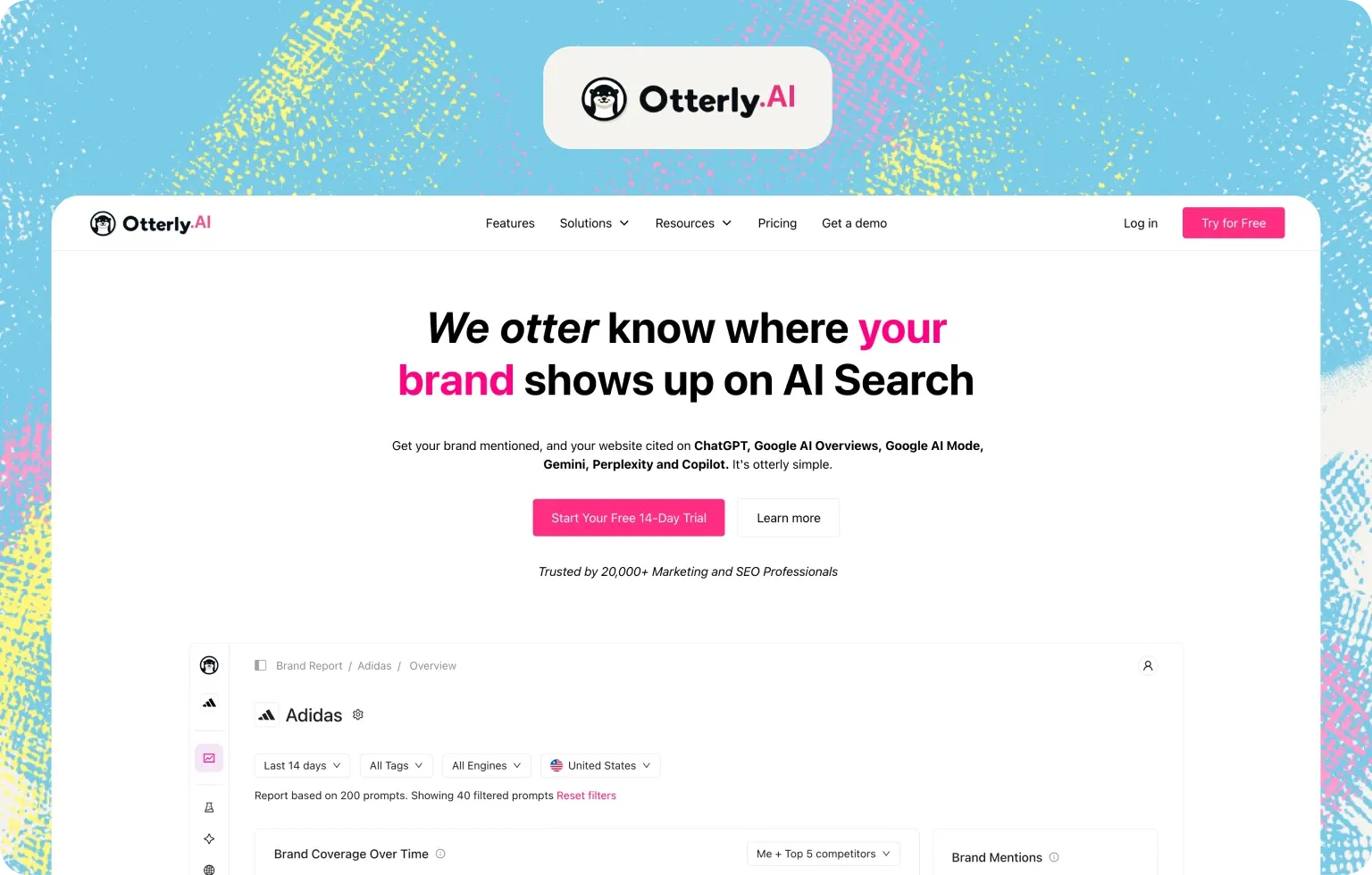
Otterly AI is an AI search visibility tool designed for teams in the early stages of tracking brand presence in AI search results.
Budget-conscious technical SEO teams who suspect on-page or technical issues are behind low AI citation and want a diagnostic tool.
Otterly's GEO (Generative Engine Optimization) Audit runs structural and technical checks on your pages and returns recommendations explaining why AI engines may not be citing them. At $29/mo it's got the most affordable entry point in this list, and unlimited brand tracking means costs stay predictable as you add more brands or clients.
Citation data is domain-level only, so you can see which sites competitors get cited from but not which specific pages. There’s no native way to turn that data into content briefs or placement targets without going outside the platform or using an Otterly competitor.
Choose Otterly when you want to monitor brand visibility but are still validating whether AI search matters for your category. Once you need to understand why competitors are winning specific citations and what to publish in response, Otterly's domain-level data doesn't give you enough to work with.
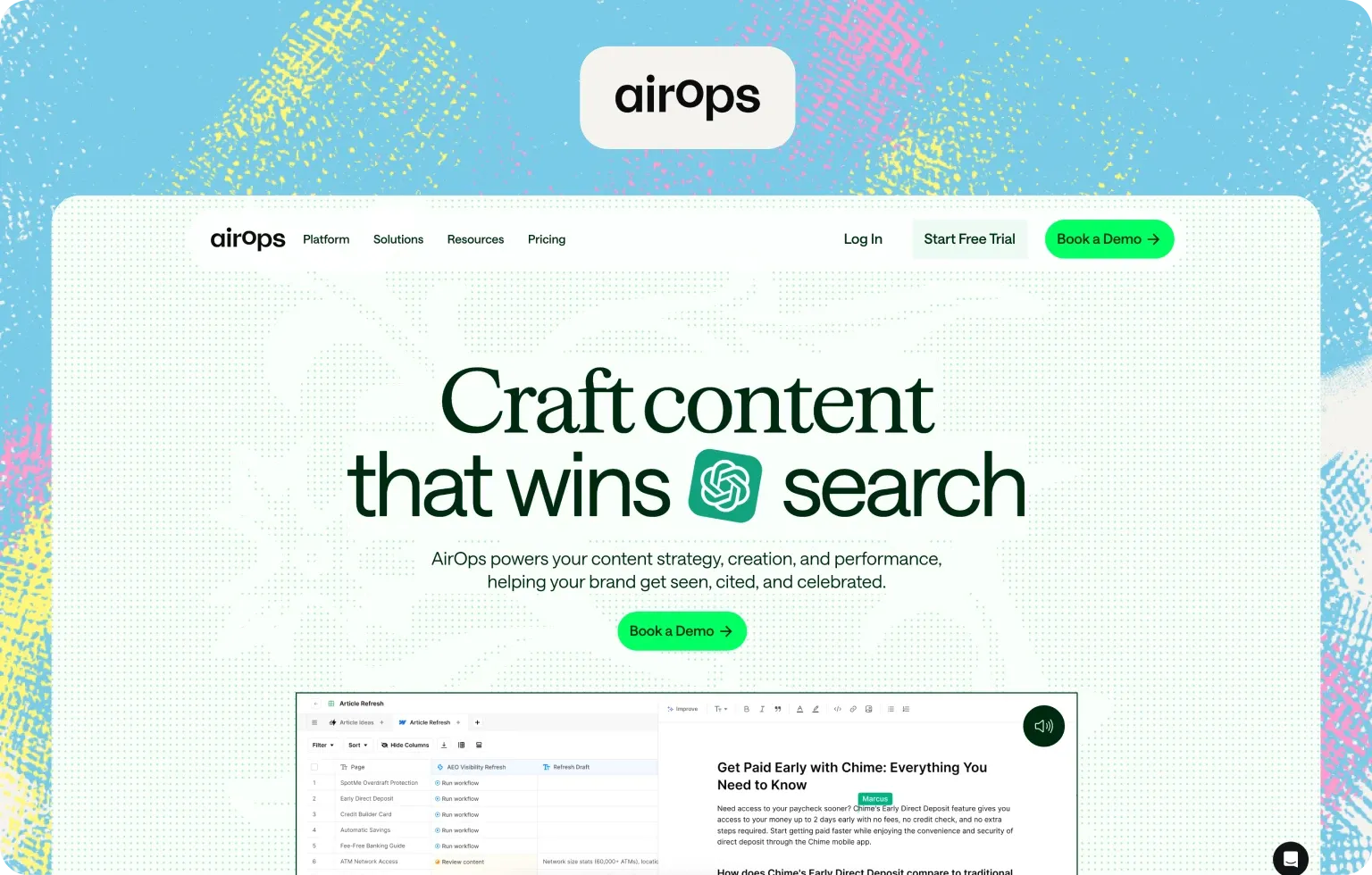
AirOps is a content operations platform that is primarily built around custom content workflow automation with an AI citation tracking layer.
Growth teams and content operations leads who need to move faster from citation data to published content.
AirOps links citation gaps directly to content briefs and CMS publishing in one place, so teams can move from spotting an opportunity to briefing a writer without changing tools. Its influence score ranks publishers by how often they are cited in AI answers, helping teams decide who to prioritize for outreach.
The workflow builder takes time to configure and typically requires onboarding support to get full value from. The Solo plan at $200/mo covers one region and ChatGPT only, and the next tier jumps to $2,000/mo, which leaves limited middle ground for teams that need more coverage without enterprise pricing.
Choose AirOps when execution speed is a higher priority than strategic direction. While AirOps does give AI search engine optimization recommendations, they’re limited compared to AthenaHQ and are secondary to its content automation features.
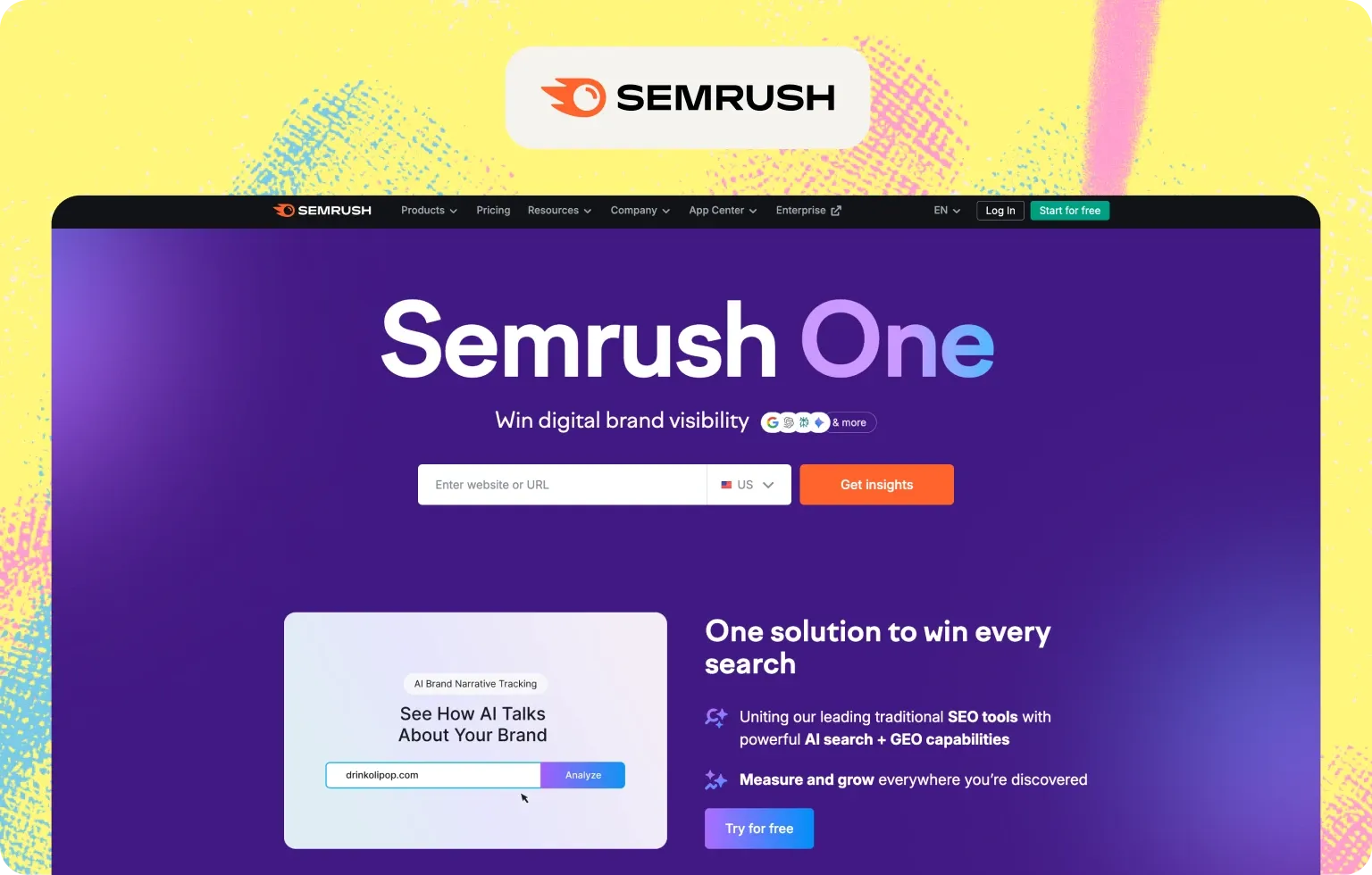
Semrush is an SEO platform that recently added an AI Visibility Toolkit tracking AI-powered search engine citations at domain and URL level.
Traditional SEO teams already using Semrush who want AI brand visibility monitoring without adding another platform.
Teams already tracking keywords in Semrush can map those directly to AI monitoring without rebuilding prompt sets from scratch. Brand Performance reports show how your brand is described in AI-generated answers, not just whether it appears.
The AI Visibility Toolkit requires a base Semrush subscription. Regional tracking is less detailed than purpose-built platforms, and the 300 daily query limit can constrain teams running high-volume tracking.
Choose Semrush when you're already using it and adding $99/mo is a simpler decision than migrating to a dedicated AEO platform. AthenaHQ's Action Center and Ask Athena copilot are stronger for teams where AI search visibility is the primary focus.
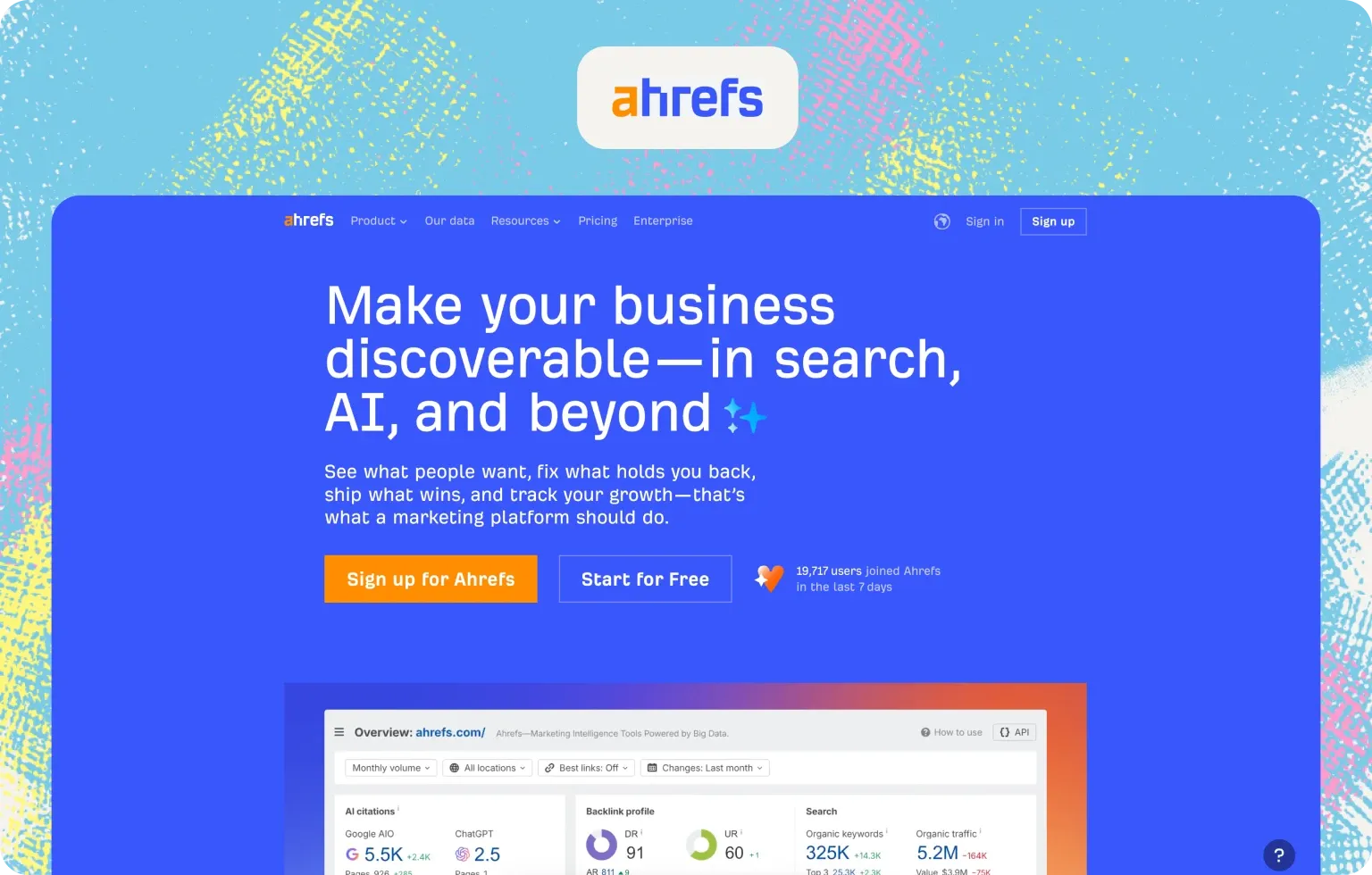
Ahrefs is an SEO platform that added AI search visibility tracking through its Brand Radar product, built on prompt volume data from real search queries.
SEO-first teams already using Ahrefs who want to add AI visibility without setting up a separate platform.
Brand Radar's prompt index draws from real search queries at scale, so competitive benchmarking reflects what buyers are genuinely asking. The Site Explorer module connects citation patterns to Ahrefs' existing backlink data, showing which earned links are driving AI recommendations.
Pricing is per AI platform, with cheaper plans covering only Google AI overviews and making full coverage expensive at $699/mo.
Choose Ahrefs when competitive citation data and seeing the impact of backlinks on citation matter more than prescriptive recommendations. AthenaHQ's Action Center and Ask Athena copilot are stronger for teams focused on what to do next.
BrightEdge is an enterprise SEO platform with an AI search visibility layer added via its AI Catalyst integration.
Enterprise teams already contracted into BrightEdge who want AI visibility without signing up for another tool.
The unified dashboard places traditional search performance and AI citation data alongside each other, and persona development and buyer journey analysis are more developed here than in most dedicated AI visibility tools.
AI search engine coverage is limited to 3 platforms, the lowest in this list. Data updates periodically rather than daily, which limits how quickly you can act on citation changes.
Choose BrightEdge if you’re already a BrightEdge customer and adding a new vendor isn’t practical. AthenaHQ is the stronger standalone choice on engine coverage and content creation recommendations.
BrightEdge doesn’t publish pricing online, you’ll have to contact sales.
Before booking demos for Athena alternatives for AI visibility tracking, score each shortlisted tool against the criteria below.
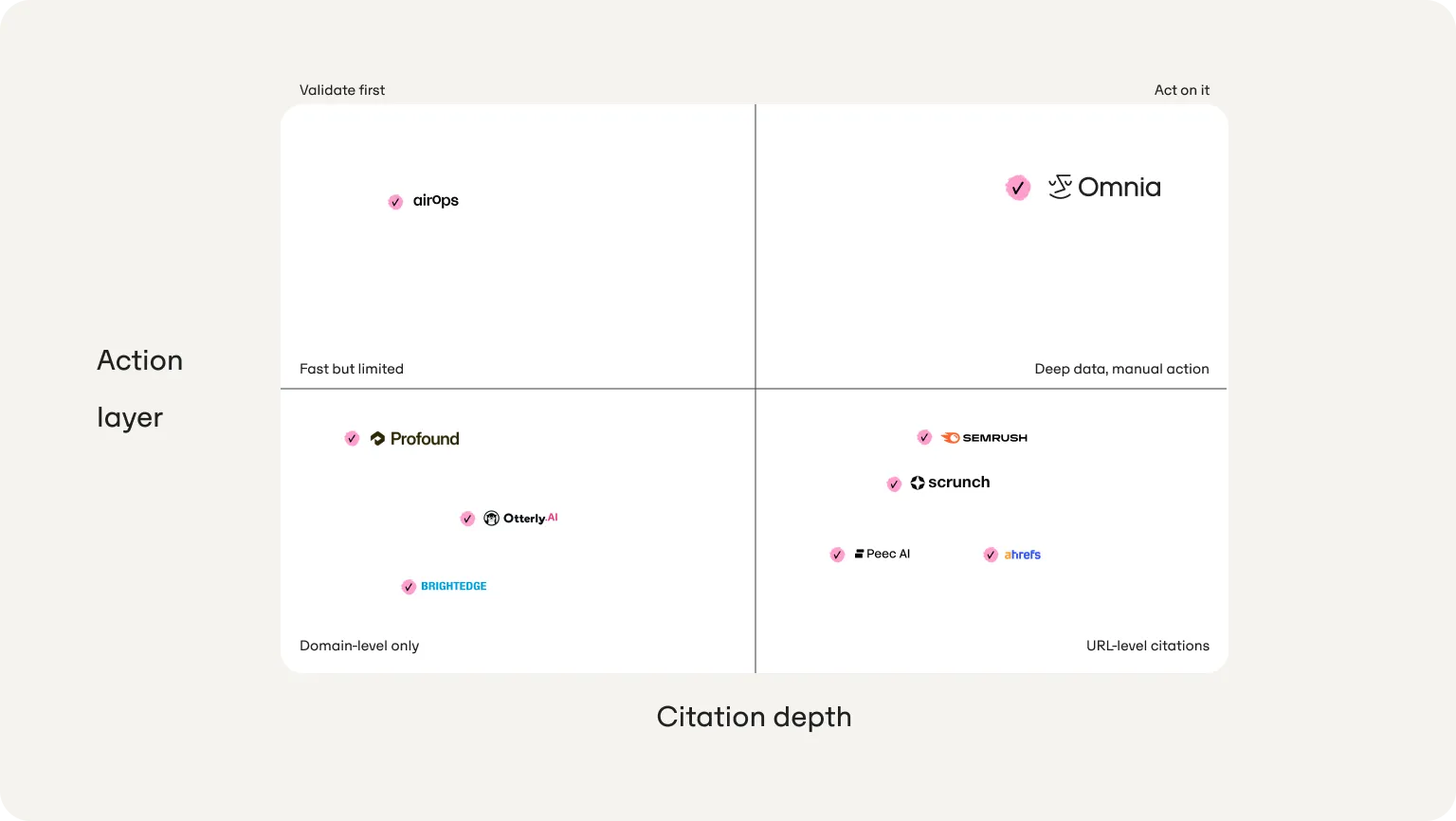
And if you need additional help with narrowing your selection for best AthenaHQ alternatives, you can use the interactive AEO selector to find your perfect match:
Omnia's native action layer turns citation gaps directly into content briefs, placement targets, and structured outlines — without piping data into a separate tool. One marketer can run the full loop in under an hour per week.
Omnia's native action layer turns citation gaps directly into content briefs, placement targets, and structured outlines — without piping data into a separate tool. One marketer can run the full loop in under an hour per week.
Omnia executes prompts via real browser sessions in actual geographic locations — not API simulations from a US data centre. You get separate baselines, separate competitor sets, and accurate local results for every market on the base plan with no per-market surcharges.
Omnia publishes tiered pricing with no credit system and no mystery burns. All four major engines are included at every tier. Growth starts at €79/mo and includes unlimited countries, daily monitoring, and the full action layer.
Omnia connects citation gaps directly to content actions and tracks whether those actions move your share of voice week over week. The weekly workflow loop gives you a reportable before/after story — visibility score, citations won, competitor share of voice movement.
Teams that reach a ceiling with Athena HQ have usually moved past the question of whether they appear in AI answers and into a more complex one: why are competitors being cited instead, and what do we need to do to change that? AthenaHQ's Action Center is built for recommendations, but it doesn't help you work backwards from the specific URLs competitors are winning or break down where your product positioning is weak on dimensions like pricing, UX, or support.
Omnia is built for that next stage. It shows which competitor pages are earning citations, where your coverage is thin by market and product dimension, and generates content briefs from those insights so teams aren't working across separate tools. The typical weekly loop looks like this: check visibility across key markets, review citation and competitor data, generate focused content briefs, ship updates, then re-test to see what changed. This approach turns AI visibility from a reporting task into a repeatable content system.
Book a demo or start with a 14-day free trial on Omnia's Growth plan to see your current citation performance across major AI platforms.
Omnia offers a 14-day free trial on the Growth plan.
No credit card required. See exactly where your brand shows up (or doesn't) across AI engines, then let the platform's recommendations guide your next move.

Athena HQ competitors are tools in AI search presence visibility and citation tracking, not companies with similar names in other industries. In this space, competitors include platforms like Omnia, Scrunch-style AEO tools, and other AI visibility monitoring and deep AI search intelligence products. The confusion usually comes from healthcare or unrelated “Athena” brands, which are not relevant here.
AthenaHealth is a healthcare software company, not an AI visibility or AEO (Answer Engine Optimization) tool. Its competitors are EHR and healthcare platforms like Epic Systems or Cerner, which are unrelated to AthenaHQ. If you’re comparing AI visibility tools or want to track brand visibility on AI search engines, AthenaHealth should not be part of that shortlist.
Tools in the Athena HQ category are not general-purpose AI systems. They are AI visibility and analytics platforms that track how brands appear in AI-generated answers across different AI models. Their main job is monitoring citations, prompts, and visibility patterns, not generating standalone AI content or giving AI-generated responses to queries.
The best alternatives to Athena HQ for AI search depend on how important localization is for your team. If your AI presence matters on a country-level, focus on tools that separate markets cleanly and avoid blended global data. In most cases, this maps directly to the “country-level tracking” and “citation transparency” rows in the scoring rubric above.
When comparing Athena AI visibility products competitors, you want URL-level citation data, not just domain mentions. Look for the broadest AI platform coverage, clear volatility tracking, strong export options, and a system that generates actionable insights from AI search signals.
Yes, but there are tradeoffs. Lower-cost tools or Athena AI free alternatives often reduce the number of AI engines they track, limit historical citation data, or simplify exports. These options can work well for smaller teams, but scaleups usually outgrow them once they need deeper cross-market or competitor-level analysis, or they want to connect AI visibility with workflows like creating AI-optimized content.
Ahrefs and Semrush are strong traditional SEO tools, but they don’t fully replace AI answer monitoring or AI search optimization workflows. They’re useful for traditional search data, backlinks, and keyword research. Most teams that need AI visibility still use them alongside Athena-style tools rather than as a full answer engine optimization replacement.
Agentic AI refers to systems that take actions autonomously rather than just generating AI responses. For example, an AI agent might take answer engine insights and produce AI-generated content to improve visibility scores for that prompt. In the AI search landscape, what matters is whether that autonomy produces something useful like content optimization suggestions or a placement target.
Written By
 AndreiHead of GrowthatOmniaJoseGrowthatOmnia
 AndreiHead of GrowthatOmnia
 AndreiHead of GrowthatOmnia
 AndreiHead of GrowthatOmnia
 AndreiHead of GrowthatOmnia
No credit card required · Free for 14 days · See your AI visibility within 3 minutes